
Last Updated: 15/April/2026
We have all been there. You stand in your kitchen at 6 PM after a long day of work. You are tired, hungry, and facing a pile of unwashed vegetables. The thought of cooking feels like a second job. This is where most people give up and order expensive takeout.
The secret to a stress-free kitchen is not about cooking faster. It is about preparing smarter. These food prep efficiency hacks are designed for real people with busy lives. Whether you are a parent or a student, these tips will help you reclaim your time and enjoy your meals again.
Why Traditional Meal Prep Often Fails
Many people think meal prep means spending five hours every Sunday cooking entire meals. While that works for some, it is too much for most people. Traditional prep often leads to “fridge fatigue,” where you get tired of eating the same leftovers by Wednesday.
The solution is “Micro-Prepping.” This means doing small tasks throughout the week that make cooking easier. Instead of preparing full meals, you prepare the ingredients. This keeps your food fresh and gives you more choices during the week.
20 Practical Food Prep Efficiency Hacks
1. The Post-Grocery Prep Session
The best time to prep is right after you go shopping. Before you put your groceries away, wash your greens and chop your carrots. If the food is already ready to use, you are much more likely to cook it rather than let it rot in the drawer.
2. Batch Prep Your Components
Instead of cooking a whole lasagna, cook a large batch of ground meat or lentils. Prepare a big pot of rice or quinoa. These are “components.” You can use them in tacos one night and a grain bowl the next.
3. Use the “Trash Bowl” Method
Keep a large bowl on your counter while you work. Throw all your vegetable peels and eggshells into it. This saves you from walking to the bin ten times. It keeps your workspace clean and saves valuable minutes.
4. Upgrade Your Tools for 2026
Modern technology can do the hard work for you. An air fryer can roast veggies in half the time. Using smart appliances like a multi-cooker or an electric pressure cooker saves you hours of standing by the stove. High-quality tools are now affordable for home use.
5. Follow the FIFO Method
FIFO stands for “First In, First Out.” When you buy new groceries, move the older items to the front of the fridge. This simple organization hack prevents food waste and ensures you use what you have before it goes bad.
6. Freeze Sauces in “Lego Cubes”
Do not let leftover sauce go to waste. Pour pesto, tomato paste, or herb oils into ice cube trays. Once frozen, pop them into a bag. You can drop a cube directly into a hot pan for instant flavor.
7. Choose Deli Containers Over Glass Jars
Professional chefs use clear plastic deli containers. Why? Because they are all the same size and stack perfectly. This saves a huge amount of space in your fridge and makes it easy to see exactly what you have prepped.
8. Master the Sheet Pan Magic
If you need to cook for the week, use your oven. You can roast chicken, broccoli, and sweet potatoes all on one large tray. It is hands-off cooking that results in very few dishes to wash.
9. Start with Proper Mise en Place
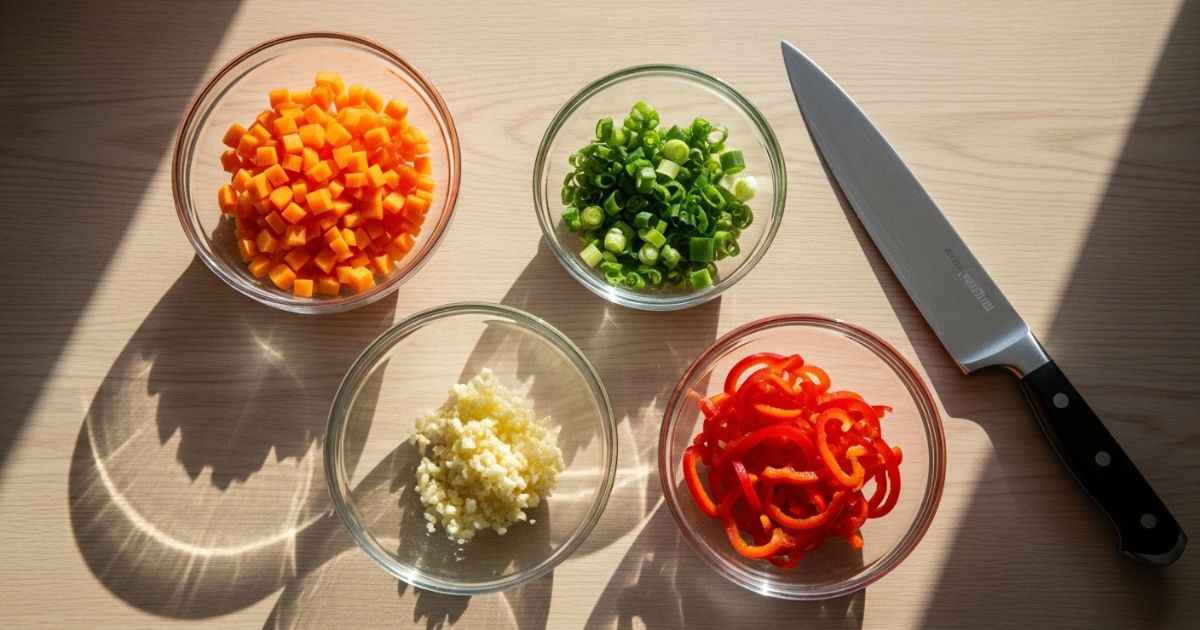
Mise en Place is a fancy way of saying “everything in its place.” Before you turn on the stove, have all your ingredients chopped and measured. It prevents the panic of searching for the salt while your garlic is burning in the pan.
10. Clean as You Work
Never let dishes pile up. While your water is boiling or your onions are sautéing, wash the cutting board. If you clean as you go, you won’t be left with a giant mess after dinner.
11. Use Multi-Use Base Sauces
Make one large jar of lemon-tahini dressing or a simple vinaigrette. You can use it as a salad dressing, a marinade for meat, or a dip for raw veggies. One sauce can power three different meals.
12. Label and Date Everything
Use a piece of masking tape and a marker. Write down what is in the container and the date you made it. This removes the guesswork and keeps your food safe to eat.
13. Pre-Portion Your Snacks
If you wait until you are hungry to find a snack, you will grab junk food. Spend ten minutes putting nuts, fruit, or cheese into small containers. It makes healthy eating the easiest choice.
14. Use Frozen Veggies Without Shame
Frozen vegetables are often just as healthy as fresh ones. They are already washed and chopped. Adding a handful of frozen peas or spinach to a meal is a 5-second health boost.
15. The “Double-Up” Rule
Whenever you make a recipe that freezes well, like soup or chili, double the ingredients. Eat half now and freeze half for a night when you are too tired to move.
16. Prepare Your Flavor Bases
Chop a large amount of garlic and ginger at once. Store them in a small jar with a little oil. Having these ready to go saves you from the most tedious part of every recipe.
17. Use Silicone Storage Bags
These are better than plastic wrap or foil. They are airtight, which keeps food fresh longer, and they can go from the freezer to the microwave. They also lay flat to save space.
18. Organize Your Pantry Strategically
Put your most-used items like olive oil, salt, and black pepper in one easy-to-reach spot. If you don’t have to hunt for your spices, your food prep efficiency hacks move much faster.
19. Utilize a Vacuum Sealer
If you buy meat in bulk, use a vacuum sealer. It prevents freezer burn and keeps food fresh for months. This is one of the best ways to save money and ensure high-quality meals.
20. Plan Your Menu Based on Overlaps
If you are buying cilantro for tacos, plan to make a lime-cilantro rice the next day. Using the same ingredients in different ways reduces waste and makes shopping simpler.
Shelf Life of Prepped Ingredients
To help you stay organized, here is a quick guide on how long your prepped items will stay fresh in the fridge:
| Ingredient | Storage Time (Fridge) |
| Chopped Onions & Peppers | 2 – 3 Days |
| Cooked Grains (Rice/Quinoa) | 4 – 5 Days |
| Cooked Proteins (Chicken/Beef) | 3 – 4 Days |
| Hard-Boiled Eggs | 7 Days |
| Leafy Greens (Washed & Dried) | 5 – 7 Days |
Kitchen Prep Hacks for Beginners
If you are new to this, do not try all 20 hacks at once. Start with the basics. Every beginner needs two things: a sharp chef’s knife and a large, stable cutting board.
Focus on one task first. Try “Post-Grocery Prep” this week. Once that feels easy, add another habit. Successful meal prep for beginners is about building a system that fits your lifestyle, not copying someone else’s perfect Instagram kitchen.
Food Prep at Home vs. Professional Kitchen
In a professional kitchen, efficiency is a requirement. Chefs use these same hacks because they have to serve hundreds of people. At home, our goals are different. We want to save money and eat healthier.
However, we can learn a lot from pros. They don’t waste movements. They keep their knives sharp. They keep their stations clean. Bringing these habits into your home kitchen will make you feel like a pro and reduce your daily stress.
Best Meal Prep Guide for Busy Families
For families, the biggest challenge is time. Use your slow cooker or Instant Pot. These tools allow you to “set it and forget it.” You can prep the ingredients in the morning, and dinner is ready when you get home. These are excellent time-saving kitchen tips for parents.
Another tip for families is to involve the kids. Let them help with simple tasks like washing fruit or snapping green beans. It teaches them about food and gets the work done faster.
Essential Tools for Maximum Efficiency in 2026
To truly master your kitchen, you need the right gear. Technology has changed a lot, and these items are now essential for a modern home. For those looking to upgrade, suppliers like Kara Foodservice offer durable, professional-grade tools that help you cook efficiently. When your tools are ready to perform, your workflow runs smoothly.
- A Mandoline Slicer: For perfect, thin slices of vegetables in seconds (always use the safety guard!).
- Electric Vegetable Chopper: No more crying over onions or spending 20 minutes dicing.
- Stackable Deli Containers: For a fridge that looks like a professional pantry and saves massive space.
- Reusable Silicone Bags: Better for the environment and much easier to store than bulky plastic boxes.
Common Myths: Why is Meal Prep Sometimes Considered Bad?
Some people think meal prep means eating dry chicken and broccoli every day. That is not true. Meal prep is only “bad” if you do it the wrong way.
If you prepare components instead of full meals, your food stays exciting. If you use the freezer hacks mentioned above, your food stays fresh. Prep is a tool to give you freedom, not a set of rules to make your life boring.
Frequently Asked Questions
How long does prepped food stay fresh?
Most cooked proteins and chopped veggies stay fresh for 3 to 4 days in a sealed container. If you need it to last longer, use your freezer for long-term storage.
Can I meal prep on a budget?
Yes! Buying in bulk and using frozen vegetables are great ways to save money. Prepping also prevents you from buying expensive last-minute takeout.
What is the fastest way to chop vegetables?
The fastest way is to use a dedicated electric vegetable chopper or a food processor. If you prefer a knife, make sure it is very sharp; a dull knife is slow and dangerous.
Conclusion: Structure Replaces Chaos
Efficiency in the kitchen is not a gift. It is a habit. When you start using these food prep efficiency hacks, you will notice a change. Your kitchen will feel calmer. Your evenings will feel longer.
Start today. Pick two hacks from this list and try them out. You will quickly see that a little bit of structure can turn kitchen chaos into a joyful part of your day. Working smarter is the best way to feed yourself and your family well.
You May Also Like:
15 Best Superfoods to Boost Health Fast: The Ultimate Guide
Top Food Trends Fhthopefood and 2026 Eating Patterns You Should Know
Why Studying Real Product Experiences Improves UX Decisions
Disclaimer:
We share these tips to help you in the kitchen. However, please remember that food safety is very important. Always wash your hands and keep your tools clean. Make sure to store food at the right temperature so it does not spoil. We are not doctors or food safety experts. If you have questions about a specific food or allergy, please talk to a professional. Use these hacks safely to enjoy your cooking!

Alex Taylor is a seasoned technology writer and systems specialist with over 5 years of experience in hardware maintenance and digital troubleshooting. He specializes in practical tech guides, focusing on making complex technical repairs and software optimization accessible to everyday users. Alex personally reviews and fact-checks every guide to ensure that maintenance tips are safe, effective, and budget-friendly. Whether it’s a hardware fix or a software setup, his work is driven by a passion for technical clarity and real-world utility.