
Last Updated: 13/April/2026
Pruning is a vital task for every garden. It simply means cutting away parts of a plant to help it grow better. However, many people find it confusing. Making common pruning errors can ruin your garden’s health and stop your trees from growing fruit. At our UK nursery, we see these mistakes every day. Most people want to do a good job, but they follow the wrong advice. This guide will show you how to avoid these mistakes and keep your trees happy.
What are the most common pruning errors? The top mistakes include pruning at the wrong time of year, removing too much wood (over-pruning), using dirty or blunt tools, making flush cuts that damage the trunk, and ignoring the natural shape of the tree.
Understanding Tree Pruning Errors
To keep a tree healthy, you must understand how it grows. A tree uses its leaves to make food. When you cut a branch, you change how the tree breathes and eats. If you make a mistake, the tree gets stressed. This stress can lead to low fruit production or even death. Many gardeners make tree pruning errors because they are in a hurry. They treat every tree the same way, but a plum tree is not the same as an apple tree. By learning the right way to prune, you protect the branch collar—the part of the tree that helps it heal.
1. Pruning at the Wrong Time of Year
Timing is everything. In the UK, the weather changes quickly. If you prune when the sap is flowing too fast, the tree might “bleed.” This sap loss attracts bugs and germs. If you prune in the freezing cold, the open wound might get frost damage, causing the wood to crack.
Winter is usually the best time for apples and pears. This is the dormant season when the tree is asleep. During this time, the tree does not lose sap, and you can see the branches clearly. However, summer pruning is better for slowing down growth on very large trees. The biggest mistake is pruning stone fruits, like cherries or plums, in the winter. This opens them up to a disease called silver leaf, which kills branches.
How to Fix Pruning Timing Errors:
- Apples and Pears: Stick to January or February for big cuts.
- Plums and Cherries: Only prune in mid-summer when the weather is dry.
- Avoid Wet Days: Never prune during heavy rain. Moisture helps fungal diseases enter the fresh cuts.
Pro Tip: If you want more fruit, prune in the summer to stop the tree from making too many leaves. If you want a young tree to grow bigger, prune in the winter.
2. Removing Too Much Wood at Once (Over-Pruning)
It is easy to get excited with a pair of shears. But removing too much wood is a major error. This is called over-pruning. When you take away more than 25% of the tree in one year, the tree goes into shock.
The tree feels like it is dying, so it panics. It will grow many thin, vertical shoots called “water sprouts” or “epicormic growth.” These shoots grow very fast but they never grow fruit. They just take up all the energy and make the tree look like a messy bush.
How to Fix an Over-Pruned Fruit Tree:
- The 25% Rule: Never remove more than one-quarter of the tree’s living canopy in a single year.
- The Three-Year Plan: If a tree has been ignored for years, fix it slowly. Take a little bit off this year, a little next year, and the rest in the third year.
- Priority List: Always remove “The Three Ds” first: Dead, Damaged, or Diseased wood.
Pro Tip: If you see a lot of thin branches growing straight up like a brush, you probably pruned too hard last year. Leave them alone for a season so the tree can calm down.
3. Using Dirty or Dull Tools
A clean cut heals fast. A jagged cut stays open for germs. Using dull tools is like trying to cut bread with a spoon; it crushes the wood instead of slicing it. This crushed wood starts to rot very quickly. Also, dirty tools act like dirty needles. They carry diseases like Apple Canker or Fire Blight from a sick tree to a healthy one.
How to Prevent Disease from Pruning Tools:
- Sharpening: Use a whetstone or a simple sharpener before you go into the garden.
- Disinfecting: Carry a small bottle of alcohol or a 10% bleach mix. Wipe your blades every time you move to a new tree.
- Identify Disease: Learn to spot signs of disease early. For example, if you see sunken bark or oozing wounds, your tree might have Apple Canker. Cleaning tools is the only way to stop this from spreading.
- Right Size: Do not force small secateurs to cut a thick branch. If it’s thicker than a pencil, use loppers.
Pro Tip: If your hand feels tired after just ten minutes, your tools are likely too dull. A sharp tool should feel like it is doing the work for you.
4. Making Flush Cuts and Leaving Stubs
Where you make the cut is just as important as when you make it. Some people cut too close to the main trunk. This is a “flush cut.” It removes the branch collar. The collar is the “healing factory” of the tree. Without it, the tree cannot grow new bark over the hole. On the other hand, leaving a “stub” (a long piece of branch) is also bad. The stub will rot and travel into the heart of the tree.
How to Make the Perfect Pruning Cut:
- Find the Collar: Look for the wrinkled, swollen bark where the branch joins the trunk.
- The Sweet Spot: Cut just outside that wrinkle.
- The 45-Degree Rule: Make the cut at a slight angle so water does not sit on the wound.
Pro Tip: A perfect cut should look like a small, clean circle. Within a year, you should see a ring of new bark starting to close the gap.
5. “Topping” the Tree
Many homeowners get scared that their tree is getting too tall. They cut the entire top off to make it shorter. This is called “topping.” It is one of the worst pruning errors you can make. It ruins the tree’s natural shape and makes the top very weak. New branches will grow back fast, but they will be weakly attached. In a British storm, these topped branches are the first to snap and fall.
Better Alternatives to Tree Topping:
- Thinning: Instead of cutting the top, thin out the branches inside the canopy to let light in.
- Variety Choice: If you have a small garden, buy “Dwarf” or “Patio” trees from a nursery.
- Drop-Cranking: If you must reduce height, cut a tall branch back to a lower side branch that is at least one-third the size of the main stem.
Pro Tip: You cannot fight nature. If you buy a vigorous tree, it will always want to be big. Look for “rootstock” information on the label to know how tall the tree will grow.
If you need a shorter tree for a small garden, it is much better to choose a variety that stays small naturally. Instead of cutting the top off a big tree, look for professional fruit trees for sale that are grown on dwarf rootstocks. This way, your tree stays at a manageable height without you ever needing to make dangerous topping cuts.
6. Pruning at the Wrong Angle
Rain is very common in the UK. If you cut a branch flat (horizontal), water will sit on top of the wound. Standing water leads to rot, moss, and fungus. Every cut should have a slight slope so the rain can slide off easily, keeping the wood dry.
How to Fix Pruning Cuts at the Wrong Angle:
- Slant the Cut: Always aim for a 45-degree angle.
- Bud Placement: The cut should start about a quarter-inch above a bud and slope away from it.
- Direction: This ensures the rain runs away from the delicate new bud.
Pro Tip: Imagine the branch is an umbrella. You want the water to run off the sides, not collect in a puddle in the middle of the cut.
7. Ignoring the Variety of the Tree
Not all fruit trees follow the same rules. This is a secret that many nursery professionals wish more people knew. For example, some apple varieties grow fruit on “spurs” (short side shoots), while others grow fruit on the “tips” of long branches. If you have a tip-bearer and you cut all the tips off, you will have a beautiful green tree with zero fruit.
How to Prune Based on Tree Variety:
- Check the Variety: Know if your tree is a “Spur-bearer” or a “Tip-bearer.”
- Specific Shapes: Cordon and Espalier trees need special “Lorette pruning” in the summer, which is different from standard bush pruning.
- Stone vs. Pome: Remember that plums (Stone) and apples (Pome) have totally different disease risks and timing needs.
Pro Tip: If you aren’t sure what tree you have, wait for it to fruit. Watch where the blossom appears. If it’s all over the short twigs, it’s a spur-bearer.
How to Fix a Badly Pruned Tree: A Recovery Guide
If you have already made these tree pruning errors, do not lose hope. Most trees are very strong and want to live. Here is a step-by-step plan to save a badly pruned tree:
- Stop Cutting: The most important thing is to put the saw away. The tree needs its remaining leaves to make food and heal.
- Water and Feed: A stressed tree needs energy. Water it deeply during dry spells. Add a layer of well-rotted manure or compost (mulch) around the base, but do not let it touch the trunk.
- Wait for the Response: You will likely see “water sprouts” (straight shoots) growing everywhere. Do not cut them all off at once. This will just stress the tree again.
- Thin Gradually: Next year, only remove about 10% of the most crowded new shoots. Leave the others to provide shade for the bark.
- Patience: It usually takes three years for a tree to return to a normal, healthy growth pattern after a major pruning mistake.
Essential Tools for Error-Free Pruning
Having the right tools makes you a better gardener and prevents pruning errors.
- Bypass Secateurs: These work like scissors and give a clean cut on thin branches.
- Loppers: These have long handles to give you power for medium-sized branches.
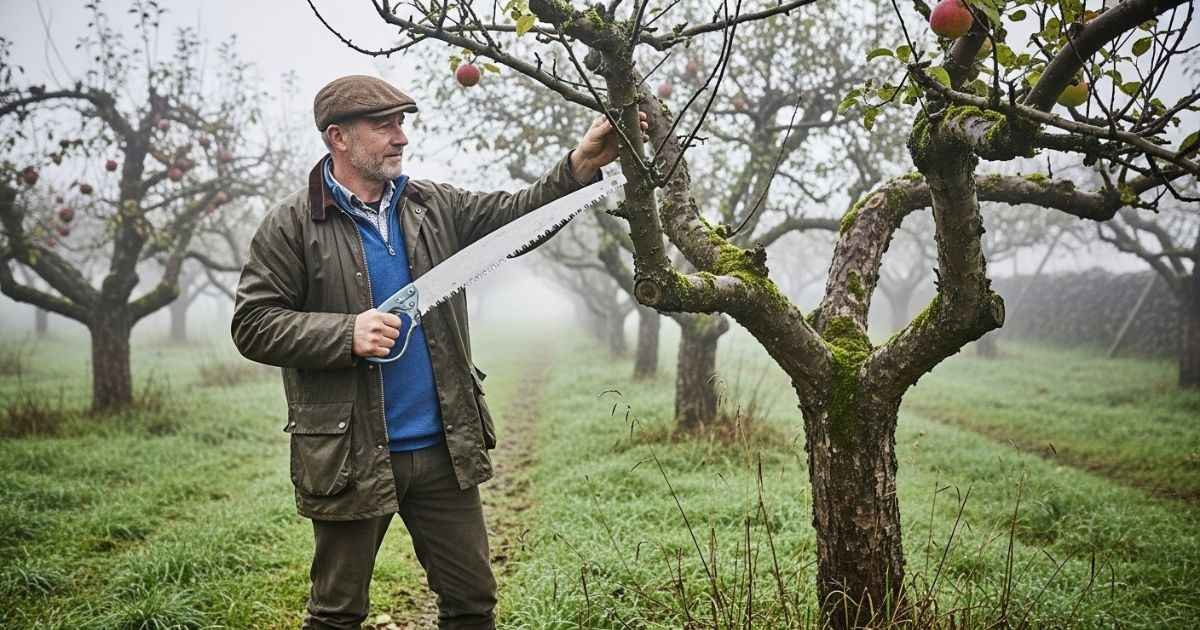
- Pruning Saw: A curved saw is best for getting into tight spaces between branches.
- Safety Gear: Always wear gloves and eye protection. Old fruit trees can have sharp spurs.
- Whetstone: A small stone to keep your blades sharp while you work.
Frequently Asked Questions
Can a tree recover from over-pruning?
Yes, most fruit trees can recover from over-pruning with proper care. To help a tree recover, stop all pruning for at least one full growing season. Provide the tree with plenty of water during dry periods and apply organic mulch around the base to provide nutrients. This allows the tree to focus its energy on healing wounds and rebuilding its canopy.
What is the best month to prune fruit trees in the UK?
The best month for pruning apples and pears is late January or February, while plums and cherries should be pruned in June or July. Apples and pears are best pruned during the dormant winter season. Stone fruits (plums and cherries) must be pruned in mid-summer to prevent Silver Leaf disease, which is more active in cold, damp winter months.
Should I use wound paint on big cuts?
No, you should not use wound paint or sealants on pruning cuts. Research shows that trees heal more effectively when cuts are left open to the air. Wound paint can trap moisture against the exposed wood, which encourages rot and fungal infections. Making a clean, angled cut with sharp tools is the best way to ensure a tree heals naturally.
While fruit trees need a lot of care, other varieties like the Cypress are much tougher. If you are looking for more garden inspiration, check out these 10 powerful reasons to love Cypress trees and how they can benefit your outdoor space.
Conclusion
Pruning does not have to be a scary chore. By avoiding these seven common pruning errors, you ensure your fruit trees stay healthy and productive for decades. Remember: keep your tools sharp, respect the timing, and always have a reason for every cut you make. Good pruning is not about making a tree look like a perfect statue; it is about helping a living thing thrive in your garden. Check your trees today, and start pruning with confidence!

Alex Taylor is a seasoned technology writer and systems specialist with over 5 years of experience in hardware maintenance and digital troubleshooting. He specializes in practical tech guides, focusing on making complex technical repairs and software optimization accessible to everyday users. Alex personally reviews and fact-checks every guide to ensure that maintenance tips are safe, effective, and budget-friendly. Whether it’s a hardware fix or a software setup, his work is driven by a passion for technical clarity and real-world utility.