
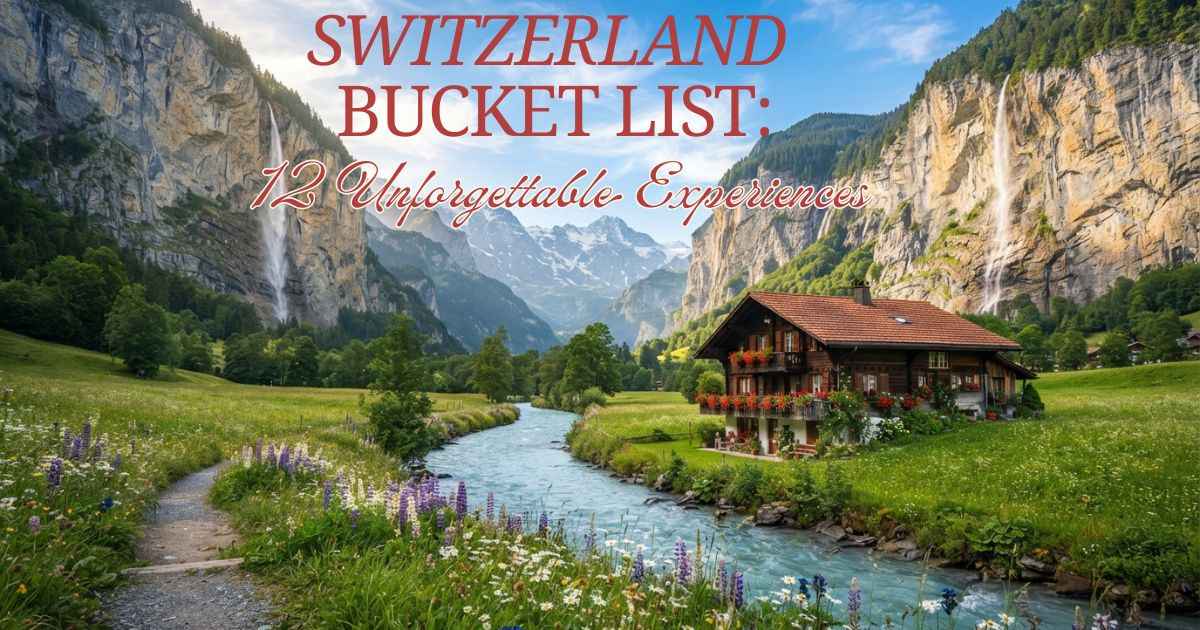
Switzerland is a small country, but it packs in more natural beauty than places ten times its size. Snow-capped mountains sit next to blue lakes. Old wooden villages sit below glaciers. Trains climb higher than most planes fly, and every turn feels like a postcard.
This guide is not just a list of famous attractions. It is a collection of real, memorable experiences that make a Switzerland trip unforgettable. Some are world-famous, like the Matterhorn. Others are quieter moments, like watching morning fog lift over a mountain valley.
This Switzerland bucket list is built for first-time visitors. You will find practical details for every experience, including the best season, how much time to set aside, and rough costs. You will also find help with bigger planning questions, like how many days you need, whether to buy the Swiss Travel Pass, and how to keep your budget under control.
Switzerland rewards travelers who plan a little. The trains are precise, the mountains are unpredictable, and the best views often depend on timing. By the end of this article, you will know exactly which experiences deserve a spot on your itinerary and how to fit them together into a trip that feels balanced, not rushed.
Whether you have five days or two weeks, this list will help you build a trip full of scenic trains, alpine lakes, mountain villages, and a little Swiss chocolate along the way.
What Should Be on Every Switzerland Bucket List?
At a minimum, your Switzerland bucket list should include one scenic train ride, one high-altitude mountain experience, one alpine lake, and one traditional Swiss village. Add a cable car ride for panoramic views, a short hike through the Alps, and a stop for local food like cheese fondue. These experiences cover the mountains, the culture, and the food that make Switzerland special, and they work well together in a five to seven day itinerary.
Before You Go: Know These Things
A little planning goes a long way in Switzerland. This section answers the questions most first-time visitors have before they book anything.
Best Time to Visit Switzerland
Summer (June to September) is the most popular season. Hiking trails are open, mountain passes are clear, and daylight hours are long. Spring and autumn are quieter and cheaper, with fewer crowds at major viewpoints. Winter turns Switzerland into a ski destination, and cities like Lucerne and Zurich feel cozy with Christmas markets.
If you want fewer crowds but still good weather, aim for late May or September.
How Many Days Do You Need?
Five days is enough to cover the highlights, like one scenic train, one mountain peak, and one or two towns. Seven days lets you slow down and add villages, hikes, or a lake cruise without feeling rushed. Ten or more days works well if you want to explore multiple regions, like Zermatt, Interlaken, and Lucerne, without long travel days.
Average Daily Budget
Switzerland is one of the more expensive countries in Europe. A budget traveler can expect to spend around 100 to 150 CHF per day, covering hostels, groceries, and public transport. Mid-range travelers usually spend 250 to 350 CHF per day for hotels, restaurant meals, and some paid attractions. Luxury travelers can spend 500 CHF or more per day on high-end hotels and private experiences.
Should You Buy the Swiss Travel Pass?
The Swiss Travel Pass covers unlimited travel on trains, buses, and boats, plus free entry to many museums. It makes sense if you plan to move between multiple cities and take several scenic train rides. If you are staying in one region and mostly hiking or relaxing, buying individual tickets may cost less.
Do You Need a Rental Car?
Most travelers do not need a car in Switzerland. The train network is fast, frequent, and reaches almost every town and mountain base station. A car can help if you plan to explore small villages off the main train lines, but parking in cities and near ski resorts can be expensive and limited.
How to Save Money
Book scenic trains and cable cars in advance for lower prices. Buy groceries from Migros or Coop instead of eating out for every meal. Choose regional trains over reserved express trains when the same route is available. Travel in shoulder season for lower hotel prices and smaller crowds.
1. Ride the Glacier Express Through the Swiss Alps
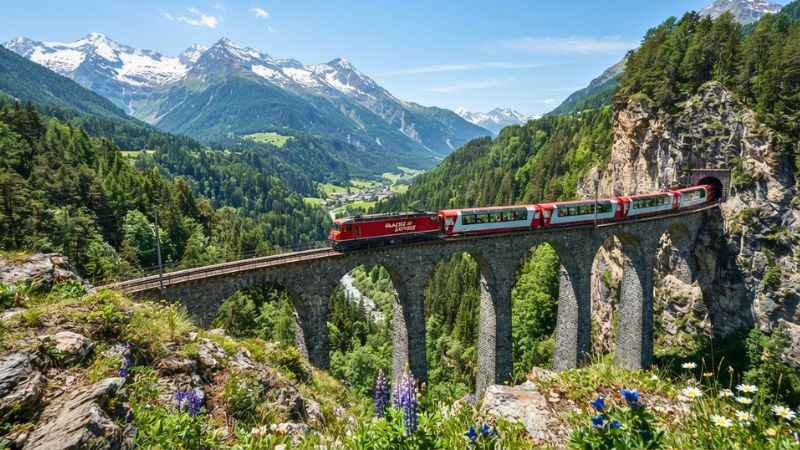
The Glacier Express connects Zermatt and St. Moritz on one of the most scenic train routes in the world. The full journey takes about eight hours, crossing 291 bridges and passing through 91 tunnels.
This train earns its place on any Switzerland bucket list because it turns travel time into the main event. You do not just reach a destination, you experience the Alps the entire way.
Expect wide glass-roofed windows, rotating mountain views, and a slow, relaxed pace that feels completely different from normal train travel. The landscape shifts from deep valleys to high alpine passes covered in snow, even in summer.
Personal tip: Sit on the left side if traveling from Zermatt to St. Moritz for the better mountain views on the Oberalp Pass section.
- Best time: Summer for full scenery, winter for snow-covered valleys
- Time needed: Full day for the complete route
- Approximate cost: 150 to 250 CHF depending on season and seat class
- Nearby attractions: Zermatt village and the Matterhorn, St. Moritz lakes
- Perfect for: Couples, photographers, luxury travelers
- Difficulty: Easy
- Photo spot: Oberalp Pass, the highest point on the route
- Common mistake: Booking the afternoon departure. Morning trains usually have clearer mountain visibility before afternoon clouds build up.
Is this experience right for you? Best for: First-time visitors who want one unforgettable scenic train ride. Skip if: You are short on time or prefer fast point-to-point travel.
2. Stand at the Top of Europe: Jungfraujoch
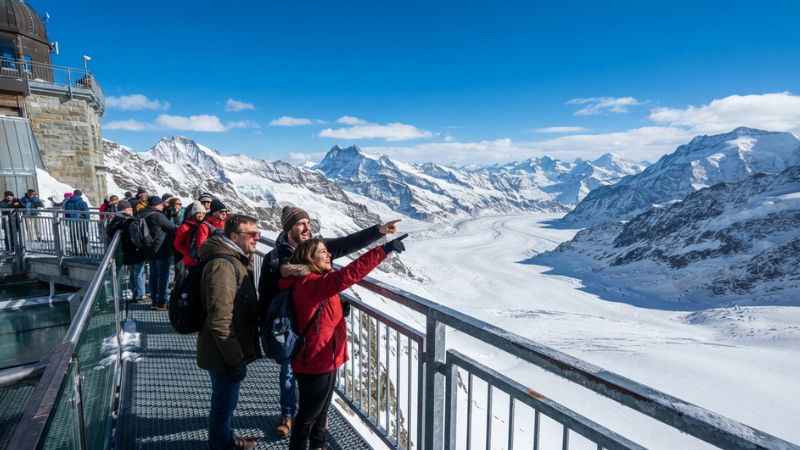
Jungfraujoch sits at 3,454 meters and holds the title of the highest railway station in Europe. A cogwheel train carries you through tunnels cut into the mountain, ending at a station surrounded by glaciers.
This spot deserves a place on your list because it is one of the few places where you can stand on a glacier without any climbing gear. The Aletsch Glacier, the longest in the Alps, stretches out below the main viewing terrace.
You will find an ice palace carved into the glacier, an outdoor snow area, and viewing platforms that look out over Germany, France, and Italy on a clear day.
Personal tip: Bring sunglasses and sunscreen. Sunlight reflecting off the snow at this altitude is much stronger than it looks.
- Best time: June to September for stable weather and open trails
- Time needed: Full day, including train travel
- Approximate cost: 200 to 250 CHF for train tickets from Interlaken
- Nearby attractions: Grindelwald and Wengen villages
- Perfect for: Families, first-time visitors, adventure lovers
- Difficulty: Easy, mostly accessible by train
- Photo spot: Sphinx Observation Terrace
- Common mistake: Booking tickets on arrival day. Jungfraujoch often sells out in peak summer, so book at least a few days ahead.
Is this experience right for you? Best for: Anyone who wants a true high-altitude experience without hiking. Skip if: You have limited mobility with stairs, or you dislike crowds at peak hours.
3. Explore Lauterbrunnen Valley and Its Waterfalls
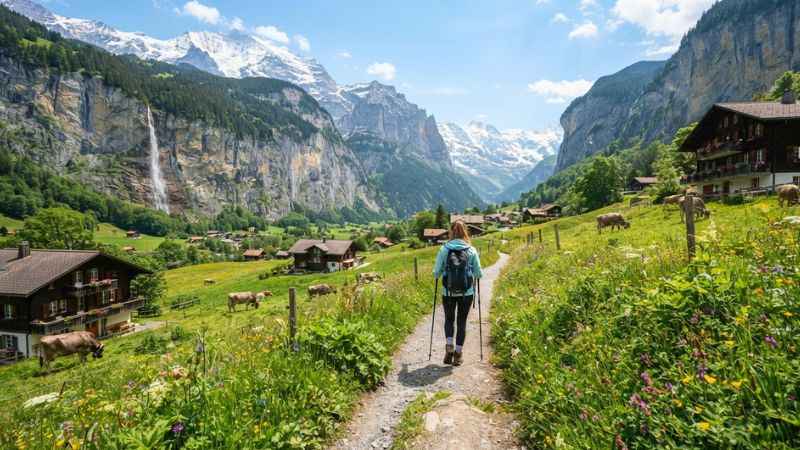
Lauterbrunnen is a narrow valley with 72 waterfalls dropping from cliffs on both sides. The most famous, Staubbach Falls, drops almost 300 meters straight down near the edge of the village.
This valley belongs on your bucket list because it shows a quieter, more peaceful side of the Alps. Steep cliffs rise on either side of a flat green valley floor dotted with wooden chalets and grazing cows.
Walking through the village, you can hear water everywhere. The valley also serves as a base for exploring Wengen and Mürren, two car-free villages higher up the mountainside.
Personal tip: Visit Trümmelbach Falls, a set of underground waterfalls inside the mountain, for a different experience than the open-air falls in the village.
- Best time: Late spring for higher water flow from melting snow
- Time needed: Half day for the village, full day with Trümmelbach Falls
- Approximate cost: 20 to 30 CHF for Trümmelbach Falls entry
- Nearby attractions: Wengen, Mürren, Schilthorn cable car
- Perfect for: Photographers, couples, budget travelers
- Difficulty: Easy
- Photo spot: The main street with Staubbach Falls in the background
- Common mistake: Rushing through in an hour. The valley rewards a slower pace and a short walk beyond the main street.
Is this experience right for you? Best for: Travelers who want quiet, scenic moments without a packed schedule. Skip if: You prefer city sightseeing over nature-focused stops.
4. Take a Boat Ride on Lake Lucerne
Lake Lucerne stretches between mountains, small towns, and forested shorelines. Historic paddle steamers cross the lake regularly, connecting Lucerne city with smaller lakeside villages.
This experience earns its spot because it offers a relaxed way to see the Alps from water level. Instead of climbing up for a view, you sit back and let the boat carry you past mountains, church towers, and quiet bays.
Many boats have open-air decks, which are ideal for photos, along with indoor seating and small cafes for a coffee or a Swiss meal.
Personal tip: Choose a first-class ticket on a historic paddle steamer for a quieter upper deck with fewer crowds.
- Best time: Summer for outdoor deck seating, autumn for fewer crowds
- Time needed: Half day for a short loop, full day for a longer route
- Approximate cost: 30 to 80 CHF depending on route and class
- Nearby attractions: Lucerne Old Town, Mount Rigi, Mount Pilatus
- Perfect for: Families, couples, relaxed travelers
- Difficulty: Easy
- Photo spot: The deck facing Mount Pilatus
- Common mistake: Choosing a route with too many stops. A direct scenic route often shows more mountain views than a route with many town stops.
Is this experience right for you? Best for: Travelers who want a relaxed, scenic activity between busier days. Skip if: You get seasick easily or prefer land-based sightseeing only.
5. Ride a Cable Car up Mount Titlis
Mount Titlis reaches 3,238 meters and is famous for the world’s first rotating cable car, which turns 360 degrees during the ascent. At the top, you find snow year-round, along with a glacier cave and a suspension bridge.
This mountain belongs on your list because it combines several experiences in one stop: rotating views during the ride, snow activities at the summit, and one of the highest suspension bridges in Europe.
The Titlis Cliff Walk bridge stretches 100 meters across a ridge, offering a clear view down into the valley below.
Personal tip: Visit early morning for the clearest skies before afternoon clouds often roll in.
- Best time: Year-round, though summer offers easier travel conditions
- Time needed: Half day
- Approximate cost: 90 to 110 CHF for the return cable car ticket
- Nearby attractions: Engelberg village, Lake Lucerne
- Perfect for: Families, adventure lovers
- Difficulty: Easy, some sections require sturdy footwear
- Photo spot: The Cliff Walk suspension bridge
- Common mistake: Skipping the glacier cave. It is included in the ticket price but often missed by visitors focused only on the summit view.
Is this experience right for you? Best for: Families and travelers who want snow activities without a long hike. Skip if: You are afraid of heights, since the bridge and cable car involve steep drops.
| Experience | Best Season | Budget | Time Needed | Crowds | Photography Rating |
|---|---|---|---|---|---|
| Glacier Express | Summer | High | Full day | Moderate | Excellent |
| Jungfraujoch | Summer | High | Full day | High | Excellent |
| Lauterbrunnen Valley | Spring | Low | Half to full day | Low | Excellent |
| Lake Lucerne Boat Ride | Summer | Moderate | Half day | Moderate | Good |
| Mount Titlis | Year-round | Moderate | Half day | Moderate | Excellent |
6. Wander the Old Town of Lucerne
Lucerne’s Old Town sits along the Reuss River, with painted buildings, cobblestone streets, and the wooden Chapel Bridge, one of the oldest covered bridges in Europe.
This city deserves a place on your bucket list because it balances history with easy access to the mountains. You can spend a morning walking through medieval streets, then reach a mountain peak by cable car in the afternoon.
The city walls above the Old Town offer a quiet walk with views over red rooftops and the lake beyond.
Personal tip: Walk the Chapel Bridge early in the morning before tour groups arrive for quieter photos.
- Best time: Spring and autumn for mild weather and fewer tourists
- Time needed: Half day
- Approximate cost: Free to walk, 10 to 20 CHF for museum entry if desired
- Nearby attractions: Lake Lucerne, Mount Pilatus, Mount Rigi
- Perfect for: Couples, families, budget travelers
- Difficulty: Easy
- Photo spot: Chapel Bridge with the Water Tower
- Common mistake: Only visiting the bridge. The nearby city walls and Lion Monument are quieter and just as worthwhile.
Is this experience right for you? Best for: Travelers who want a mix of history and mountain access. Skip if: You prefer to avoid cities entirely on your trip.
7. See the Matterhorn from Zermatt
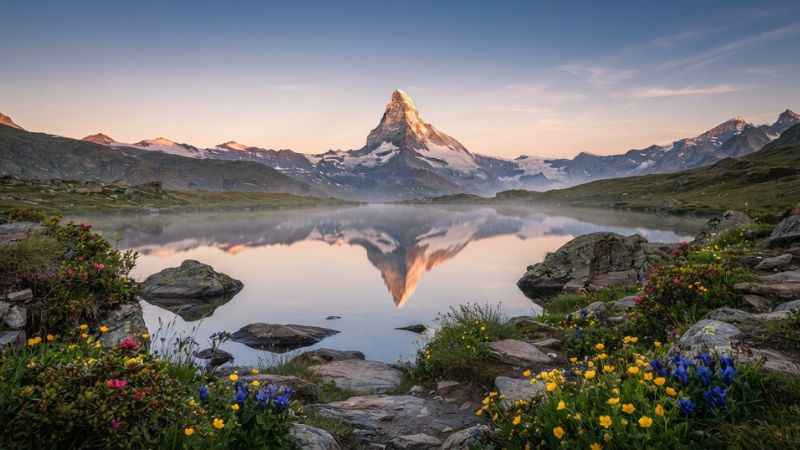
Zermatt is a car-free village sitting directly below the Matterhorn, one of the most recognized mountain peaks in the world. Trains and electric taxis are the only transport allowed in town.
This village earns its place on the list because of how close and clear the Matterhorn view feels. Unlike many mountain viewpoints that require travel, the peak is visible from many spots right in the village.
Cable cars from Zermatt reach several high viewpoints, including Gornergrat and Matterhorn Glacier Paradise, each offering a different angle on the mountain.
Personal tip: Walk to Lake Stellisee on a calm morning. The still water often creates a clear reflection of the Matterhorn.
- Best time: Summer for hiking access, winter for skiing
- Time needed: One to two full days
- Approximate cost: 40 to 100 CHF per cable car ride
- Nearby attractions: Gornergrat railway, Matterhorn Glacier Paradise
- Perfect for: Photographers, adventure lovers, luxury travelers
- Difficulty: Easy in town, moderate for surrounding hikes
- Photo spot: Lake Stellisee or the Gornergrat viewpoint
- Common mistake: Only viewing the Matterhorn from town. Cloud cover often clears at higher elevations even when the village view is blocked.
Is this experience right for you? Best for: First-time visitors who want the classic Swiss mountain view. Skip if: You have a tight budget, since Zermatt is one of the pricier towns.
8. Visit the Rhine Falls
The Rhine Falls near Schaffhausen is the largest waterfall in Europe by volume. Water crashes over wide rock formations, creating a steady roar that can be heard well before you see it.
This stop belongs on your bucket list because it offers a completely different kind of natural power compared to the quiet mountains and lakes elsewhere in Switzerland.
Boats can take you close to the falls, including to a rock platform in the middle of the water, for a direct view of the current.
Personal tip: Take the boat trip to Rock Island in the middle of the falls for the closest possible view.
- Best time: Late spring for the strongest water flow
- Time needed: Half day
- Approximate cost: 5 CHF entry, 10 to 20 CHF for boat rides
- Nearby attractions: Schaffhausen Old Town, Lake Constance
- Perfect for: Families, budget travelers
- Difficulty: Easy
- Photo spot: The lower viewing platform near the water
- Common mistake: Visiting only from the main viewing platform. The boat ride gets you much closer and shows the scale of the falls better.
Is this experience right for you? Best for: Travelers passing between Zurich and northern Switzerland. Skip if: Waterfalls are not a priority and time is limited.
9. Explore Interlaken and Its Adventure Sports
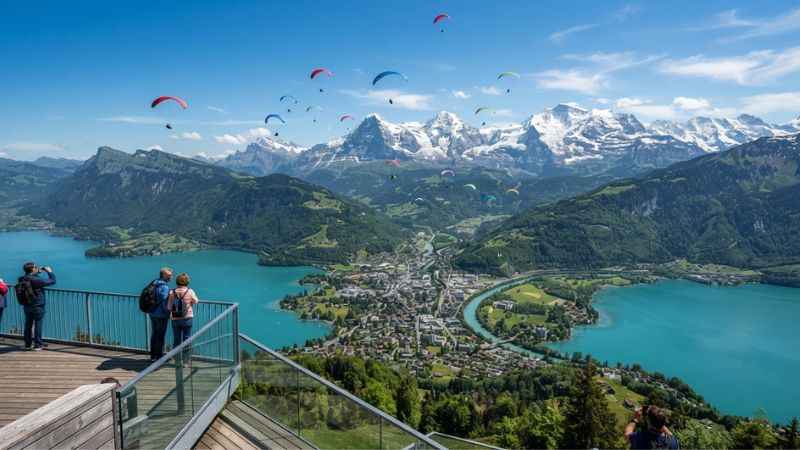
Interlaken sits between two lakes, Thun and Brienz, and serves as the main hub for adventure sports in the Bernese Alps. Paragliding, canyoning, and skydiving companies operate here throughout the year.
This town earns its spot because it turns the Alps into an activity, not just a view. Paragliding over the valley, in particular, offers a completely different perspective on the surrounding mountains.
Even without adventure sports, Interlaken works well as a base for day trips to Jungfraujoch, Lauterbrunnen, and Grindelwald.
Personal tip: Book paragliding early in the day, since flights are often cancelled later due to wind conditions.
- Best time: Summer for the widest range of activities
- Time needed: Half day for activities, full day including day trips
- Approximate cost: 150 to 200 CHF for paragliding, less for canyoning
- Nearby attractions: Lauterbrunnen, Grindelwald, Lake Thun
- Perfect for: Adventure lovers, couples
- Difficulty: Moderate to hard depending on activity
- Photo spot: Höhematte Park with mountain backdrop
- Common mistake: Not checking weather flexibility. Adventure sports depend heavily on wind and visibility, so build a buffer day into your schedule.
Is this experience right for you? Best for: Travelers who want an adrenaline activity alongside scenic views. Skip if: You have limited time or prefer low-key sightseeing.
10. Walk Through a Traditional Swiss Village
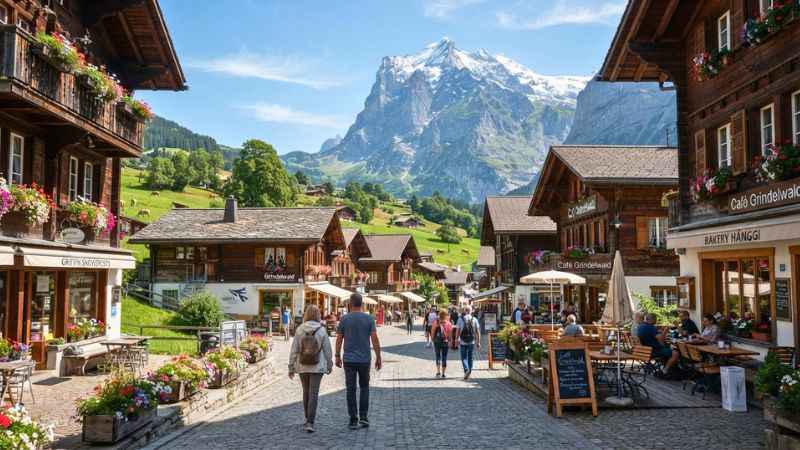
Villages like Gimmelwald and Grindelwald show a side of Switzerland that feels untouched by modern development. Wooden chalets, small farms, and narrow paths replace the traffic and crowds of bigger towns.
These villages deserve a place on your list because they show daily Swiss life, not just tourist sites. Cows with bells still graze on steep hillsides, and many buildings date back over a century.
Gimmelwald, in particular, is car-free and reachable only by cable car, keeping it quiet even during peak season.
Personal tip: Stay one night in a mountain village instead of only visiting during the day. Evenings are noticeably quieter and the sunset light on the peaks is worth it.
- Best time: Summer for open trails, winter for a snow-covered setting
- Time needed: Half day visit, full experience with an overnight stay
- Approximate cost: 20 to 40 CHF per night for basic mountain lodging
- Nearby attractions: Mürren, Schilthorn cable car
- Perfect for: Couples, budget travelers, photographers
- Difficulty: Easy
- Photo spot: Village paths with mountain backdrop
- Common mistake: Treating it as a quick photo stop. Slowing down for a coffee or short walk shows a different side of the village than a five-minute visit.
Is this experience right for you? Best for: Travelers who want authentic village life over famous landmarks. Skip if: You need modern amenities or nightlife nearby.
11. Taste Swiss Chocolate and Cheese Fondue
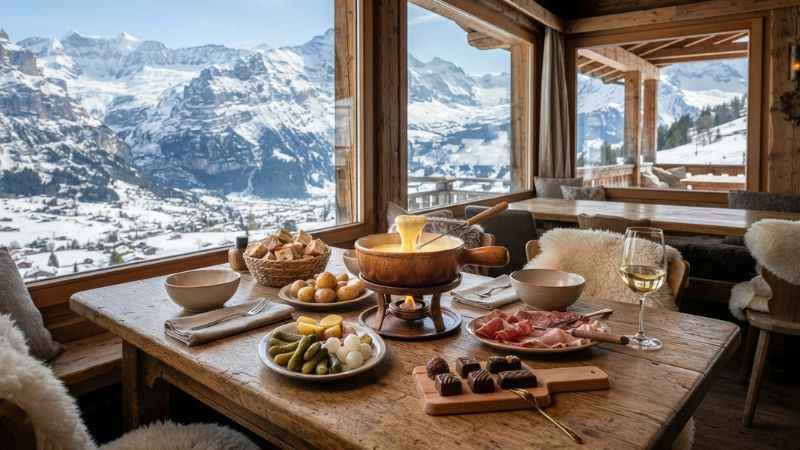
Swiss food culture centers around a few simple, high-quality staples. Chocolate shops in Zurich and Lucerne sell handmade truffles and bars, while mountain restaurants serve cheese fondue made from local alpine cheese.
This experience belongs on your bucket list because food adds a cultural layer to the trip that scenery alone cannot. Fondue, in particular, is often shared, making it a social part of the evening rather than just a meal.
Chocolate-making workshops are available in several cities, letting you see the process from bean to bar.
Personal tip: Order fondue in a mountain village restaurant rather than a city one. The setting adds to the experience, and portions are often more generous.
- Best time: Fondue is best in cooler months, chocolate shopping works year-round
- Time needed: One to two hours for a meal, half day for a workshop
- Approximate cost: 25 to 40 CHF for fondue, 20 to 50 CHF for chocolate workshops
- Nearby attractions: Local markets and chocolate shops in most towns
- Perfect for: Couples, families, food lovers
- Difficulty: Easy
- Photo spot: A rustic mountain restaurant table setting
- Common mistake: Ordering fondue for one person. It is traditionally a shared dish, and most restaurants serve it for two or more.
Is this experience right for you? Best for: Travelers who want to experience Swiss culture through food. Skip if: You have dairy restrictions, since fondue is cheese-based.
12. Hike a Classic Swiss Alpine Trail
Switzerland has thousands of kilometers of marked hiking trails, ranging from flat valley walks to steep alpine routes. The Five Lakes Walk near Zermatt and the trails around Schynige Platte near Interlaken are popular choices for first-time hikers.
Hiking earns its place on this list because it lets you slow down and experience the mountains at your own pace, away from cable cars and crowds.
Trails are well marked with yellow signs showing estimated walking times, making route planning simple even for visitors unfamiliar with the area.
Personal tip: Start hikes early in the morning. Afternoon weather in the Alps can change quickly, even on clear mornings.
- Best time: June to September when snow has cleared from higher trails
- Time needed: Half day for shorter routes, full day for longer trails
- Approximate cost: Free, aside from cable car access to trailheads
- Nearby attractions: Zermatt, Interlaken, Grindelwald
- Perfect for: Adventure lovers, photographers
- Difficulty: Moderate, varies by trail
- Photo spot: Alpine lakes reflecting nearby peaks
- Common mistake: Underestimating trail difficulty. Signposted times assume a steady pace, so build in extra time for photo stops.
Is this experience right for you? Best for: Travelers who want an active, closer connection to the mountains. Skip if: You have limited mobility or prefer sightseeing without walking.
Which Switzerland Experience Matches Your Travel Style?
Not every experience suits every traveler. Use this quick guide to prioritize your list.
For couples: Glacier Express, Lake Lucerne boat ride, traditional Swiss villages
For photographers: Lauterbrunnen Valley, Zermatt and the Matterhorn, alpine hikes
For families: Jungfraujoch, Mount Titlis, Rhine Falls
For adventure lovers: Interlaken adventure sports, alpine hiking, Mount Titlis
For luxury travelers: Glacier Express first class, Zermatt, private mountain dining
For budget travelers: Lauterbrunnen Valley, Rhine Falls, traditional villages
Sample Itinerary
5-Day Switzerland Bucket List
Day 1: Arrive in Zurich, travel to Lucerne, explore the Old Town and Chapel Bridge.
Day 2: Take a boat ride on Lake Lucerne, ride the cable car up Mount Titlis.
Day 3: Travel to Interlaken, settle in, and explore Höhematte Park.
Day 4: Day trip to Jungfraujoch, then relax in Interlaken in the evening.
Day 5: Visit Lauterbrunnen Valley, then depart or continue to your next destination.
7-Day Switzerland Bucket List
Day 1: Arrive in Zurich, explore the city center for the afternoon.
Day 2: Travel to Lucerne, walk the Old Town, boat ride on Lake Lucerne.
Day 3: Ride Mount Titlis, return to Lucerne or continue to Interlaken.
Day 4: Explore Interlaken, try paragliding or another adventure activity.
Day 5: Day trip to Jungfraujoch from Interlaken.
Day 6: Explore Lauterbrunnen Valley, stay overnight in Gimmelwald or Mürren.
Day 7: Travel to Zermatt, view the Matterhorn, and enjoy fondue in the evening.
Budget Breakdown
| Category | Budget Traveler | Mid-Range Traveler | Luxury Traveler |
|---|---|---|---|
| Accommodation | 40-70 CHF | 150-250 CHF | 400+ CHF |
| Food | 25-40 CHF | 60-90 CHF | 150+ CHF |
| Transport | 20-40 CHF | 40-80 CHF | 100+ CHF |
| Activities | 20-50 CHF | 80-150 CHF | 250+ CHF |
| Daily Estimate | 105-200 CHF | 330-570 CHF | 900+ CHF |
Common Mistakes Tourists Make
Trying to visit too many places. Switzerland is small on a map, but mountain travel takes longer than it looks. Fewer stops with more time at each usually creates a better trip.
Ignoring mountain weather. Clear skies in the valley do not guarantee clear skies at the summit. Check mountain-specific forecasts before cable car or train trips.
Buying train tickets individually. If you plan several train journeys, compare individual ticket costs against a Swiss Travel Pass before booking each one separately.
Booking Jungfraujoch too late. Tickets often sell out in peak summer weeks. Book a few days ahead whenever possible.
Not carrying layers. Temperatures can shift 15 degrees or more between valley towns and mountain summits, even in summer.
Packing Essentials
- Sturdy walking shoes
- Rain jacket
- Power bank
- Travel adapter (Type J plug)
- Refillable water bottle
- Layered clothing
- Camera
- Sunglasses
Frequently Asked Questions
Is Switzerland expensive?
Yes, Switzerland is one of the more expensive countries in Europe, especially for food and accommodation. Careful planning, like buying groceries and using regional trains, can help control costs.
How many days are enough for Switzerland?
Five days covers the main highlights, while seven to ten days allows for a more relaxed pace with villages and hikes included.
What is the most beautiful place in Switzerland?
This depends on personal taste, but Lauterbrunnen Valley and the area around Zermatt are consistently rated among the most scenic regions in the country.
Can you visit Switzerland without a car?
Yes. The train, bus, and boat network covers nearly every town and mountain base station, making a car unnecessary for most itineraries.
Is Switzerland safe?
Switzerland has a low crime rate and is generally considered very safe for travelers, including solo travelers.
Which month has the best weather?
July and August offer the most stable weather, though June and September have fewer crowds with still good conditions.
What shouldn’t I miss on a first visit?
At minimum, plan for one scenic train ride, one high altitude mountain, and one traditional village.
Should I buy the Swiss Travel Pass?
If you plan multiple train journeys across regions, the pass often saves money. If you are staying in one area, individual tickets may be cheaper.
Do I need to book cable cars in advance?
For popular routes like Jungfraujoch or Titlis in peak summer, booking a few days ahead is recommended to avoid sold out time slots.
Is tipping expected in Switzerland?
Service charges are usually included in restaurant bills, so tipping is optional and typically limited to rounding up the total.
Conclusion
If this is your first visit, prioritize mountain experiences, one scenic train journey, and at least one traditional Swiss village. These three elements capture what makes Switzerland different from other European destinations.
Focus on creating a balanced itinerary instead of trying to see everything. A slower pace with fewer stops usually leads to a more memorable trip than a packed schedule that rushes through the Alps. Choose the experiences that match your travel style, build in buffer time for weather, and let the mountains set the pace for your trip.

Emma Rose is the founder of TryHardGuides.co.uk and a senior content strategist specializing in lifestyle, personal development, and digital entrepreneurship. With a focus on evidence-based living, she produces actionable content designed to help readers make informed life decisions and navigate the evolving tech-lifestyle landscape. As the editorial lead, Emma oversees the site’s mission to provide trustworthy, high-authority information. Her work reflects a commitment to personal growth, transparency, and the pursuit of a well-balanced, informed life.