
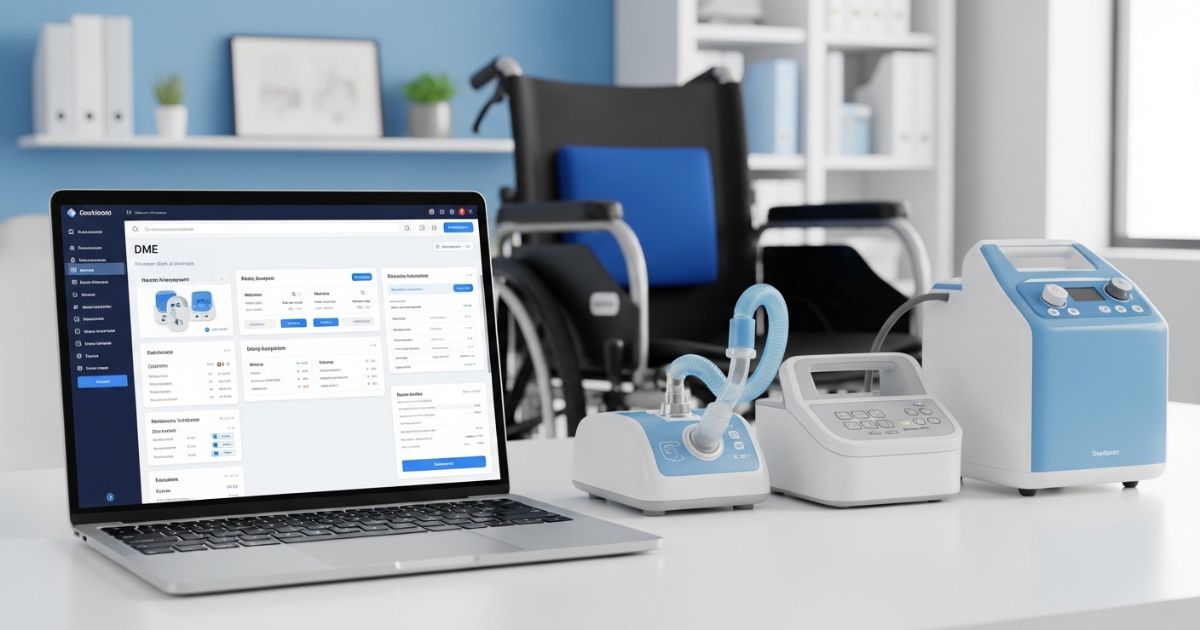
The durable medical equipment industry runs on precision. A single billing error can trigger a claim denial. A missed delivery confirmation can delay patient care. A compliance gap can invite an audit. For HME/DME suppliers navigating this environment, technology is not a convenience — it is the operational backbone that determines whether a business grows or struggles to survive.
This article explores what modern dme software does, why the stakes are so high in selecting the right platform, how leading solutions like brightree software have shaped the market, and what features suppliers should prioritize when evaluating their options.
What Is DME Software and Why Does It Matter?
Durable medical equipment software is a category of healthcare IT solutions designed to manage the full operational lifecycle of HME/DME suppliers. This includes everything from patient intake and order management to insurance verification, delivery scheduling, billing, claims submission, and regulatory compliance.
Unlike generic practice management systems, purpose-built dme software is engineered around the specific workflows, payer rules, and documentation requirements that define the HME industry. Medicare’s complex coverage criteria, prior authorization mandates, CMN (Certificate of Medical Necessity) tracking, and HIPAA-compliant data handling — none of these are afterthoughts in a well-designed DME platform. They are woven into every workflow.
The market for durable medical equipment is growing rapidly. An aging U.S. population, the rise of home-based care models, and the expansion of chronic disease management programs are all driving demand for wheelchairs, oxygen therapy equipment, CPAP devices, hospital beds, and thousands of other products. As volume increases, so does operational complexity — and that complexity is exactly what strong DME software is designed to absorb.
Core Modules Every DME Platform Should Offer
Before comparing vendors or evaluating specific products, it helps to understand the functional categories that define a complete DME solution.
1. Patient and Order Management
Every DME transaction starts with a patient. A robust intake module captures demographic information, insurance details, referring physician data, and the specific equipment being requested. Orders flow from intake into fulfillment, with status tracking that keeps every stakeholder — from billing staff to delivery technicians — aligned on where each order stands.
Good order management in DME software also handles product catalog complexity. A supplier carrying thousands of SKUs, each with its own HCPCS code, modifier requirements, and payer-specific documentation rules, needs a system that can automate the mapping between product, payer, and compliance requirement without requiring manual lookups at every step.
2. Insurance Verification and Prior Authorization
Insurance eligibility verification is a high-volume, high-stakes task in the HME industry. Submitting a claim against inactive coverage or missing a prior authorization requirement results in denial — and recoupment efforts cost far more in staff time than the original claim was worth.
Modern dme software automates eligibility checks in real time, flags coverage gaps before orders ship, and manages prior authorization workflows with built-in tracking and deadline alerts. Some platforms integrate directly with payer portals, reducing the manual effort involved in chasing authorizations for items like power wheelchairs or home oxygen.
3. Document Management and CMN Tracking
Certificate of Medical Necessity documentation is one of the most audit-sensitive areas in DME billing. CMS and other payers require that CMNs be completed accurately, signed by the appropriate clinical provider, and maintained on file for the duration of the audit lookback window.
Purpose-built dme software manages this documentation lifecycle — from initial CMN creation to recertification tracking — with automated reminders that prevent suppliers from delivering equipment without the paperwork to support it. Fax integration, e-signature capabilities, and scanned document storage are standard features in competitive platforms.
4. Delivery and Logistics Management
For many HME suppliers, the physical logistics of equipment delivery represent a significant operational cost. Route optimization, delivery confirmation, signature capture, and technician scheduling all fall within the scope of a full-service DME platform. Mobile apps that connect field staff to the central system in real time have become standard in modern solutions, eliminating the paper-based delivery confirmation workflows that previously created delays and documentation gaps.
5. Billing and Revenue Cycle Management
DME billing is among the most complex in all of healthcare. HCPCS coding, modifier selection, documentation attachment requirements, secondary billing rules, and coordination of benefits all require specialized knowledge — and specialized software to execute reliably at scale.
A high-quality dme software platform handles claim scrubbing, electronic submission to Medicare and commercial payers, remittance processing, denial management, and secondary claim generation within a single integrated workflow. Suppliers that rely on disconnected billing tools, manual claim preparation, or spreadsheet-based AR tracking consistently see higher denial rates and slower cash flow than those on purpose-built platforms.
6. Compliance and Audit Readiness
Regulatory risk is ever-present in DME. Medicare audits — RAC, ZPIC, and MAC reviews — can result in significant recoupment demands for suppliers that cannot produce documentation on demand. Accreditation requirements from ACHC or The Joint Commission add another layer of compliance obligation.
Leading DME platforms include built-in compliance tools: audit trail logging, documentation completeness checks, accreditation workflow support, and reporting dashboards that let compliance officers monitor risk across the entire order population.
Brightree Software: A Market-Defining Platform
No conversation about DME technology is complete without examining brightree software, which has become one of the most widely recognized names in the HME/DME industry.
Brightree was founded in 2002 with a specific focus on the post-acute and home medical equipment markets. The platform was built cloud-native at a time when most competitors were still operating server-based systems, which gave it structural advantages in scalability, remote access, and ongoing feature development. That architectural decision proved prescient — cloud deployment became the industry standard over the following two decades, and Brightree had already spent years optimizing for it.
Brightree software covers the full spectrum of DME operations: patient management, order workflow, eligibility verification, document management, delivery logistics, billing, and reporting. Its cloud-based architecture means that updates, security patches, and new features are deployed automatically, without requiring suppliers to manage on-premise IT infrastructure.
The platform serves a wide range of HME/DME businesses — from small independent suppliers to large regional and national providers. Its scalability is a frequently cited advantage among suppliers that have grown significantly over time without needing to migrate to a different platform.
One of Brightree’s distinctive strengths is its integrated patient engagement and connectivity ecosystem. The platform has developed interfaces with referral sources, payers, and clinical documentation systems, reducing the manual handoffs that slow down order processing and create compliance gaps. For suppliers focused on respiratory therapy, complex rehab, orthotics and prosthetics, or infusion services, Brightree has built out specialty-specific workflows that address the unique documentation and billing requirements of each category.
Brightree was acquired by ResMed in 2016, a move that brought significant investment in product development and integration capabilities. ResMed’s focus on sleep and respiratory care has influenced Brightree’s development roadmap, with particularly strong tooling for CPAP resupply workflows, remote patient monitoring integration, and connected device data management.
For DME suppliers evaluating brightree software, it is worth noting that the platform’s depth comes with a corresponding implementation investment. Larger organizations typically realize greater returns from the platform’s advanced capabilities, though Brightree has made ongoing efforts to improve onboarding efficiency for mid-market suppliers.
How DME Software Drives Revenue and Reduces Denials
The financial case for investing in purpose-built dme software is straightforward. Industry benchmarks consistently show that suppliers using integrated DME platforms achieve meaningfully better billing performance than those relying on fragmented or generic tools.
Claim denial rates in DME can range from 5% to 20% or higher depending on the quality of documentation and billing processes in place. Each denied claim represents lost revenue — some of which is never recovered — plus the labor cost of denial management. A platform that reduces denial rates by even a few percentage points can generate returns that far exceed the cost of the software itself.
Beyond denials, the automation embedded in modern dme software reduces the labor required to process each order. Eligibility verification that previously took 10–15 minutes per order can be completed in seconds. CMN tracking that once required manual calendar reminders and spreadsheet management runs automatically in the background. Delivery scheduling that involved phone calls and paper manifests is replaced by digital dispatch and mobile confirmation.
These efficiency gains translate directly into capacity. A billing team using strong dme software can handle a larger order volume without proportional headcount growth, which improves operating margins as the business scales.
Selecting the Right DME Software for Your Organization
The right dme software depends on the size, specialty mix, and strategic direction of each individual supplier. A few key evaluation criteria to prioritize:
Integration ecosystem. The most capable platform in isolation is limited if it cannot connect to your referral sources, payer portals, and clinical partners. Evaluate each vendor’s existing integration library and their approach to building new connections.
Specialty support. If your business includes O&P, complex rehab, infusion, or respiratory therapy, verify that the platform has dedicated workflows for those categories — not just generic order management that requires heavy customization.
Scalability. If growth is a strategic priority, select a platform designed to scale. Migrating from one DME system to another is disruptive and expensive — choosing a platform that can grow with the business avoids that cost.
Implementation and support. Even the best software fails if implementation is poorly managed. Evaluate the vendor’s onboarding methodology, training resources, and ongoing support model before signing a contract.
Compliance tooling. Given the audit environment in DME, ask specifically about audit trail capabilities, documentation completeness checks, and how the platform supports accreditation workflows.
Brightree software performs well across most of these dimensions, particularly for mid-to-large suppliers and those with complex specialty operations. Smaller suppliers should evaluate whether the platform’s depth aligns with their operational scale and budget.
The Future of DME Technology
The next generation of dme software is being shaped by several converging trends. Artificial intelligence is beginning to appear in denial prediction, documentation completeness scoring, and demand forecasting. Remote patient monitoring integration is becoming standard for suppliers in respiratory and cardiac equipment categories. Patient-facing digital tools — online portals, mobile apps, automated resupply programs — are improving the patient experience while reducing inbound call volume.
Interoperability is also advancing. As the healthcare industry moves toward greater data exchange between providers, payers, and suppliers, DME platforms that participate in this connected ecosystem will deliver increasing value. Electronic CMN workflows, direct EHR integration, and real-time payer communication are all areas where leading platforms, including brightree software, are investing development resources.
Suppliers that invest in purpose-built, continuously evolving dme software today are positioning themselves to operate efficiently in this more connected, more automated future. Those that delay are not simply accepting a present-day cost — they are falling behind competitors that are already capturing the efficiency gains that modern platforms deliver.
Conclusion
Running a successful HME/DME business in today’s regulatory and competitive environment requires more than clinical knowledge and reliable equipment. It requires operational infrastructure that can handle complex billing, maintain airtight documentation, optimize delivery logistics, and stay ahead of compliance requirements — all simultaneously.
Purpose-built dme software is that infrastructure. Platforms like brightree software have demonstrated that investing in the right technology creates durable competitive advantages: lower denial rates, faster cash flow, better compliance posture, and the operational capacity to grow without proportional cost increases.
For suppliers evaluating their technology stack, the question is not whether to invest in a strong DME platform — it is which platform best fits their specific business and how quickly they can complete the transition. In a market where margins are under pressure and audit risk is real, the right software is not an expense. It is a foundation.

Alex Taylor is a seasoned technology writer and systems specialist with over 5 years of experience in hardware maintenance and digital troubleshooting. He specializes in practical tech guides, focusing on making complex technical repairs and software optimization accessible to everyday users. Alex personally reviews and fact-checks every guide to ensure that maintenance tips are safe, effective, and budget-friendly. Whether it’s a hardware fix or a software setup, his work is driven by a passion for technical clarity and real-world utility.