
Do cracks in walls or sagging floors have you worried about your home’s health? Every house relies on key structural elements like the foundation and framing to stay sturdy. In this blog, you’ll learn what these parts are and why they matter.
Stick around; understanding your home might save you big headaches later!
Foundation: The Base of the Home
The foundation keeps your house standing strong and steady. Without it, everything above could crumble like a cookie.
Types of Foundations: Slab, Crawlspace, and Basement
A home’s foundation is its base. It supports the entire structure and keeps it stable.
- Slab Foundation
This type of foundation is solid and made of concrete. It works well in warmer areas where the ground does not freeze often. A slab rests directly on the soil, which must be strong enough to bear the weight. No space exists beneath it, so plumbing and utilities are installed before pouring the concrete. - Crawlspace Foundation
Crawlspaces leave a small gap between the ground and the house floor. They are usually 18 inches high or more, creating room for pipes and wiring access. These are common in wetter regions since they help prevent moisture from entering living spaces. However, they may need extra support if built on weak soil. - Basement Foundation
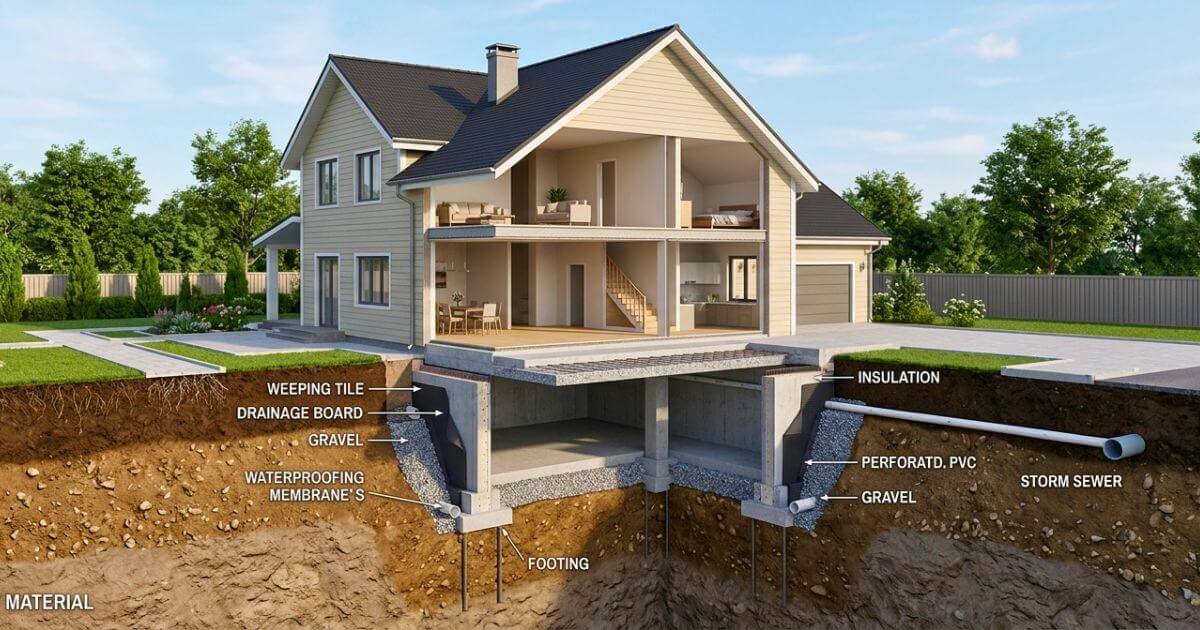
Basements add extra usable space below ground level by creating a taller foundation wall system. They can serve as storage or living areas but must resist heavy earth pressure from all sides. Drainage systems are crucial for them to avoid water damage over time, especially with heavy rain or poor landscaping outside the home.
Importance of Foundation Drainage Systems
Water is a home’s worst enemy. Without a proper foundation drainage system, rainwater and runoff can seep into the foundation. This weakens the structure over time and leads to costly repairs.
Excess water around your home causes soil to shift or swell. This movement puts pressure on the foundation, leading to cracks. Gutters, downspouts, and sloped landscaping help direct water away from your house.
“A good drainage system isn’t optional; it’s essential,” as many experts say. Regular checks for pooling water can save you headaches later on!
Framing: The Skeleton of the House
Framing holds everything together, as the bones of your body do for you. It gives shape to your home and supports its strength.
Walls and Studs
Studs form the backbone of your walls. These vertical boards are usually 2×4 or 2×6 inches, spaced 16 or 24 inches apart. They hold drywall, anchor windows and doors, and carry roof loads down to the foundation.
Double top plates sit at the top of studs for extra strength. They spread weight evenly from the upper floors or roofs. Over doors and windows, headers made from LVLs or solid wood bear heavy loads. Without these parts in place, walls wouldn’t stand strong against time or pressure.
Joists and Beams
Walls rely on joists and beams to bear the weight of your home’s structure. Joists, usually made from lumber, I-joists, or floor trusses, span horizontally between walls and carry live loads like furniture and people.
They also support dead loads such as fixtures or subflooring, like Advantech or plywood.
Beams handle larger spans where extra strength is needed. These heavy-duty supports make open layouts possible by reducing the need for columns in key spaces like living rooms or basements.
A strong beam ensures stability while distributing weight evenly to avoid sagging floors or cracking ceilings.
A solid beam is the backbone every house needs.
Roof Structure
The roof takes a beating from the weather every day, so it has to be strong. Understanding its parts can save you headaches down the line.
Rafters and Trusses
Rafters and trusses carry the roof’s weight to the home’s walls. Rafters are sloped beams that meet at the peak of a roof, often seen in older or more traditional homes. They need proper sizing based on building code span tables to prevent sagging.
Trusses are pre-engineered structures made with triangular frameworks, offering strength and efficiency. Unlike rafters, they spread loads evenly across exterior walls. OSB sheathing ties this system together for added stability.
Using either option depends on design needs and budget constraints.
Importance of Proper Roofing Materials
Good roofing materials shield your home from harsh weather. They also help with insulation, keeping energy costs low during hot summers or cold winters. Shingles or tiles that are worn out, curled, or missing can lead to leaks and costly damage over time.
Upgrading to durable options like metal roofs or high-quality asphalt shingles boosts longevity. Clean gutters play a big role too; they keep water flowing right and stop problems like clogs, leaks, or ice buildup in colder months.
Load-Bearing Walls and Beams
Some walls hold up more than just paint—they support the weight of your home. Know which ones they are before any remodeling plans take off!
Identifying Load-Bearing Walls
Every homeowner should know about load-bearing walls. These walls hold up your house and keep it strong.
- Look at the location of the wall. Load-bearing walls are often in the center of a home, supporting upper floors or the roof.
- Check which direction the floor joists run. If a wall runs perpendicular to the joists, it is likely load-bearing.
- Inspect basement beams and columns. Walls directly above these supports are often load-bearing.
- Pay close attention to exterior walls. Most outer walls carry weight from the roof down to the foundation.
- Notice large openings like in living rooms. The beam above might show that a removed wall was once load-bearing.
- Ask for professional help before tearing down any wall. Even experts need to confirm if walls are safe to remove without harm.
Missing or damaging a load-bearing wall can weaken your house!
Supporting Structures: Columns and Posts
Columns and posts hold up heavy loads. They transfer weight from beams or girders to the foundation. Larger open areas may need these supports for long-span beams. Without them, the structure could weaken over time.
Steel or engineered wood often works best in custom designs. Strong materials prevent sagging or bending under pressure. These supports must anchor firmly to avoid shifting as the house settles.
A poorly placed column can lead to serious stability issues later.
Sheathing and Bracing
Sheathing and bracing hold the house together like a strong hug. They keep walls sturdy against wind and other forces.
Plywood and Structural Panels
Plywood and structural panels strengthen a home’s framework. OSB sheathing is a popular choice for tying framing together. It adds lateral stability, keeping everything secure during high winds or stress.
Subflooring materials like Advantech or plywood connect floor joists firmly, preventing squeaks and movement.
Kiln-dried wood used in these panels has less than 14% moisture content. This process reduces the risk of mold growth and rot over time. Panels come in standard sizes to fit most projects easily but must follow building codes strictly during installation for safety and durability.
Role in Adding Rigidity and Stability
Sheathing and bracing strengthen your home against harsh forces. Sheathing, like plywood or structural panels, spreads pressure from wind or earthquakes across the structure. This stops walls and roofs from shifting or bending under stress.
Bracing connects framing parts tightly. These rigid links improve stability by holding everything in place. In high-risk zones for storms or quakes, building codes often require bracing to handle lateral forces better.
Strong sheathing and secure bracing keep homes safe during tough weather.
Next up is water management systems that protect your home from moisture damage!
Water Management Systems
Water can be sneaky and damaging if not managed well. A good system keeps your home dry and safe from harm.
Gutters and Downspouts
Gutters catch rainwater and channel it away from your home. Downspouts guide the water to the ground, keeping it far from your foundation. This setup stops water from pooling near your house, which could cause soil movement or cracks in the foundation.
Clogged gutters lead to leaks and ice dams. Cleaning them regularly helps avoid these problems. Investing in repairs or upgrades can save you money by preventing costly damage later.
A well-maintained gutter system boosts how well your drainage systems work overall.
Landscaping for Proper Drainage
Good drainage keeps water away from your home. It also protects your foundation and prevents damage.
- Grade the land around your home to slope downward, away from the foundation. This helps water flow away instead of pooling near the house.
- Use plants and shrubs with deep roots to absorb excess water. Choose native plants that thrive in local soil and weather conditions.
- Add rocks or mulch around flower beds to stop soil erosion. These materials also help direct water flow during heavy rains.
- Install hardscaping features like walkways or patios that guide water downhill. Ensure they don’t trap or hold rainwater near the house.
- Monitor problem spots where puddles form after storms. Fill low areas with soil to level them out and improve runoff.
- Avoid planting trees too close to your home’s foundation. Roots can grow into cracks and let moisture seep in, causing serious issues over time.
- Keep gutters clean, as clogged ones lead to overflow that affects landscaping below them. Always check downspouts after big storms for blockages.
- Create swales, shallow ditches lined with grass or pebbles, to direct water safely away from your yard’s key areas.
- Use rain gardens filled with water-loving plants in sections of your yard prone to collecting excess moisture naturally.
- Regularly inspect how water flows across your property during rainfalls or snow melts for early signs of trouble areas to fix quickly afterward!
This links directly with managing water systems around load-bearing structures next!
Signs of Structural Issues
Cracks or sagging can hint at major problems. Spotting these early can save you headaches and money down the line.
Cracks in Walls or Foundation
Visible cracks in walls or foundations can mean trouble. They might show settling, shifting, or more serious structural issues. Tiny hairline cracks are common, but larger ones could hint at bigger problems.
Cracks near windows or doors often point to header or lintel stress. This might need fixing fast.
Water intrusion through foundation cracks makes things worse over time. Look for damp spots during inspections to catch this early. Quick repairs stop small issues from growing into expensive headaches later on!
Sagging or Uneven Floors
Sloping, bouncing, or dipping floors often point to issues with joists, beams, or foundations. A sag near support columns might mean the footing or posts are failing. Watch for these warning signs early.
Small fixes now can stop bigger problems later.
Floors that feel uneven could also signal moisture damage or wood rot beneath them. Check around for unusual softness underfoot. Ignoring these signs may lead to costly structural repairs down the line.
Next up is how regular upkeep protects your home’s structure!
Maintaining Structural Integrity
Taking care of your home’s structure is like keeping your car tuned—it avoids big problems later. A little attention now can save you from costly disasters down the road.
Regular Inspections
Check your home’s structure yearly. Inspect the foundation, roof, and framing for cracks or wear. Look for signs of moisture around water management systems like gutters and downspouts.
Older homes, especially those over 15 to 20 years old, may need professional help. Experts can spot hidden issues early. Small problems grow fast when ignored, so stay proactive with repairs.
Make sure HVAC, plumbing, and electrical systems also get annual inspections. This keeps everything running smoothly without surprises later on. Now let’s look at addressing minor repairs quickly!
Addressing Minor Repairs Promptly
Fix small issues fast. A crack in the wall or a tiny leak can grow into a big, costly problem. Use smart water sensors to spot leaks early and take quick action. Replace worn materials like shingles before they fail completely.
Proactive care saves money and stress. Regularly check for signs of damage, such as sagging beams or peeling paint. Prompt repairs protect your home’s value and keep it safe over time.
Conclusion
Knowing your home’s structure isn’t just for builders. It helps you protect your biggest investment. Foundations, walls, and roofs all need care to keep things strong and safe. Spotting problems early can save money and stress later.
Stay curious, stay proactive, and let your home stand tall for years!

Alex Taylor is a seasoned technology writer and systems specialist with over 5 years of experience in hardware maintenance and digital troubleshooting. He specializes in practical tech guides, focusing on making complex technical repairs and software optimization accessible to everyday users. Alex personally reviews and fact-checks every guide to ensure that maintenance tips are safe, effective, and budget-friendly. Whether it’s a hardware fix or a software setup, his work is driven by a passion for technical clarity and real-world utility.