
Staring at a blank row of white boxes can make anyone feel stuck. You have the clue expunge sitting right there. You know exactly what the word means in plain English. It means to get rid of something for good. But for some reason, the word in your head is not fitting into the spaces on your page.
This is a common wall that many people hit during their morning puzzle. I know the feeling of having the right idea but the wrong word. It can be very annoying when you are just one or two words away from finishing the whole grid. This guide is here to help you move past that wall.
We are going to look at every possible answer for this clue. We will explore why puzzle makers choose certain words over others. By the end of this article, you will not just have the answer. You will understand the logic of the game. This will make you a faster and more confident solver.
Top Answers for the Expunge Crossword Clue Based on Letter Count
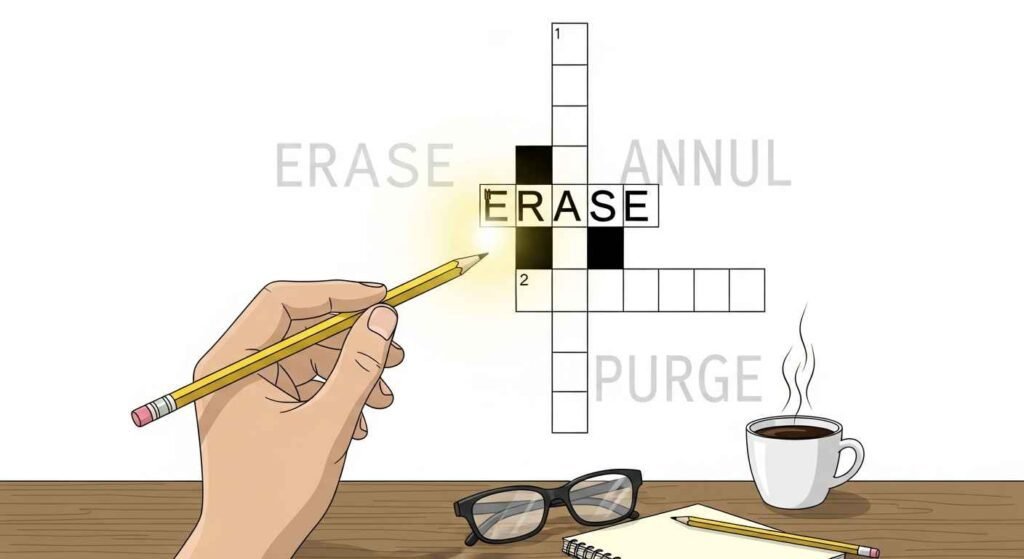
The word ERASE is the champion of this clue. If you are looking at five empty boxes, this should be your very first guess. It is a favorite for creators because it is a simple word that almost everyone knows. It also has three vowels. Vowels are the glue that holds a crossword together.
If ERASE does not fit, you might need to look at the letters you already have from other words. Sometimes a single letter like an ‘S’ or an ‘A’ can change everything. If your grid is asking for a five-letter word but ERASE is wrong, try the word ANNUL. This is often the answer if the clue has a slightly formal or legal tone.
Another five-letter choice is PURGE. This word is used when the theme of the puzzle is about cleaning or clearing a list. It is a stronger word than erase. It suggests that something is being removed in a very forceful way. Checking the clues around it will help you decide which one to ink in.
Solving Short Four Letter Grids
When you only have four boxes, the options change. This is where many people get tripped up. The most famous four-letter answer in the crossword world is DELE. If you do not work in a printing shop, you might not know this word. It is a special mark that editors use to show that a letter or word should be removed.
Because it is a short word with three vowels, builders use it all the time to fill tight spots. If you see “expunge” and have four boxes, DELE is a very strong bet. It is one of those “crossword-only” words that experts memorize early on.
If DELE is not it, look for EDIT. This is a very simple way to say you are removing something from a story or a book. It is a common word that fits easily into many different types of puzzles. Occasionally, you might even see the word VOID. This is usually the case if the clue refers to a check or a legal paper being cancelled.
Exploring Six Letter Synonyms
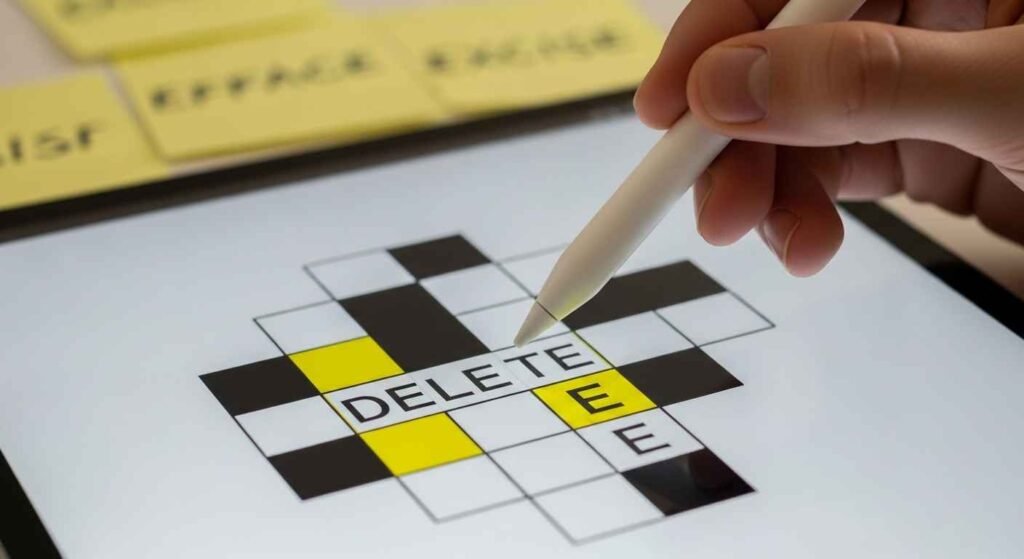
If your grid is a bit larger, you have more room to play. The word DELETE is the most direct six-letter match for expunge. It is the word we use every day on our computers. Because it is so common, it is a very fair answer for most puzzles.
If DELETE does not seem right, look at EFFACE. This is a more elegant word. To efface something means to rub it out so that no one can see it anymore. It often refers to a memory or a marking on a stone. It is a “high-level” word that you might see in a Friday or Saturday puzzle.
Another common six-letter word is EXCISE. This one is a bit tricky because it can also mean a type of tax. In the world of crosswords, to excise something is to cut it out completely. It is often used when the clue mentions a surgical or very precise removal of text or information.
How Letter Length Changes Your Strategy
The length of the word tells you a lot about the mind of the person who made the puzzle. Shorter words are often there to help the bigger “theme” words stay connected. This is why you see words like ZAP or RID in small spaces. They are quick and easy to use.
Longer words like OBLITERATE or ERADICATE are usually the stars of the show. If you have ten or nine boxes, the puzzle maker wants you to think about total destruction. These words are satisfying to solve because they take up so much space and provide many letters for the words going down.
Always count your boxes twice before you start writing. It sounds simple, but many people lose time because they try to force a six-letter word into a five-letter space. Keeping a calm mind and a sharp eye on the count is the first step to becoming a master solver.
Understanding the Hidden Context of the Clue
Crossword clues often have a hidden “flavor.” If the clue says “Expunge, in a way,” it usually means the answer is a bit more creative or indirect. If the clue is just the word “Expunge” by itself, the answer will be a direct synonym.
Pay attention to whether the clue is a verb or a noun. Since “expunge” is a verb, your answer must also be a verb. You would not use a word like “removal” because it is a noun. You would use “remove” instead. This small tip can save you from a lot of mistakes.
If the clue is in the past tense, like “Expunged,” your answer must also end in -ed. You would look for words like ERASED or DELETED. Matching the tense of the clue to the tense of the answer is a golden rule in crosswords that many beginners forget.
The Role of Vowels in Your Search
Vowels are the secret weapons of any crossword solver. Most of the top answers for this clue are very heavy on vowels. Words like ERASE, DELE, and EFFACE have many E’s and A’s.
If you have a box that connects two words, and that box is a vowel, there is a high chance it belongs to one of these common answers. This is why it is helpful to solve the shorter words around your target first. They often provide the vowels that act as a bridge to the bigger word you are struggling with.
When you see an ‘E’ at the end of a five-letter space, your brain should immediately think of ERASE. If you see a ‘D’ at the beginning of a six-letter space, start testing DELETE. This type of pattern recognition is what separates the casual solvers from the experts.
Why Some Words Are Preferred by Puzzles
Not all words are created equal in the eyes of a puzzle builder. A word like SCRATCH is a great synonym for expunge, but it has many consonants in a row. This makes it very hard to build other words around it.
On the other hand, a word like ERASE is very “friendly.” It is easy to build words both across and down when you have letters like E, R, and A. This is why you see the same answers appearing over and over again in different newspapers.
By learning these “friendly” words, you are essentially learning the most popular building blocks of the game. It is like having a cheat sheet in your head. Once you know which words builders love, you can solve the grid much faster.
Dealing with Frustration During the Solve
It is okay to feel a bit of “grid lock” when you can’t find a word. The stress of a blank space can make your brain freeze up. When this happens, the best thing to do is to look away for a moment.
When you come back, don’t look at the word “expunge” again right away. Instead, look at the clues for the words that cross into those empty boxes. Even if you only get one letter, it can be the spark that helps you see the whole word.
Crosswords are supposed to be a fun challenge, not a source of pain. If you find yourself getting angry at the paper, remember that the answer is always there. It is just a matter of finding the right perspective.
The Use of Latin and Formal Terms
Because “expunge” is a formal-sounding word, it often leads to formal answers. Words like ANNUL and RESCIND are common in these cases. These are words you might hear in a courtroom or a government office.
If your puzzle has a serious or academic tone, stay away from slang like ZAP. Look instead for those “heavy” words that feel a bit more official. This sense of “tone matching” is a skill that you develop over time as you solve more puzzles from different sources.
For example, a puzzle in a high-end magazine might use EXPURGATE for a ten-letter space. A fun, modern app might use X-OUT. Knowing who made the puzzle can give you a huge hint about which word is the right fit.
Learning from Your Mistakes
Every time you have to look up an answer, you are actually getting better. If you look up “expunge” today and see that the answer was DELE, you will remember that for the rest of your life.
The next time you see four boxes and that clue, you will fill it in without a second thought. This is how the best solvers in the world got so fast. They didn’t start out knowing everything. They just remembered the words that once made them feel stuck.
Don’t feel bad about needing a guide. Use it as a training tool. Every answer you find here is a new piece of knowledge that stays in your toolkit for all future games.
Building a Mental Map of Synonyms
A good way to prepare for future puzzles is to group your synonyms by their “vibe.” Think of one group for editing, like EDIT, DELE, and EFFACE. Think of another group for destruction, like ERADICATE and OBLITERATE.
When you see the clue, quickly ask yourself which “vibe” fits the rest of the puzzle. This mental map lets you skip over words that don’t fit the mood, saving you time and mental energy. It is a more organized way to solve than just guessing random words.
Over time, this becomes automatic. You won’t even have to think about it. Your brain will see the clue and the boxes and instantly narrow the 77 possible answers down to the two or three most likely winners.
Common Questions About Crossword Answers
What is the most common answer for the expunge crossword clue?
The word ERASE is the most frequent solution. It is used in almost every major crossword series because its letters are very easy to connect with other words.
Why is the word DELE used so much?
DELE is a favorite for puzzle makers because it has a rare combination of letters that fit into tight corners. Even though it is not a common word in daily speech, it is a staple of the crossword world.
How do I choose between two words of the same length?
Look at the letters from the words that cross your path. If you have an ‘R’ as the second letter, ERASE is your winner. If you have an ‘N’, it is likely ANNUL.
Does the difficulty of the day matter?
Yes. On a Monday or Tuesday, the answer is usually a simple word like ERASE or EDIT. By Saturday, the puzzle might use a much harder word like EXPURGATE or EFFACE.
Is it okay to use a dictionary for crosswords?
Absolutely. Using a guide or a dictionary is a great way to learn new words and improve your skills. It helps you build the vocabulary you need to solve harder puzzles in the future.
Disclaimer:
This article is for informational purposes only and serves as a guide for crossword enthusiasts. While we strive for 100% accuracy, crossword answers can vary by publisher, date, and specific puzzle themes. This content does not provide legal advice regarding the “expungement” of official records. We are not affiliated with the NYT or any puzzle brand. Always verify your grid with crossing words to ensure the best fit for your specific game.
You May Also Like: Byrdle Solver Revealed: Crack Today’s Puzzle in Minutes
For More Information, visit TryHardGuides.

Evelyn White is an experienced content writer with a background in lifestyle, trends, and practical advice. With several years of writing across digital platforms, she specializes in making everyday topics accessible, informative, and engaging. Her goal is to deliver trustworthy, reader-focused content that’s both useful and easy to understand.