
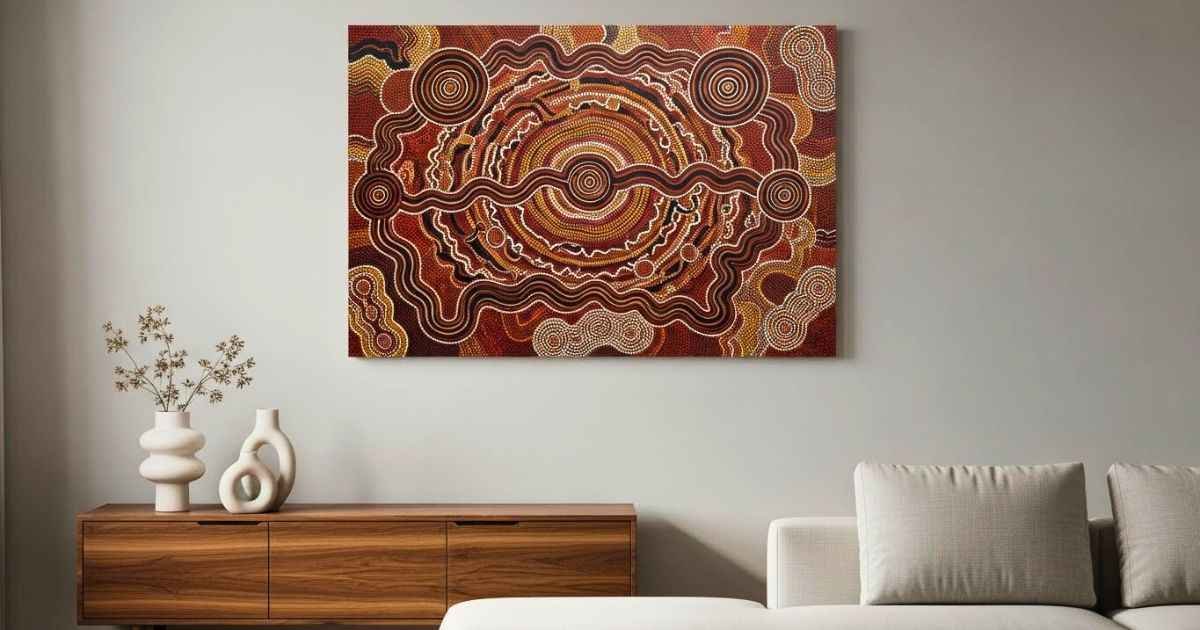
The Aboriginal art world seems to be comprised of two extremes. Go to a gallery and see pieces that break the bank with value accompanied by excellence. Go online and see pieces cheaper than chips with shifty qualities. But the best part is, there’s a solid middle ground that so many buyers fail to see, where true, beautiful works exist at prices human beings can afford.
$500 to $1000 between Australian galleries and international shipping fees isn’t a bad price for what you’d pay for a true painting, with certificate of authenticity, created by a highly skilled artist who is fairly compensated for their work. This price range excludes the unnecessary inflation of size, reputation, provenance, and comparable art scenes. This is a magical number to pay for Aboriginal art.
What This Price Level Includes
Let’s get one thing clear, $500 to $1000 Aboriginal art is not prints. Mass produced pieces are not included in this price range. These are true paintings on canvas created by individual hands using brush strokes and dotting techniques passed on through generations and learned in culturally significant ways and own artistic expression.
So why are such pieces sellable in this price range versus the gallery standard of five and six figures? Most of the time, it’s due to name recognition and not relative skill. Picture a novice or emerging artist who puts forth nothing less than spectacular work and charges $700. Now picture someone with name recognition who presents similar quality at $15,000. Both could be equally talented and connected to their dreamtime stories. However, the difference lies in time on the galleries’ walls, international exhibitions, and whispers through the art scene.
Size matters, but not in the way you’d think. A detailed 60cm x 90cm piece from a discovered artist in this price range would complement a room more than a larger piece times three the price that has no color or eloquence. Additionally, this size would fit easily in any abode, requiring a smaller wall–not an entire one–to display.
What This Price Level Excludes
What’s more interesting about this price range is that charging more has nothing to do with painting quality. Those gallery prices include overhead, from having a storefront in a popular city to having elaborate opening parties and international art fairs with exorbitant fees and exhibitions needing publicized campaigns. If you’re required to pay full price, you end up paying for someone else’s ease of life and not the artist.
However, when buyers purchase through online galleries or otherwise that reside in this middle ground (not providing excessive additional expenses), often the artists fare better, too, receiving a higher percentage from the sale. You pay less; they receive more, it’s a win-win situation.
Buyers still receive everything they need. Certificate of authenticity, documentation of provenance, and information about the artist and their story needn’t come in pieces but accounted for by any respectable seller in the $500-$1000 range. If they’re hesitant about it, then leave them be, but reputable sellers for Aboriginal art will tell you everything you need to know without hesitation.
Where This Shopping Occurs
Thanks to the internet and its accessibility for many people over remote travel, Aboriginal art from well-known galleries has boomed within this price range. There are now great sites run by dealers who specialize in these kinds of transactions where buyers from all over can check out these aboriginal paintings without having to step foot into Sydney or Melbourne for collection and sale.
Regional centers in Aboriginal communities have become more accessible in time; however, these require direct links to the artists making sure that compensation is fair and appropriate for all involved. These also provide pieces that are fit to budget without the city gallery’s sense of worth. Many regional art centers ship around the world now with proper documentation anyone would need for sales anywhere.
Art fairs and Aboriginal art fairs provide another great opportunity if one enjoys browsing through booths instead of galleries. When artists and dealers create cool set-ups at various events over the course of three or four days, they often sell for lower prices than they would otherwise because they need volume sales versus one sale per day as static vendors. In this way, buyers can see multiple works from different artists laid out before them instead of required placements on gallery walls.
Quality from This Price Level
A piece worth up to $1K should boast well thought out work. Examine paint delivery: are dots consistently painted? Are lines crisp? Does it complement as a whole? Quality craftsmanship can be easily determined from aesthetically pleasing work versus pieces thrown together in haste.
Cultural integrity should be detectable just as much as it would be from a piece worth $7000 to $10,000. Genuine Aboriginal art comes with stories behind them that celebrate creation narratives and cultural knowledge that artists can support with fact. This depth does not have price integrity; it’s simply part of authentic work buyers need to hear from credible merchants who love what they do.
Materials shouldn’t differ in price ranges unless there’s something inherently wrong with them. Quality canvasses, acrylic paints (good for outdoor placement), preparation for presenting work is standard across the board for legitimate works. What inflates someone’s price at $10K is usually based on prominence instead of materials.
Buying Tips Within This Price Level
When it comes to confident shopping experiences within this realm, learn about Aboriginal art regions and styles ahead of time. The Central Desert region boasts dot paintings while the coastal regions focus more on bark painting; even Kimberley rock art differs significantly across territories.
Finding reliable dealers makes all the difference, too. Those selling appealing Aboriginal art are intimately connected with hard-working artists who pay them well to ensure proper collaboration for communities involved. They enjoy working with new collectors who want to find both respected pieces based on visual elements and connected value points as desired per budget scale.
Take time before committing. The beauty about this price range is there’s enough to go around; there’s no reason to rush through something you’re spending $800 on. You’re allowed to backtrack and see things you’re looking at; maybe taking pictures help bring them back to memory where you can check back in after three days, sometimes pieces look good but may not hold your interest down the line or vice versa.
Why Starting Here Can Make Sense
Starting your collector challenge at this point makes sense thanks to learning how to assess quality without being intimidated by price or general skeptical participation from those looking for obvious fakes. The education gained becomes valuable over time when trends grow within collecting habits as established prices open opportunities if budgets ever increase.
The amount available between this pricing scale is incredible; explore different styles regional advantages; find size ranges; discover different artists whose styles resonate more than others all without breaking the bank per chance.
Therefore, it keeps Aboriginal art available for those interested in growing collections because they genuinely love them, it’s not just an investment strategy. When you’re not spending millions upon millions of dollars trying to guess what will appreciate, you appreciate works because you want them, you connect personally, and that’s what makes collections mean something.
Middle grounds aren’t bad options; more often than not, they’re filled with some of the best work at greatest value where beauty exists at lower prices but quality and cultural endeavors seem beautiful throughout any kind of realistic association. Good luck collecting.
You May Also Like: Transform Your Messy Home With Designmode24 Design Secrets

Emma Rose is the founder of TryHardGuides.co.uk and a senior content strategist specializing in lifestyle, personal development, and digital entrepreneurship. With a focus on evidence-based living, she produces actionable content designed to help readers make informed life decisions and navigate the evolving tech-lifestyle landscape. As the editorial lead, Emma oversees the site’s mission to provide trustworthy, high-authority information. Her work reflects a commitment to personal growth, transparency, and the pursuit of a well-balanced, informed life.