
Last Updated: 24/March/2026
Furniture shopping has always carried a quiet tension. A single choice can shape daily comfort for years. Yet for decades, retail asked customers to rely on imagination, hoping that size, color, and atmosphere would align once the furniture arrived home.
Digital commerce made this gap even wider. Screens replaced physical presence, and photographs replaced experience. While convenience increased, certainty disappeared.
That is the imbalance that is being rectified today. Artificial Intelligence and Augmented Reality are not complicating retail. They are eliminating uncertainty. Technology does not describe furniture, but rather makes it look, act, and exist in real spaces of living before one purchases the furniture. This transformation is not about the way products are sold. It changes how decisions are formed. Zolak brings this transformation to life by combining AI intelligence with immersive AR environments that allow furniture to exist naturally inside real homes before purchase.
How AR and AI Work in Furniture Shopping
AR, or Augmented Reality, lets you see furniture in your own room through your phone or tablet. You can move it around, turn it, and see how it fits with your walls, floors, and other items. AI, or Artificial Intelligence, watches what you like and gives smart suggestions. For example, it can show different colors, materials, or layouts that match your style.
A 3D furniture configurator is another tool. It lets you change the size, color, or fabric of a sofa or table in real time. You can see every angle, zoom in on details, and make choices with confidence. Together, AR and AI make shopping feel more like seeing the furniture live at home, without leaving your house.
When furniture becomes part of the space
Traditional product pages isolate furniture from its environment. A chair floats against a white background. A sofa appears in a staged interior that rarely resembles a real home. The result is distance rather than connection. AR closes that distance.
Furniture steps directly into the room where it may eventually live. Scale becomes immediate. Proportion feels natural. A table aligns with the floor. A cabinet respects the wall. Light interacts with surfaces instead of being artificially controlled.
Movement matters here. Walking around a virtual object reveals details that static images hide. Corners and construction become visible from every angle. The experience is not about visual novelty. It is about understanding.
Tools such as a 3d furniture configurator quietly support exploration, allowing variations in materials or finishes without breaking the sense of place. What was once imagined now feels confirmed.
Benefits for Customers
Using AR and AI tools gives you clear advantages:
- Save time – You can try many options quickly without visiting multiple stores.
- Reduce mistakes – You see the size and fit before buying, so nothing looks wrong at home.
- Test different styles – Change colors, fabrics, and layouts instantly.
- Boost confidence – You feel sure about your choice because you saw it in your own space.
These benefits make furniture shopping easier, less stressful, and more fun.
Virtual showrooms without physical limits
Physical showrooms offer inspiration, but they are shaped by constraints. Space limits selection. Logistics limit variety. Layouts remain fixed for long periods of time. Virtual showrooms operate differently.
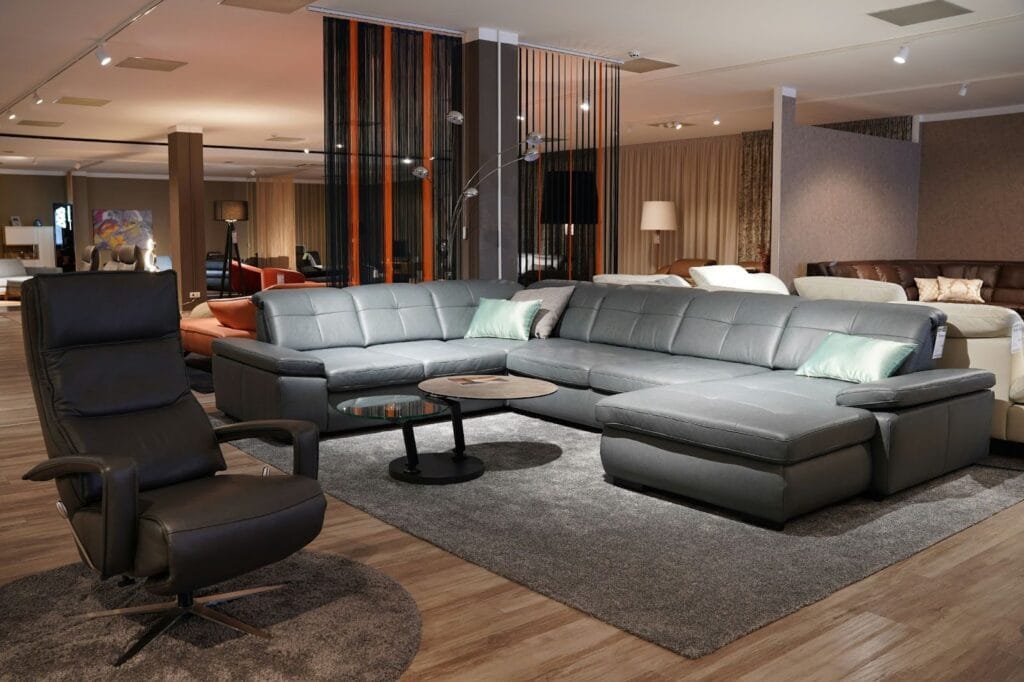
Entire collections exist without square meters or storage concerns. The interiors can be changed easily to modern and classic, minimal and expressive. Rooms grow bigger and smaller, and change their positions depending on the situation, but not depending on the structure.
AI guides this experience invisibly. It observes what attracts attention and what fades quickly. It understands preference through behavior rather than forms or filters. Over time, environments begin to reflect individual taste instead of presenting a single universal display. With Zolak, virtual showrooms become adaptive spaces where technology quietly supports confident, emotionally aligned decisions.
This creates a sense of flow. Exploration feels continuous rather than fragmented. Furniture is discovered in context, not in isolation.
Step-by-Step Guide / User Interaction
Here is how a customer can use these tools step by step:
- Scan your room – Use your phone to capture your floor, walls, and space.
- Select furniture – Pick a sofa, table, or chair from the app or website.
- Place the furniture – Drag it into your room using AR. See how it fits and turns.
- Adjust details – Change colors, materials, or sizes using the 3D configurator.
- Check angles – Walk around virtually, zoom in, and see corners and surfaces.
- Save your design – Keep your setup for later or share with family before buying.
This process helps you make smart choices without rushing. You explore freely and understand how the furniture works in your space.
Intelligence that respects decision-making
The strongest role of AI in retail is subtle guidance. Instead of pushing constant recommendations, intelligent systems respond to signals. Pauses, comparisons, repeated views, and changes of direction all communicate intent. AI reads these moments and adjusts the experience quietly.
Suggestions appear only when they add clarity. A better size for the room. A material that complements existing tones. A layout that feels balanced rather than crowded.
This restraint matters. Shopping remains calm. The pace belongs to the customer. Decisions feel personal rather than influenced. Trust grows naturally when technology knows when to step back.
Emotion returns to the buying process
Furniture is deeply emotional. It supports rest, focus, gathering, and solitude. Yet online retail often reduces it to measurements and price.
AR restores emotion by placing furniture into lived environments. Lighting dilutes or intensifies the mood. Substances are responsive to the point of view. Spaces are either open, warm, or structured as they are explored.
AI makes this emotional layer more advanced by modifying the environment itself. Calm palettes emerge for those drawn to simplicity. Stronger contrasts appear for those exploring expressive designs.
The result is not persuasion, but resonance. Choices align with feeling rather than logic alone. When furniture feels right in its future space, commitment becomes effortless.
One continuous retail experience
The boundary between online and offline retail continues to fade. Exploration may begin at home, with furniture placed virtually in a real room. Preferences are saved. Measurements are understood. When a physical store visit follows, the journey continues rather than restarts.
Likewise, in-store discoveries travel back home digitally. Products can be revisited in context, reconsidered in real light, and evaluated without time pressure.
Retail becomes a single, connected experience. Brands feel attentive and consistent. Customers remain in control from the first interaction to the final decision.
Learning from real behavior
Beyond experience, AR and AI offer insight. Every interaction reveals how people actually live. Which colors are tested repeatedly but rarely chosen? Which furniture appears appealing but feels overwhelming in real spaces? Which layouts invite exploration and which cause hesitation?
This information shapes better products. Furniture evolves based on reality, not assumptions. Sizes become more practical. Styles adapt to real homes rather than idealized interiors. Design improves because it listens.
Freedom replaces pressure
Perhaps the most meaningful change is psychological. AR and AI remove the fear of making a wrong choice. Customers explore freely, test ideas, and adjust direction without consequences. There is no urgency, no forced commitment, and no penalty for curiosity.
Shopping becomes creative rather than stressful. The experience invites discovery instead of decision fatigue. Confidence forms naturally through understanding. When pressure disappears, satisfaction increases.
FAQs
- Do I need a special device?
Most smartphones and tablets with a camera work fine for AR. No special equipment is required. - Will the colors look right?
AR shows realistic colors, but lighting in your room may slightly change how they appear. - Can I save my design?
Yes, you can save setups to review later or share with others. - Is it hard to use?
The apps are designed to be simple. You just point your camera, drag furniture, and adjust settings.
These FAQs answer the common questions and make customers feel confident about trying AR and AI tools.
Conclusion
The future of furniture retail is not defined by visible technology. It is defined by clarity. AR and AI succeed when they disappear into the experience, allowing furniture to exist where it matters most inside real spaces, under real light, within real routines. Virtual showrooms feel natural rather than staged. At home, previews feel reassuring rather than technical. Furniture shopping no longer depends on hope. It is guided by understanding. This is retail that feels alive, intuitive, and quietly confident long before delivery day arrives.
You May Also Like: Modern Breakout Office Furniture: Transforming Workspaces for Creativity and Collaboration

Emma Rose is the founder of TryHardGuides.co.uk and a senior content strategist specializing in lifestyle, personal development, and digital entrepreneurship. With a focus on evidence-based living, she produces actionable content designed to help readers make informed life decisions and navigate the evolving tech-lifestyle landscape. As the editorial lead, Emma oversees the site’s mission to provide trustworthy, high-authority information. Her work reflects a commitment to personal growth, transparency, and the pursuit of a well-balanced, informed life.