

The growth enterprises market helps small companies find funds to expand. Many owners feel stuck because big stock market rules are too hard. This market acts as a bridge for rising companies. It allows them to reach investors by passing easier financial eligibility tests.
Quick Facts: GEM vs. Main Board at a Glance
| Feature: | Growth Enterprises Market (GEM) | Main Board |
| Minimum Market Cap | HK$150M (Cash Flow) / HK$250M (R&D) | HK$500 Million |
| Financial History | HK$30 Million cash flow (2 years) | HK$50 Million profit (3 years) |
| Financial Reports | Half-yearly and Annual | Half-yearly and Annual |
| Target Group | High-growth SMEs and Tech firms | Established large firms |
What is the Growth Enterprises Market?
The growth enterprises market is a special part of the Hong Kong Stock Exchange. It began in 1999 to support tech startups and small firms. It helps businesses that have big goals but smaller bank accounts. Instead of proving high profits, firms show they are growing and have steady cash flow.
This market looks at the future of a company. It lets young businesses sell shares to the public for new projects. This helps companies innovate without the heavy pressure of the Main Board.

Risks to Consider
- Low Liquidity: Stocks here often have low trading volume. This means it is hard to sell shares quickly without changing the price.
- High Volatility: Prices can have large swings because these firms are small.
- Compliance Costs: You must hire an expert adviser for two years. This is a high cost for a small business.
Who is the Growth Enterprises Market Best For?
This board is best for tech firms and companies that spend a lot on research (R&D). If your business creates new inventions, this market might fit you. It is also good for firms that want to move to the Main Board later.
Avoid this board if your business grows very slowly. The cost of legal rules may be too high. Compared to the London AIM, the GEM board focuses mainly on the Asian market.
Key Listing Requirements for the GEM Board
To join the growth enterprises market, a firm must meet clear rules. Under the cash flow test, the business needs a market value of at least HK$150 million. Under the R&D test, it needs a market value of HK$250 million.
You also need two full years of business history. Every firm must hire a “Sponsor” to help them join. Under the Securities and Futures Ordinance (SFO), you must also keep an adviser for two years to follow all laws.
The 2024 Reform: The New Streamlined Transfer
The Hong Kong Stock Exchange (HKEX) recently updated its regulations to make it easier for GEM-listed companies to transition to the Main Board. This is the most significant update in 2024, focusing on efficiency and cost reduction:
- Simplified Eligibility: Under the new rules, a transfer applicant must demonstrate a solid track record of at least three full financial years, maintaining continuity in both ownership and management.
- Cost Efficiency: Previously, companies were required to hire a new sponsor during the transfer process, which often cost millions in fees. Now, healthy companies can move upward without the mandatory requirement of a new sponsor, significantly reducing financial barriers.
- Reduced Compliance Gap: GEM companies now follow reporting standards that align more closely with the Main Board. This change has increased transparency and made the transition process much smoother for established firms.
Note: These updates became effective in early 2024 and represent a major shift in how the HKEX supports high-growth SMEs.
YMYL Safety Verdict
The growth enterprises market is a high-risk platform. It is mostly for “Professional Investors” who understand big price swings. Retail investors should be very careful because it is hard to sell shares fast.
Always check if your adviser has a license from the Securities and Futures Commission (SFC). Never invest money that you cannot afford to lose.
Common Challenges for GEM-Listed Companies
Listing on the growth enterprises market is a big step, but it comes with hurdles. Understanding these challenges early helps business owners prepare for the future.
Maintaining public float requirements is a major task. At least 25% of the company’s shares must always be held by the public. If a major owner buys too many shares, the company could break the law. This requires careful tracking of who owns the stock.
Managing investor relations is also key. Because the GEM board is for professional investors, the pressure for clear communication is high. Companies must explain their growth plans clearly. If investors lose trust, the stock price can drop quickly due to low trading volume.
Higher audit and legal fees are another burden. Staying on the exchange requires constant legal and accounting work. For a small firm, these yearly costs can eat into the money meant for growth.
GEM vs. International Growth Markets
The growth enterprises market is not the only choice for rising firms. Comparing it to other global boards helps founders pick the best home for their shares.
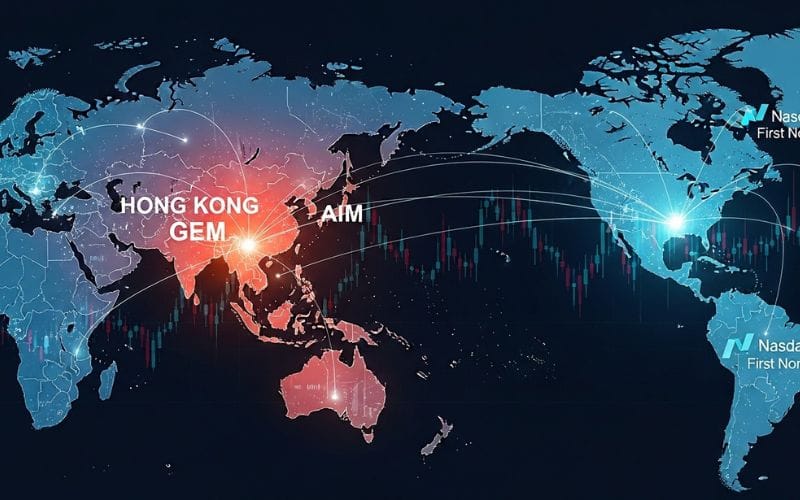
The London AIM is older and has more international companies. However, the GEM board offers better access to investors in Mainland China. This is a major plus for Asian startups that want to reach local capital.
Nasdaq First North is popular for European tech firms. GEM is often better for companies that have manufacturing or sales ties to the Greater Bay Area. This local focus helps firms build a stronger reputation where they actually do business.
Choosing where to list depends on where your customers are. If your brand is famous in Asia, the growth enterprises market provides better visibility. It also builds higher trust with regional banks and partners.
Conclusion: Making the Right Choice
The growth enterprises market is a great tool for small firms to reach the next level. It offers a path to grow without strict profit rules. While price swings are a risk, the 2024 reforms make the market much better for users. Following these rules helps both owners and investors make smart choices.
Frequently Asked Questions (FAQ)
Is the GEM board for small companies?
Yes, it is for small and medium firms that show high growth potential.
How often do GEM companies report finances?
As of 2024, they provide reports every six months, just like the Main Board.
Can I buy GEM stocks as a regular person?
Yes, but you should know the risks. Prices move fast and there are fewer buyers.
What is an R&D test for listing?
It is a rule for tech firms. They must show they spent at least HK$30 million on research over two years.
Do I need a sponsor to move to the Main Board?
No. Under the new rules, healthy GEM firms can move up without a new sponsor.
You May Also Like:
Is GomyFinance com Good for Budgeting? A Complete 2026 Guide to Create Your Budget Safely
MataRecycler AI: How Smart Waste Management is Transforming Recycling in 2026
For More Information, visit TryHardGuides.
Disclaimer
This website provides information to help you learn about the growth enterprises market. We do our best to share facts that are correct and up to date. However, this is not professional financial or legal advice. Investing in small companies carries high risk. You should always talk to a licensed expert before spending your money. We are not responsible for any losses you may face from using this information

Alex Taylor is a seasoned technology writer and systems specialist with over 5 years of experience in hardware maintenance and digital troubleshooting. He specializes in practical tech guides, focusing on making complex technical repairs and software optimization accessible to everyday users. Alex personally reviews and fact-checks every guide to ensure that maintenance tips are safe, effective, and budget-friendly. Whether it’s a hardware fix or a software setup, his work is driven by a passion for technical clarity and real-world utility.