
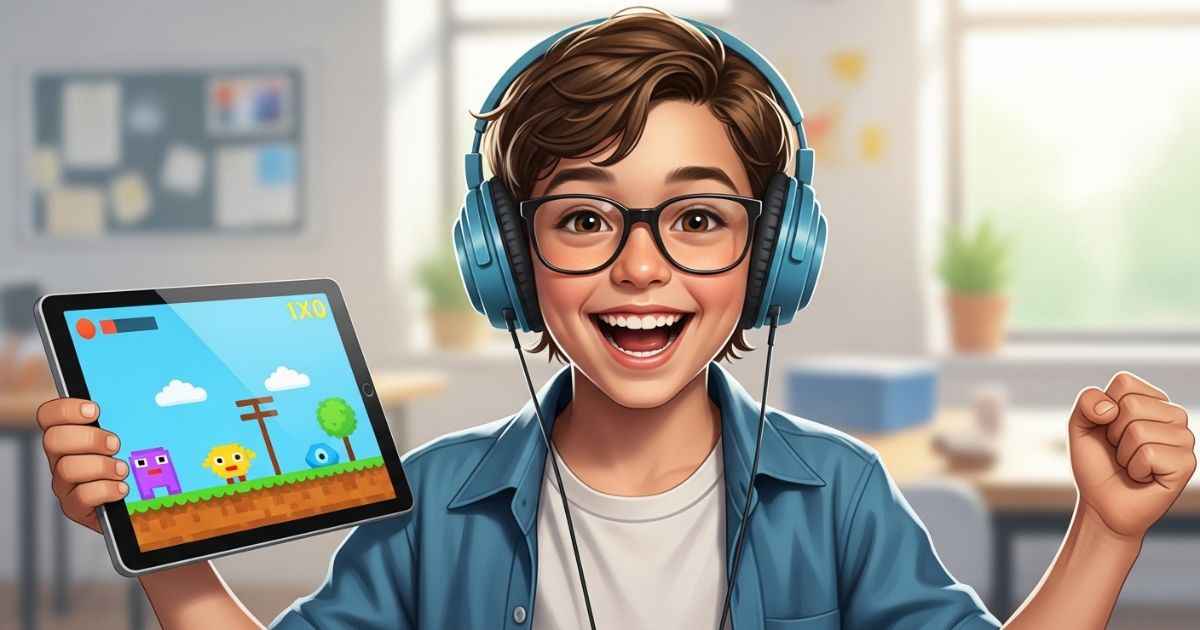
Have you ever watched your child play video games and thought, “What if they could build one instead?”
A make your own game course gives kids exactly that opportunity. It turns screen time into skill time. And it opens doors to one of the most exciting industries in the world.
What Is a Make Your Own Game Course?
A make your own game course teaches children how to design, build, and complete their own computer games. It is not just about playing games. It is about understanding how they work, how to plan them, and how to bring them to life using real tools.
These courses introduce kids to game design, game mechanics, and game environments step by step. They start with an initial concept — just an idea. Then, turn it into something playable. That process alone teaches creativity, problem-solving, and focus.
What Will Your Child Actually Learn?
Here’s what you kids can learn if you enrol in a game design course or make your own game course:
Game concepts and planning
Every great game starts with an idea. Children learn how to develop game concepts and turn them into a structured plan. This includes creating game design documents. This refers to the written blueprints that professional developers use before writing a single line of code.
Learning to plan before building is one of the most valuable key skills a young creator can develop. It teaches patience, organisation, and clear thinking.
Game mechanics and level design
Game mechanics are the rules that make a game work.
- How does the player move?
- What happens when they score?
- What makes it challenging?
Children learn to design and test their own mechanics through hands-on practice.
Level design is another core skill. Students learn how to build game environments that feel real, fun, and challenging. They explore how great level designers think about player experience from the very first moment someone picks up a controller.
Programming and tools
Children are introduced to real programming languages and professional tools used in game development. Software Academy’s courses use Scratch for younger beginners, progressing to Python and Lua (used for Roblox game creation). These are genuine tools used by developers across the games industry.
Older students are also introduced to concepts from Unreal Engine. This is the powerful platform behind many of today’s biggest games, developed by Epic Games. Getting familiar with these tools early gives kids a real head start.
Animation, art, and sound effects
Games are a combination of many creative disciplines. Students explore animation, art, and how sound effects shape the player experience. They learn that a great game is not just about code, but it is about the full sensory world you build for the player.
This interactive design approach means children develop both technical skills and creative ones.
Why Game Design Skills Matter for the Future
The games industry is one of the fastest-growing sectors in the world. Game design graduates are in high demand across a wide range of roles. Level designers, animators, programmers, and project managers are all needed to bring modern games to life.
Beyond games themselves, the skills learned in a make your own game course apply to much more. Children who understand game design and interactive design are already ahead.
Programming, digital art, and project management are professional skills used across creative industries. When your child learns to build a game, they are also learning how to work in a team, manage ideas, and see a project through from start to finish.
What Career Opportunities Open Up?
Children who complete game design courses develop a strong foundation for various careers. The games industry employs thousands of people in the UK, from programmers to artists to producers.
Here are some of the roles young learners might one day explore:
- Level designer — Creating game environments that players explore
- Game programmer — Writing the code that makes the gameplay mechanics work
- Animator — Bringing characters and worlds to life
- Sound designer — Building the audio that makes games feel immersive
- Games developer — Working across the full process of video game development
Many of these roles value practical experience and a portfolio of projects just as much as formal qualifications. That is exactly what Software Academy helps children build. Every course ends with real, playable games and projects students can be proud of.
The skills children learn also apply beyond games. Virtual reality experiences, augmented reality apps, interactive design, and even short film production all use many of the same creative and technical foundations.
Parting thoughts
A make your own game course is one of the most valuable things a child can explore today. It builds creativity, technical skills, and professional skills all at once. It turns a love of games into a genuine ability to create, develop, and showcase original work.
Software Academy makes this journey accessible, fun, and career-focused. All courses are online, flexible, and designed for children who want to do more than play; they want to build.
If your child is interested in games, give them the tools to make their own. The earlier they start, the further they can go.

Emma Rose is the founder of TryHardGuides.co.uk and a senior content strategist specializing in lifestyle, personal development, and digital entrepreneurship. With a focus on evidence-based living, she produces actionable content designed to help readers make informed life decisions and navigate the evolving tech-lifestyle landscape. As the editorial lead, Emma oversees the site’s mission to provide trustworthy, high-authority information. Her work reflects a commitment to personal growth, transparency, and the pursuit of a well-balanced, informed life.