

Last Updated: 16/April/2026
Life on Earth is always moving and changing. Every day, nature works to create something new. Sometimes, a group of animals or plants changes so much that it becomes a brand-new group. This specific process of creating distinction is called speciering. While many people use the scientific term “speciation” to describe the result, the act of speciering explains the journey from one old group to two new ones.
Understanding how this happens is like learning the secret rules of the world. It is not just about birds and bugs. The same rules of splitting and forming new “species” happen in chemistry and even in how businesses grow. By looking at how things become different, we can see the deep logic behind variety and success.
What is Speciering and How Does It Work?
In simple words, speciering is the process where one group splits into two or more distinct groups. For this to happen, the groups must stop mixing. In nature, this usually means they stop having babies together. In other fields, it means they stop sharing the same traits or space.
Once a group is divided, each side begins to change on its own. They might adapt to a new home, find new food, or develop new habits. After a long time, these changes add up. Eventually, the two groups are so different that they can no longer join back together. This is the main way that nature and systems create variety.
Speciering vs. Evolution: Are They the Same?
It is common to confuse these two ideas, but they are different. Evolution is the slow change of a group over a long time. Speciering is a specific moment within evolution. It is the exact point where the change is so big that a new, separate category is born. While evolution changes a group, speciering multiplies the number of groups.
The Biology of Speciation: The Scientific Foundation
Scientists use the word speciation to talk about how new life forms arise. This is the foundation of all biology. For new species to form, there must be a barrier. This is often called reproductive isolation. It means that even if two animals meet, they can no longer produce healthy babies that can also have babies.
There are four main ways this happens in the wild:
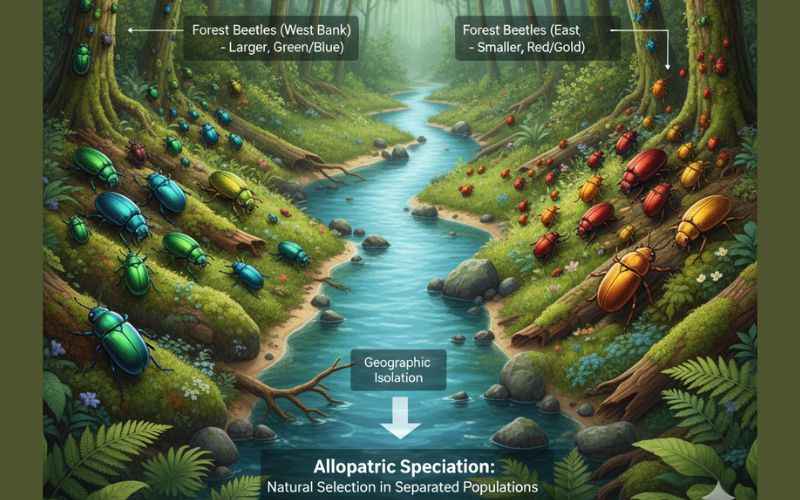
- Allopatric Speciation: This happens when a physical wall, like a river or a mountain, splits a group.
- Sympatric Speciation: This occurs in the same area but because of different habits, like eating different foods.
- Peripatric Speciation: This happens when a very small group moves to a brand-new home far away.
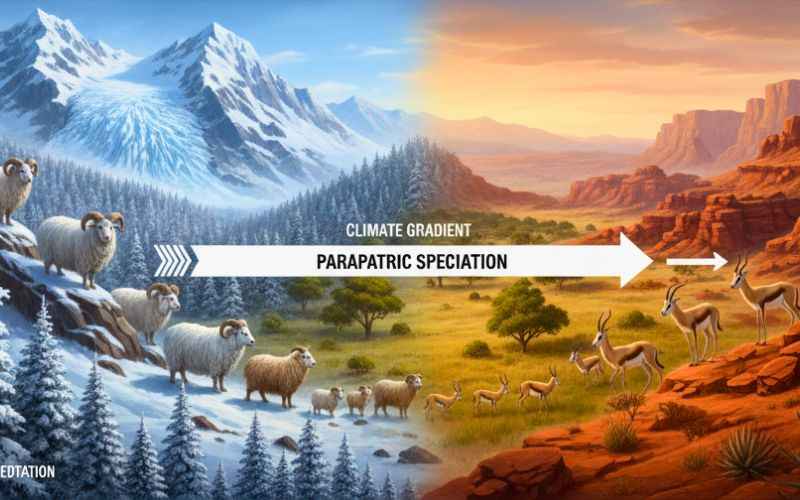
- Parapatric Speciation: This happens when a group is spread over a huge area and the ends of the group stop meeting.
The Engine of Speciering: Key Drivers of Change
New groups do not appear by magic. There are rules that push living things and systems to change. These drivers ensure that every new “species” is fit for its environment.
Natural Selection
Nature is a tough place. Only those that fit their home survive and have babies. If a bird has a beak that is perfect for the seeds in its forest, it will do well. Over many years, the “best-fitted” traits become the standard. This helps a group change into something new and better for its specific home.
Genetic Drift
Sometimes, change happens because of pure luck. If a small group of animals survives a storm, only their traits will move forward. It does not mean they were the “best,” but they were the lucky ones. This random luck can cause a group to look very different very quickly.
Mutations
Every so often, a baby is born with a tiny change in its DNA. This is a mutation. Most do nothing, but some give an animal a faster run or a better color. If the change helps, it is passed down. Over millions of years, these tiny mistakes build a whole new type of life.
Chemical Speciering: Beyond Living Things
The idea of speciering is not just for animals. In the world of chemistry, scientists look at how single elements take on different forms. This is known as chemical speciation.
For example, an element like Mercury can be a liquid, a gas, or part of a solid. Depending on its “species” or form, it might be safe or very dangerous. Scientists must find out which form a chemical is in to know how it will act in the ocean or in our bodies. This shows that the science of becoming distinct is a rule that applies to the very atoms of our world.
Speciering in Business: Creating Niche Markets
Even in the world of money and products, we see the process of speciering at work. In business, this is called niche targeting. Instead of making one product for everyone, a company splits its products into different “species” for different people.
Think about a shoe company. They do not just make “shoes.” They create:
- Fast shoes for runners.
- Tough boots for hikers.
- Pretty shoes for parties.
By using the rules of speciering, businesses make sure they have a perfect “fit” for every customer. This helps them survive in a crowded market, just like a bird survives in a crowded forest by eating a different kind of seed.
Reproductive Isolation: The Invisible Barrier
One of the most important parts of forming a new group is reproductive isolation. This is the “stop sign” that keeps groups apart. It can be a physical barrier, like a mountain, or a behavior barrier, like a bird singing a song that only its own group understands. Without this barrier, groups would keep mixing, and we would never have the amazing variety of life we see today. It is the invisible force that protects the unique traits of every new group.
Real-World Examples of Speciering and Speciation
To see this science in action, we can look at several famous examples:
- Darwin’s Finches: These birds on the Galapagos Islands developed different beaks to eat different foods. This is the classic example of biological speciation.
- The Tech Industry: Think about how “phones” split into “smartphones” and “gaming phones.” This is business speciering.
- Heavy Metals: In the soil, lead can be in a form that plants can soak up, or a form they cannot. This is chemical speciering.
Why Does the Process of Speciering Matter Today?
You might ask why we need to know this. The truth is that this science keeps our world healthy. Variety makes nature strong. If all trees were the same, one disease could kill every forest. Because we have many species, life can keep going even when things get hard.
This science also helps us make new medicines and grow better food. By studying how wild plants turned into the crops we eat today, farmers can learn to grow food with less water. It is the key to a better future.
Frequently Asked Questions About Speciering and Speciation
What is meant by speciation?
Speciation is the scientific term for the moment when a new and distinct species is formed during the course of evolution. It occurs when a group within a species develops its own unique characteristics. Eventually, these changes become so significant that the group can no longer breed with the original population, marking the birth of a new species.
What are the 4 types of speciation?
The four main types of speciation are defined by how much the populations are separated from one another:
- Allopatric: Caused by physical barriers like mountains or rivers.
- Peripatric: Occurs when a small group breaks off to live in a new, isolated environment.
- Parapatric: Happens when a species is spread across a large area and mates only with close neighbors.
- Sympatric: Occurs in the same location but through different behaviors or food choices.
Is speciering a real word?
Yes, it is a recognized term used to describe the active process of becoming specific or distinct. While “speciation” is the standard term in academic biology to describe the end result, speciering is often used in chemistry, environmental science, and marketing to explain the ongoing journey of differentiation and niche creation.
What is the difference between speciation and evolution?
Evolution is the broad, continuous process of organisms changing over many generations. Speciation is a specific outcome of evolution. Think of evolution as the road and speciation as the exit ramp that leads to a brand-new destination. Evolution changes a lineage, while speciation splits one lineage into two.
Can humans cause speciering?
Yes, human activity is a major driver of modern change. By building cities, highways, and fences, we create artificial barriers that split animal populations. This can lead to rapid adaptation. For example, some city-dwelling birds have developed different songs and nesting habits compared to their forest relatives, starting the process of becoming distinct groups.
What is reproductive isolation?
Reproductive isolation refers to the various barriers—such as different mating seasons, unique songs, or physical distance—that prevent two groups from having babies together. This isolation is the “key” that allows speciering to happen, as it ensures that new traits stay within a specific group instead of mixing back into the main population.
How does speciering affect business marketing?
In business, speciering is known as market segmentation or niche targeting. It involves taking a general product and “evolving” it into specialized versions for specific audiences. Just as nature creates a bird with a special beak for a specific seed, a business creates a specific product (like a waterproof phone for swimmers) to fit a specific customer need.
Conclusion
The science of speciering is the reason our world is so full of color and life. It is a slow and quiet process that happens in our backyards, in our labs, and in our shops. Whether it is a bird changing its colors to find a mate or a business creating a new product for a small group, the goal is always the same: to find a unique way to survive and grow.
By learning about how new forms emerge, we understand the beauty of diversity. It shows us that being different is not just okay—it is a natural law that keeps the world moving forward.
Disclaimer:
This article is for learning only. We try our best to give you the right facts. But, the science of biology and business is always changing. New things are found every day. This post is not professional advice from a scientist. You should always check big science books or talk to an expert if you need official help. We are not responsible for how you use this info.
You May Also Like:
Pigeimmo Review 2026: Is It Still the Best Lead Tool for French Agents?
What is Spaietacle? Meaning, Concept, and the Future of Digital Innovation
For More Information, visit TryHardGuides.

Alex Taylor is a seasoned technology writer and systems specialist with over 5 years of experience in hardware maintenance and digital troubleshooting. He specializes in practical tech guides, focusing on making complex technical repairs and software optimization accessible to everyday users. Alex personally reviews and fact-checks every guide to ensure that maintenance tips are safe, effective, and budget-friendly. Whether it’s a hardware fix or a software setup, his work is driven by a passion for technical clarity and real-world utility.