
For decades, the daily commute has been a battle against boredom and cramped environments. Travelers usually hunch over small smartphone screens or struggle with glaring laptop displays, trying to escape the noise of crowded trains. However, the emergence of advanced smart glasses is fundamentally altering this uncomfortable reality.
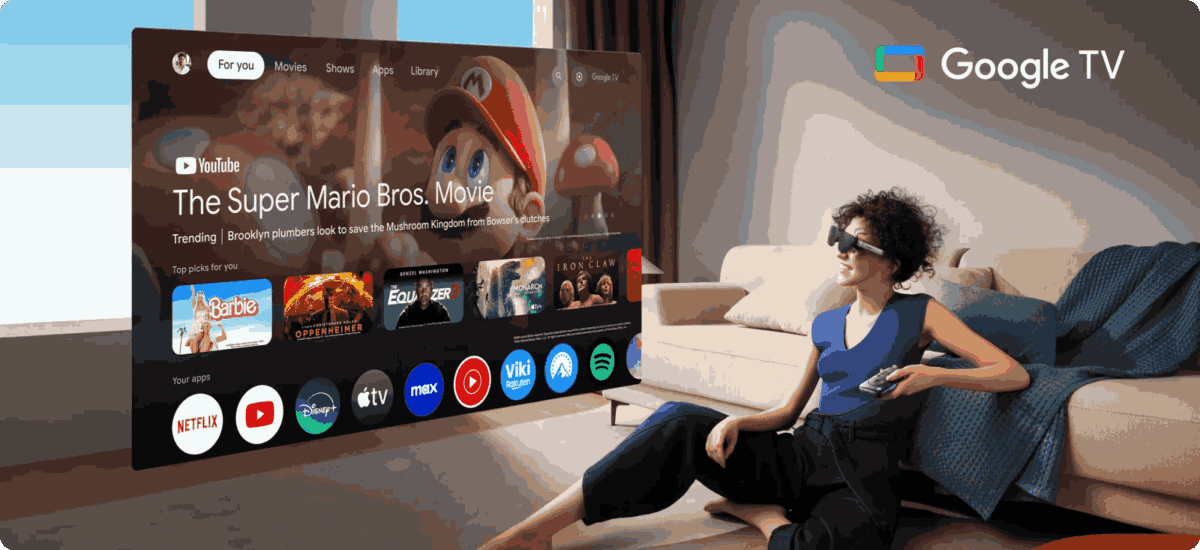
By 2026, wearable display technology has finally matured enough to offer a viable alternative to traditional mobile screens. Devices like the RayNeo Air 4 Pro are leading this charge, promising to transform a chaotic subway ride into a private, cinematic experience that was previously impossible outside a living room.
The Modern Commuter’s Struggle
The typical transit experience involves significant compromises regarding comfort and entertainment quality. Commuters often contend with harsh overhead lighting that washes out screens, forcing them to strain their eyes just to follow a movie plot or read a document.
Privacy is another major concern in these high-density public spaces. Using a tablet or laptop often feels like inviting the passenger next to you to read your emails or watch your show, creating a persistent sense of unease during travel.
The Evolution of AR Display Tech
We have moved past the era where head-mounted displays were bulky, heavy novelties reserved for hardcore developers. The industry has shifted toward lightweight, stylish designs that look increasingly like standard eyewear rather than sci-fi props.
From Gimmick to Daily Driver
Early iterations of these devices suffered from poor battery life and pixelated resolution. Today, the focus has shifted entirely to visual fidelity and ergonomic weight distribution, making extended wear viable for long flights or daily train rides without fatigue.
This maturation of hardware allows Smart Glasses to finally serve as a primary screen replacement for many compatible devices and use cases, especially when your phone, handheld, or laptop supports video-out over USB-C.
Deep Dive: RayNeo Air 4 Pro Visuals
The core appeal of this new hardware generation lies in the optics. The RayNeo Air 4 Pro utilizes dual 0.6-inch Micro-OLED panels (publicly reported as SeeYa), a critical component that distinguishes high-end XR devices from cheaper alternatives found in the budget market.
Understanding Micro-OLED
Micro-OLED technology delivers superior contrast ratios compared to traditional screens. By illuminating pixels individually, the panels achieve perfect blacks, which is essential for maintaining immersion when you are watching dark movie scenes in brightly lit environments like airports.
The 201-Inch Virtual Illusion
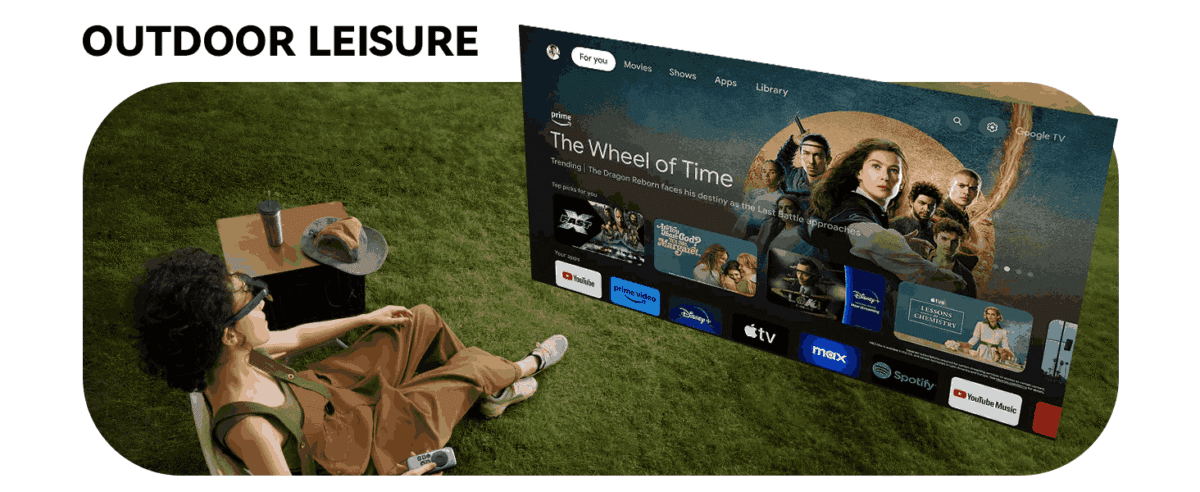
The optical engine projects a virtual image equivalent to a 201-inch screen viewed from six meters away. This creates a theater-like scale that feels expansive yet comfortable, avoiding the “screen door effect” that plagued older VR headsets and ruined image clarity. As with any “virtual screen size” claim, the perceived size depends on the distance/definition used, so you may see different equivalents in other contexts.
HDR10 and Color Accuracy
A standout feature showcased at CES 2026 is the integration of HDR10 support. This dynamic range standard can help the eyewear render brighter highlights and deeper shadows, but the benefit depends on whether your source device and content actually output HDR over the connection. Color accuracy, meanwhile, is better judged by metrics like gamut coverage and color error rather than HDR alone.
Audio Engineering by Bang & Olufsen
Visuals constitute only half of the cinematic equation. To address the audio limitations of thin frames, RayNeo partnered with Bang & Olufsen to redesign the acoustic architecture of the glasses. This collaboration aims to bring premium audio to the wearable form factor.
The ‘Audio Vivid’ Experience
The resulting sound system, dubbed “Audio Vivid,” utilizes specialized algorithms to create a spatial soundstage. This technology attempts to trick the brain into perceiving sound sources from specific locations in 3D space, enhancing the realism of the RayNeo Air 4 Pro without headphones.
Acoustic Privacy in Public
A critical challenge for open-ear audio is sound leakage. The new acoustic system employs sound-guiding structures (often described as tubes/waveguides) and tuning strategies to direct sound toward the user’s ear while reducing what escapes into the surrounding space, addressing a key social friction point.
Gaming and Productivity Ecosystem
While marketing often highlights movies, the versatility of smart glasses extends deeply into gaming and remote work. The high refresh rates and plug-and-play compatibility make these devices a natural extension for handheld consoles and portable PCs—as long as the device supports the right video output.
The Steam Deck Connection
For gamers, the 120Hz refresh rate transforms the experience on handhelds like the Steam Deck. It bypasses the limitations of the console’s built-in 7-inch screen, allowing UI elements and text in RPGs to remain legible and sharp on a much larger canvas. In practice, the smooth “plug-and-play” experience depends on having a USB-C port that supports DisplayPort Alt Mode (or a suitable adapter/dock).
Office on the Go
Productivity users benefit from the ability to set up one or more virtual displays (often via companion software on supported platforms). This capability effectively grants a multi-monitor setup to digital nomads working from coffee shops, where carrying physical external monitors is impractical or impossible due to luggage restrictions.
Versatile Use Cases
These devices are designed to adapt to various input sources seamlessly. The following scenarios highlight where this tech excels over traditional screens:
- Console Gaming: Connecting to a Switch or PS5 for zero-latency gaming on a massive virtual display (typically via an adapter/dock that outputs USB-C video).
- Private Office: Editing sensitive spreadsheets on a plane without worrying about curious onlookers (privacy improves, though brightness/fit and seating angles still matter).
- Drone Piloting: Using the glasses as a high-definition FPV view for photography drones (when the controller/output chain supports compatible video-out).
Technical Specifications & Comparison
To understand where the RayNeo Air 4 Pro stands in the current market, it is helpful to look at the raw specifications. The table below outlines key metrics that define the performance of modern head-mounted displays.
| Feature | RayNeo Air 4 Pro | Standard Smart Glasses |
| Display Panel | 0.6″ Micro-OLED (publicly reported as SeeYa) | Micro-OLED / OLED / LCoS / LCD (varies by model) |
| Virtual Screen Size | 201″ at 6 meters | Typically ~120″–200″+ (varies by definition/optics) |
| Refresh Rate | 120Hz | 60Hz–120Hz (varies) |
| Audio System | Bang & Olufsen | Varies by model |
| Weight | ~76g lightweight design (claimed) | Often ~70g–90g (varies) |
| HDR Support | HDR10 | Mostly SDR; some models add HDR features (varies) |
Verdict: Is It Worth It?
The leap in display technology seen at CES 2026 suggests that wearable displays are ready for mainstream adoption. The visual fidelity provided by Micro-OLED panels finally matches the expectations set by premium home televisions.
For frequent travelers, the investment in a device like the RayNeo Air 4 Pro offers a clear return in quality of life—provided your devices are compatible and your main use cases (movies, handheld gaming, work) match the strengths of wearable displays. It effectively decouples your entertainment experience from your physical surroundings, delivering a consistent, high-end viewing environment wherever you go.

Alex Taylor is a seasoned technology writer and systems specialist with over 5 years of experience in hardware maintenance and digital troubleshooting. He specializes in practical tech guides, focusing on making complex technical repairs and software optimization accessible to everyday users. Alex personally reviews and fact-checks every guide to ensure that maintenance tips are safe, effective, and budget-friendly. Whether it’s a hardware fix or a software setup, his work is driven by a passion for technical clarity and real-world utility.