
Last Updated: 14/June/2026
Many business people talk about clean energy today, but few understand what it truly means. Looking closely at Zero Energy Buildings shows they are not just standard houses with a few solar panels on top. A Zero Energy Building is also not just a property that uses a little less electricity than other offices. To truly know what this means for commercial property, we must look at how these properties run, how much they cost, and how they protect the planet.
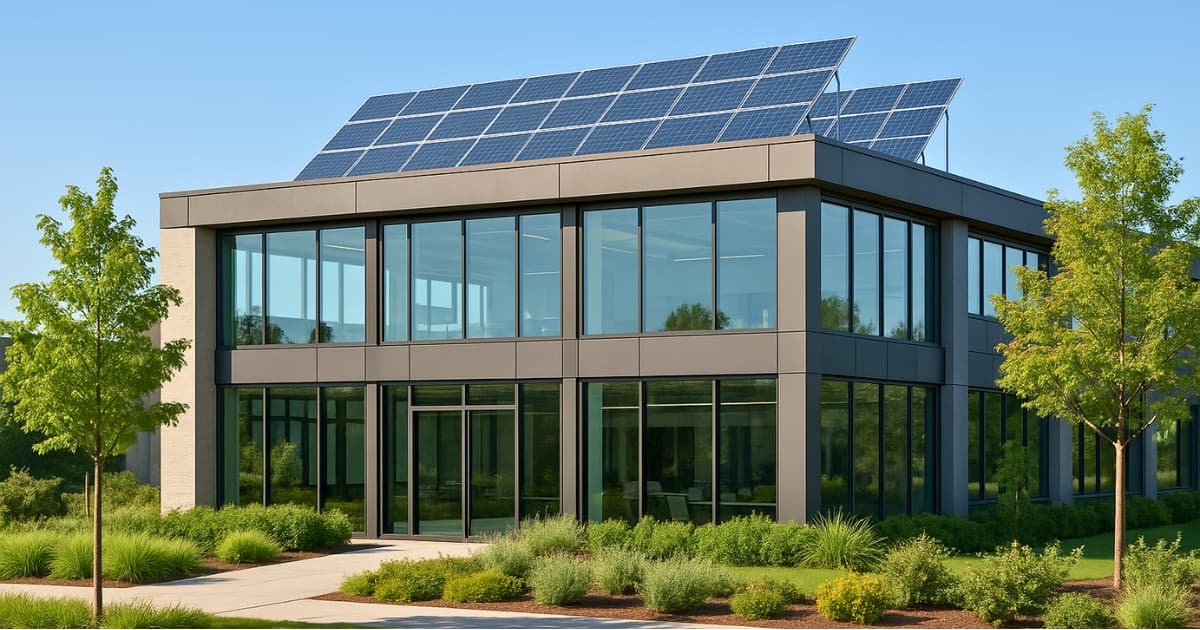
A Zero Energy Building is a highly efficient commercial property that makes as much clean power on its own site as it uses over a whole year. This means the net amount of energy it buys from outside power companies is exactly zero. It balances its own needs by creating its own supply.
Every commercial property owner wants to save money and stop wasting resources. Understanding these new building designs is the first step toward lower utility bills and better real estate value.
What is the Zero Energy Building Concept?
The main idea behind this modern design is total balance. These clean properties do not live completely cut off from the local city power grid. Instead, they talk to the grid like a smart partner.
During very sunny or windy weeks, the property produces much more electricity than it needs. It sends this extra clean power back into the city grid for others to use. During dark winter weeks or heavy storms, the property might not make enough power on its roof. During those cold days, it pulls safe electricity down from the city grid to keep the lights on.
At the end of a full year, engineers look at the math. They check how much power the building took from the grid and how much power it gave back. When the two numbers match perfectly, the property hits a net zero score. This setup keeps the building warm and working in every season without losing power.
Key Components of a Zero Energy Building
Building a high-performance office or store takes great planning from day one. You cannot take a poorly built property and fix it later by putting solar panels on the roof. If a wall leaks air, the solar panels cannot keep up. Green design means making every small part work together as one strong system.
Better Insulation and Building Envelopes
The building envelope is the physical barrier that separates the indoor rooms from the outside weather. To hit a zero energy goal, the insulation inside the walls must be much thicker than normal building codes require.
Windows must use three layers of glass instead of standard double glass. These triple-pane windows have special invisible coatings that stop summer heat from coming inside while letting beautiful natural light shine through. Tight rubber seals around every door and window stop indoor air from escaping, which keeps the temperature stable.
Smart HVAC and Smart Mechanical Systems
Heating, ventilation, and air conditioning systems are known as HVAC. These machines use the most power inside any commercial property. Clean buildings fix this by using highly efficient modern heat pumps and fresh air systems.
These smart systems use heat recovery tools. They take the heat from inside air right before it goes outside and use it to warm up the cool fresh air coming in. Water heaters also use advanced air-source heat pumps to save massive amounts of electricity.
Energy Efficient Lighting and Automation
Traditional light bulbs waste a lot of electricity and create too much extra heat. Clean commercial spaces use light-emitting diode fixtures everywhere. These LED lights use very little power and last for many years.
These lights connect to smart motion sensors and daylight sensors. If an office becomes empty, the lights turn off by themselves. If bright sunlight comes through the big windows, the indoor lights automatically become dim to save power.
Solar Panels and Renewable Generation
Once a building uses very little power, on-site energy generation can do the rest of the work. Solar panels are the most popular choice for commercial land.
Engineers look at the total roof space, the direction of the building, and the local sun patterns. Some big properties in windy areas also add small wind turbines or underground geothermal systems to get clean power from the earth.
Advanced Battery Storage Systems
The latest commercial projects now include big battery storage banks. These batteries save the extra electricity created by the solar panels during the middle of the day. The property can then use this free stored energy at night or during a sudden city blackout. This protects businesses from stopping work when the main power grid goes down.
Why Zero Energy Matters for Commercial Property Owners
The biggest daily cost for any traditional commercial building is the utility bill. For huge office towers, shopping malls, or factories, these utility bills cost hundreds of thousands of dollars each year. Turning a property into a zero energy space changes this financial picture completely.
Even though it costs more money to build a clean property at first, the daily running costs drop fast. Over time, highly efficient buildings only pay tiny fees to stay connected to the city grid. This protects property owners from sudden electricity price hikes in the future.
Financial Comparison: Standard Properties vs. Zero Energy Properties
Building a clean property requires a larger upfront budget. Real estate developers must look at the immediate construction costs and compare them to the long-term monthly savings to see the real profit.
| Cost and Value Metrics | Standard Commercial Building | Zero Energy Commercial Building |
| Upfront Building Cost | Standard Budget (Example: $10 Million) | 5% to 10% More Money ($10.5 to $11 Million) |
| Monthly Utility Bills | High and changes every month | Very low or near zero dollars |
| Money Back Timeline | No payback possible | 7 to 15 years to win the investment back |
| Property Resale Value | Standard market price | Higher price and premium sale value |
| Tenant Attraction | Normal market interest | Attracts top green companies fast |
The financial savings start the exact day the building opens. Because the monthly power bills are so low, the owner keeps more profit.
Also, big global companies now have strict green rules. They look for office spaces that do not hurt the environment. Owners of clean properties have fewer empty rooms and can charge higher rent because their spaces are highly modern and clean. Local tax credits and government cash rebates also help pay back the extra upfront building costs quickly.
Key Advantages and Disadvantages of Zero Energy Buildings
Every real estate business strategy has good points and difficult points. Owners must look at both sides before starting a new project.
Advantages
- Protection from Energy Spikes: Property bills stay low even when city electricity costs go up.
- Higher Property Value: Green buildings sell for more money in the real estate market.
- Lower Repair Costs: Advanced LED lights and smart HVAC parts do not break down as often.
- Great Business Image: It brings in top-quality tenants who care about the earth.
Disadvantages
- Higher Initial Cost: It requires more money during the first building phase.
- Difficult Planning: Architects and engineers must work together closely from the start.
- Space Limits: Tall buildings in crowded cities might not have enough roof space for solar panels.
- Weather Problems: Places with extreme heat or cold require much more expensive engineering.
Real-World Net-Zero Energy Building Examples
Looking at real properties shows that net zero energy consumption works perfectly for big businesses today.
The Edge in Amsterdam
The Edge is known as one of the cleanest and smartest commercial office buildings ever made. The whole south side of this building is covered in high-tech solar panels instead of regular glass.
It uses water from deep underground wells to warm or cool the rooms without using traditional heaters. This building actually creates a little more power than it uses, which makes it a great success.
The Bullitt Center in Seattle
Seattle is famous for cloudy weather and rain, but the Bullitt Center proves that clean buildings can win anywhere. This office has a giant solar roof that sticks out past the walls to catch every bit of sunlight.
It uses 26 deep geothermal wells inside the ground to keep the indoor air comfortable. It has hit its net zero goals every single year while hosting many busy commercial offices.
Current Technical Challenges and Design Boundaries
Reaching a net zero goal is not possible for every single plot of land. Tall skyscrapers in city centers have thousands of workers inside but very small roofs. In those cases, the roof is too small to hold enough solar panels to run the whole tower.
The local climate also changes the plan. A wide warehouse in a sunny, mild area will hit its energy goals much easier than a tall office in a city with heavy snow and humid summers.
Also, regular construction workers need extra training to build these structures. Small mistakes, like a tiny gap in a window seal, can let heat leak out. This can ruin the energy balance of the entire property. Owners must spend extra time testing every machine before tenants move their desks inside.
The Strategic Future of Commercial Real Estate
Building codes are becoming much stricter around the world. Government groups are changing the laws to protect the environment. Many regions now require all new commercial properties and big remodeling projects to be zero-energy ready by the end of the decade.
What used to be a rare test project for universities is now becoming the normal way to build. Real estate professionals who learn these new methods today will be much more successful than landlords who wait until the law forces them to change.
Technology is also helping. Solar panels are getting cheaper and better every year, battery costs are dropping, and smart computer software makes running these systems simple.
Frequently Asked Questions
What are zero energy buildings?
A zero energy building is a highly efficient property that creates as much renewable energy on-site as it uses over a full year. This leaves a net energy use score of zero.
What is a zero energy building also known as?
It is also called a Net Zero Energy Building, an NZEB, or a Net Zero Property.
What is the zero energy concept?
The concept means making a building use very little power by using great insulation and smart lights, then creating that small amount of power using on-site solar energy.
What are nearly zero energy buildings?
These are properties that have excellent energy saving features but still need to buy a small amount of traditional power from the city grid to run completely.
Can a zero energy building work in a cold climate?
Yes. By using thick insulation, triple glass windows, and geothermal ground pumps, these properties can hit their targets even in cold areas.
What is the main barrier to building a zero energy property?
The main barrier is the initial cost. It usually adds 5% to 10% more money to the upfront construction bill, though this money comes back through lower utility bills later.
Disclaimer:
We write this guide to help you learn about green building designs. We try hard to share the best facts and numbers. However, building laws and energy costs can change depending on your city. We do not give official legal or money advice. Please talk to a local engineer or building expert before starting a big project.
You May Also Like:
How to Fix 8379xnbs8e02328ws Error Code on Your Computer
Susie00822 Revealed: The Truth Behind the Trending Search
For More Information, visit TryHardGuides.

Alex Taylor is a seasoned technology writer and systems specialist with over 5 years of experience in hardware maintenance and digital troubleshooting. He specializes in practical tech guides, focusing on making complex technical repairs and software optimization accessible to everyday users. Alex personally reviews and fact-checks every guide to ensure that maintenance tips are safe, effective, and budget-friendly. Whether it’s a hardware fix or a software setup, his work is driven by a passion for technical clarity and real-world utility.