
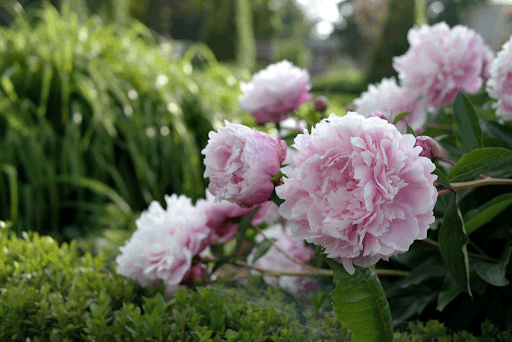
There’s something almost unfair about peonies. Cloud-soft petals, that impossible fullness, they’re already doing half the work before you’ve touched a vase. But here’s what most people don’t realize: the difference between a beautiful peony sitting on a table and one that stops someone mid-scroll? Almost entirely about how it’s arranged with the camera in mind.
Whether you’re shooting wedding flat-lays, Etsy listings, Instagram content, or brand editorial work, the right peony flower arrangement approach changes the entire outcome. And that matters more commercially than you might think. Sixty percent of shoppers now actively search for user-generated product visuals before committing to a purchase, up from 50% in 2021. Photo-ready florals aren’t a vanity exercise. They’re a practical business asset.
Quick Prep That Makes Peonies Camera-Ready
Understanding how to arrange peonies begins long before the first stem meets a vase. Starting with a professionally styled peony flower bouquet from Appleyard London gives you genuine quality to work with, but the real transformation comes in how you position, stage, and shoot what you have.
From a clustered mini-vase carousel to a statement S-curve, these five peony bouquet ideas span every content format. And the peony styling principles woven throughout? They’ll genuinely change how your shots read.
Good preparation separates a beautiful arrangement from a photographable one. Spend ten minutes here. You’ll feel the difference across every single shoot.
Bloom-Stage Planning for Photos
Aim for 60–70% “marshmallow-stage” blooms, open enough to show real volume, but not yet shedding petals. Add one or two tighter buds for structural contrast and one fully-open hero bloom for visual drama.
Need to fast-track opening before a shoot? Warm room, fresh angled cut. Want to slow things down? A cool space until the shoot morning handles it.
Stem and Waterline Details That Prevent Droop
Once your bloom stages are sorted, stem control becomes the next priority. Re-cut all stems at an angle. Strip anything sitting below the waterline; cloudy water is surprisingly obvious in clear vases. Cluster stems tightly at the binding point to counter head flop, and always refresh the water immediately before you shoot.
Styling Kit Checklist
Before you build anything, have your kit assembled. Clear florist tape for a vase-mouth grid, a flower frog or pin holder, sharp snips, matte ribbon, and a neutral cloth backdrop cover the essentials.
For photo-specific setups specifically, a white foam board bounces light softly onto petals, while a matte black board creates controlled shadow depth where you want it.
Styling Principles for a Photogenic Peony Flower Arrangement
Prep done. Now you need to think simultaneously like a photographer and a florist, because the concept-level decisions you make here determine whether an arrangement reads as editorial or merely decorative.
Colour Palette Rules That Read “Expensive” in Photos
Monochromatic tonal gradients, cream into blush into coral, create genuine depth without visual noise. Limit supporting accent colours to one maximum. Keep foliage consistent within a single green “family.” Mixing eucalyptus with ruscus with fern simultaneously fragments the eye in a way that’s almost impossible to fix in post.
Shape Recipe for Peony Styling for Photos
Place one to three hero peonies at the visual apex as your clear focal point. Frame them with greenery that creates a soft vignette effect around the edges.
Leave deliberate negative space so individual petals read clearly on camera rather than merging into one indistinct mass. Colour palette sets the mood, but shape controls where the eye actually travels.
Texture Layering That Doesn’t Compete
Introduce micro-textures, seeded greens, and small accent blooms only at the outer edges, never across the focal zone. Keep fillers genuinely minimal. The moment filler elements begin competing with petals for attention, the arrangement stops reading as considered and starts reading as cluttered.
Arrangement #1: Editorial “Monochrome Cloud” Vase
The most versatile build in this list. Clean, bright, built for close-ups and product photography specifically.
Best For
Minimal interior shots, product photography, tight Instagram frames, and bright editorial content.
Build Steps
Create a tape grid across the vase mouth for consistent spacing. Establish your tallest stems first to map the silhouette, then fill the mid-section and finish with low collar blooms around the rim.
Rotate the vase as you build so every angle reads well. Use side light and slightly underexpose to preserve highlight detail on white or ivory petals. It’s a small adjustment that makes a measurable difference to the final image.
Arrangement #2: Garden-Gathered Spiral Hand-Tie
The Monochrome Cloud suits stillness. For candid holding shots, lifestyle reels, or that just-picked aesthetic, the spiral hand-tie delivers something a vase arrangement fundamentally cannot.
Build Steps
Start with one peony, then add each subsequent stem at the same consistent downward angle to build a natural spiral. Keep hero bloom faces oriented forward and rotate the bunch every two or three stems. Bind firmly at the grip point and trim to a gentle dome, not a tight, compressed ball.
For photo upgrades, wrap with matte silk or linen ribbon in a muted tone and leave long tails for movement. Pair with neutral knits or raw wood surfaces. Avoid anything glossy; it competes.
Arrangement #3: Low “Bloom Bowl” for Flat-Lays
The spiral hand-tie works beautifully in motion. For overhead storytelling, though, the Bloom Bowl is built exclusively for the flat-lay frame.
Build Steps
Add shallow water and position or short-stem blooms so faces point upward toward the camera. Build your focal cluster first, then create a looser ring around it.
Concentrate stronger colour tones near the focal cluster rather than distributing them evenly; that visual “hotspot” is exactly what an overhead lens will lock onto. Use the bowl as your anchor shape and build a simple triangle composition with two or three props positioned around it.
Arrangement #4: Clustered Mini-Vases for Carousel Content
The Bloom Bowl gives you one strong, anchored flat-lay image. But when you need an entire carousel’s worth of distinct, cohesive shots from a single setup, mini-vases are the most efficient approach available.
Worth noting: word-of-mouth and social media marketing are now the dominant advertising strategies among small businesses, at 61% and 57% respectively. Repeatable, photogenic floral setups aren’t just aesthetic decisions; they’re genuinely business-building tools.
Build Steps
Assign one “hero vase” with your largest bloom and position it slightly forward from the rest. Arrange the remaining vases from deepest shade to lightest across the line for immediate visual flow. Vary stem heights subtly, avoid the rigid “soldiers in formation” effect.
From one setup, you can realistically capture a wide establishing shot, a hero close-up, a hands-adjusting frame, a top-down perspective, a petal detail image, and a negative-space shot for text overlays. That’s six distinct images minimum from a single arrangement.
Arrangement #5: Statement Asymmetry “S-Curve”
Mini-vase clusters create impact through repetition. The S-Curve creates it through drama. This is your moody editorial build, your luxury welcome-table arrangement.
Build Steps
Establish the line structure first: one tall upward line, one outward-reaching line, one returning line, tracing a deliberate S-path through the arrangement.
Position two or three focal peonies at each curve turn, where the eye naturally pauses longest. Finish with a light greenery halo that frames without concealing petals.
Back this arrangement against a textured plaster wall or dark linen drape for strong petal contrast. Leave one intentional bloom “lean” for movement, then lock stems firmly with your tape grid.
Aesthetic Shot Setup Guide
Even a perfectly styled peony arrangement for photography can fall completely flat if the surrounding environment isn’t working with it.
| Shot Type | Best Angle | Light Source | Background |
| Vase arrangement | Eye-level, slight side angle | North-facing window | Linen or stone |
| Hand-tie bouquet | 30–45° downward | Diffused sheer curtain | Raw wood or neutral knit |
| Flat-lay bowl | True overhead | Bounce card fill | Matte unfinished surface |
| S-Curve editorial | Slight low angle | Side-raked natural light | Textured plaster or dark wood |
| Mini-vase cluster | Eye-level + top-down | Reflected window light | Pale stone or aged wood |
For editing, lower highlights before adjusting anything else, this is the single most important step for preserving petal detail on whites and creams. Then lift shadows slightly and add subtle texture clarity. Resist over-sharpening edges. It makes petals look artificial faster than almost any other mistake.
Common Styling Mistakes That Ruin Peony Arrangements for Photography
Correct light, correct angle, and still the shot looks wrong. These are the quiet culprits worth knowing before they cost you a shoot.
“One giant pink blob”, resolve with intentional negative space, tonal variety, and one consistent greenery frame anchoring the composition. Droopy heads mid-shoot, tighter binding point, shorter stems, heavier base vase.
Visible tape or murky water, keep tape below the vase rim and use a greens collar to conceal the waterline entirely. Overfilled arrangements, remove stems rather than adding more. One clear focal zone consistently outperforms ten competing ones.
Frequently Asked Questions
1. What flowers pair well with peonies without overpowering them in photos?
Iris, foxglove, allium, lavender, and poppy all complement peonies without competing. Keep companion blooms slightly smaller and in a complementary tone to your existing peony palette.
2. How do you arrange peonies properly?
Place the largest, most open blooms at the centre. Layer smaller blooms outward for texture and depth. Add one type of greenery, fern fronds, tree branches, or hosta leaves, to complement the arrangement without introducing clutter.
3. What is the 3-5-8 rule for bouquets?
Three flower types, five stems of greenery, eight stems of filler. It’s a reliable starting framework that creates visual balance without overcomplicating the design process, particularly useful when you’re building arrangements quickly.
Arranging Peonies for the Camera
Getting genuinely compelling shots from peonies isn’t complicated, but it absolutely requires thinking about bloom stage, stem control, colour discipline, and negative space before the camera comes out.
Each of the five builds here, from the Monochrome Cloud through to the S-Curve, gives you a repeatable format that holds across different content types and varied lighting conditions. Start with one arrangement.
Shoot it from three distinct angles. Notice how much more confident the results feel when the structure was built with the lens in mind from the very beginning. That’s not luck. That’s the method.

Emma Rose is the founder of TryHardGuides.co.uk and a senior content strategist specializing in lifestyle, personal development, and digital entrepreneurship. With a focus on evidence-based living, she produces actionable content designed to help readers make informed life decisions and navigate the evolving tech-lifestyle landscape. As the editorial lead, Emma oversees the site’s mission to provide trustworthy, high-authority information. Her work reflects a commitment to personal growth, transparency, and the pursuit of a well-balanced, informed life.