
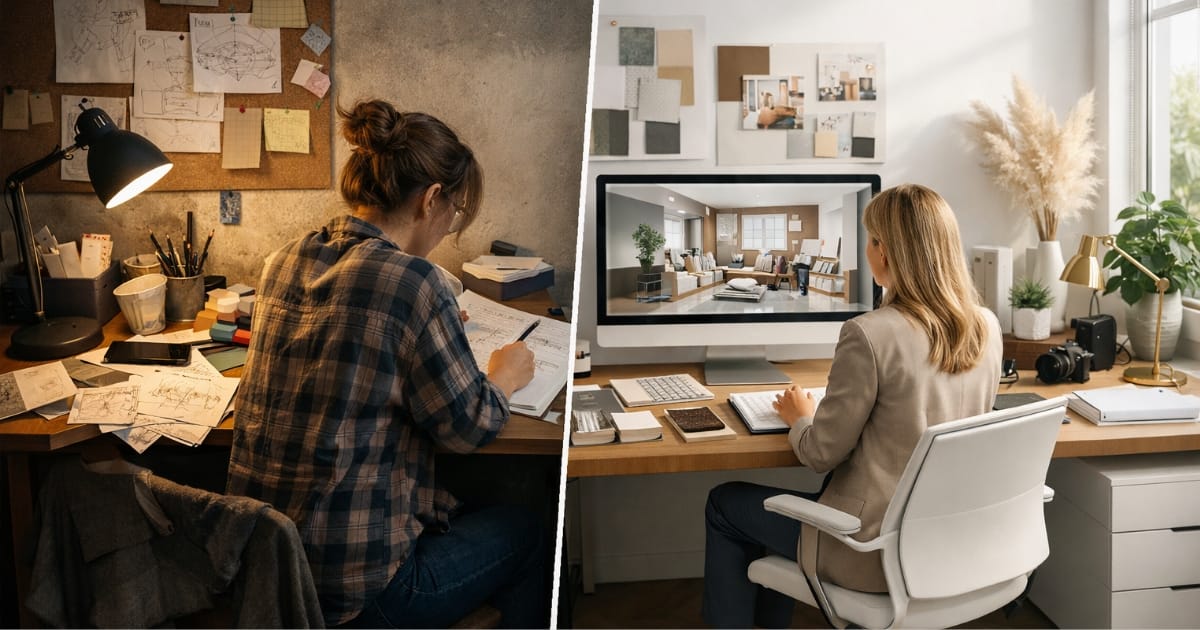
Becoming a successful interior designer is about far more than having a good eye for colour and layout. It’s a continuous process of learning, refining your style, building technical skills, and understanding how to bring ideas to life in real-world spaces. Whether you’re just starting out or looking to elevate your career, developing yourself as an interior designer requires a balance of creativity, strategy, and practical expertise.
Refine Your Personal Style
Every great interior designer has a recognisable point of view. That doesn’t mean limiting yourself; it means understanding what you naturally gravitate towards and developing it with intention.
Start by paying attention to the materials, colours, and textures you repeatedly choose, as well as the types of spaces that inspire you most. It’s also worth considering how you balance trends with timeless design. Over time, these patterns will help shape a distinct style that sets your work apart in a competitive industry.
Strengthen Your Technical Knowledge
Behind every beautiful space is a foundation of technical understanding. Interior designers need to be confident in areas such as spatial planning, lighting design, and materials.
Developing your technical skills might include:
- Learning design software like CAD or 3D visualisation tools
- Understanding building regulations and safety requirements
- Gaining knowledge of sustainable materials and practices
The more technically capable you are, the easier it becomes to turn creative ideas into practical, functional designs.
Build a Strong Portfolio
Your portfolio is your most powerful tool. It tells your story, showcases your abilities, and demonstrates your versatility as a designer. Rather than simply displaying finished projects, aim to show the full design process. You should include mood boards, sketches, and before-and-after transformations where possible. Even if you’re just starting out, conceptual projects or redesigns of existing spaces can effectively highlight your creativity and potential.
Stay Inspired and Informed
Interior design is constantly evolving, influenced by culture, technology, and lifestyle changes. Staying inspired is essential for growth.
This can be as simple as regularly following industry publications, visiting showrooms or exhibitions, and observing everyday spaces like cafés, hotels, or retail environments. Inspiration often comes from unexpected places, so maintaining curiosity is key to developing fresh and innovative ideas.
Invest in the Right Tools and Equipment
As your work becomes more advanced, the tools you use can significantly impact the quality of your output. High-quality visual presentations, custom prints, and material samples can elevate how your ideas are perceived by clients.
Working with a Mimaki printer distributor can help you access professional-grade equipment for producing detailed visuals, large-format prints, and bespoke design elements. This allows you to present your concepts more effectively and bring a higher level of precision to your projects. Having the right equipment isn’t just about convenience; it’s about professionalism and delivering a premium experience.
Develop Client Communication Skills
Design is deeply personal, and every client has their own vision, preferences, and expectations. Being able to communicate clearly and confidently is just as important as your creative ability.
Strong communication starts with listening. You want to have a great understanding of what the client truly wants, even if they struggle to articulate it. From there, it’s about explaining your ideas in a way that’s easy to visualise, while also managing expectations around timelines, budgets, and outcomes. A positive client experience is often what leads to repeat work and referrals.
Build Your Professional Network
Interior design is a relationship-driven industry. Building connections can open doors to new opportunities, collaborations, and clients.
Networking can involve:
- Connecting with suppliers, contractors, and manufacturers
- Engaging with other designers and creatives
- Attending industry events and trade shows
A strong network not only supports your growth but also enhances the quality of your work through collaboration.
Developing yourself as an interior designer is a journey that combines creativity with discipline. By investing in your skills, tools, and mindset, you can build a career that is both fulfilling and impactful, creating spaces that truly resonate with the people who use them.
You May Also Like: Smart Business Saving Strategies: How Companies Can Cut Costs and Maximize Growth

Emma Rose is the founder of TryHardGuides.co.uk and a senior content strategist specializing in lifestyle, personal development, and digital entrepreneurship. With a focus on evidence-based living, she produces actionable content designed to help readers make informed life decisions and navigate the evolving tech-lifestyle landscape. As the editorial lead, Emma oversees the site’s mission to provide trustworthy, high-authority information. Her work reflects a commitment to personal growth, transparency, and the pursuit of a well-balanced, informed life.