
You find the perfect rug online, order it with confidence, and then stand in your living room watching it sit there like a sticky note on a billboard. It happens constantly, and honestly, it’s one of the most fixable decorating mistakes you’ll ever make.
This guide walks you through exactly how to choose rug size for every room, backed by designer logic, real room-by-room recommendations, and a couple of surprisingly simple visualization tricks that remove all the uncertainty.
Here’s a number worth knowing before we get into it: according to Architectural Digest research, 84 percent of people preferred rugs that extend beneath the main furnishings in a room, which means sizing up is almost always the smarter instinct.
When you shop for area rugs, the real differentiator isn’t the pattern or color, it’s whether you know precisely how the rug will function inside your space.
A well-sized rug anchors your furniture grouping, creates intentional zones, and quietly signals that your room was designed with purpose rather than assembled by chance. Get it wrong, and even the most beautiful piece can make a room feel off in ways that are hard to name.
Now that you understand what’s actually at stake, let’s build the foundational knowledge that makes every sizing decision feel straightforward, starting with the core principles that professional designers rely on.
Smart Foundations: Understanding Area Rug Size Basics
Before you pull out a measuring tape, it helps to understand the thinking behind good rug decisions. These aren’t inflexible rules handed down from on high. They’re reliable starting points that work regardless of your room’s size, shape, or aesthetic.
Why Rug Size Is the Most Common Decorating Mistake
Too small, and your furniture looks like it’s floating, disconnected from the floor and from everything else around it. Too large, and the rug can swallow the room whole, particularly in tighter spaces.
The fix is more intuitive than most people expect. Your sizing decisions should be driven by your seating arrangement, not the room’s overall square footage.
Rule of Thumb: Leave a Proper Exposed Border
Designers consistently recommend leaving 6 to 18 inches of bare floor between the rug’s edge and the wall in smaller rooms, scaling up to 12 to 24 inches in larger spaces. That visual breathing room isn’t decoration, it’s structure. It keeps things balanced rather than crowded.
Designer Ratio Insights for Visual Balance
The “two-thirds rule” shows up in living room design regularly for a reason: your rug should span roughly two-thirds the length of your sofa. This proportion creates an implicit relationship between furniture and floor that registers as visually correct, even when most people can’t articulate why it works.
Seating Area Over Room Size
Mapping your furniture layout before you ever look at a rug is the most reliable method available. Think of the rug as the foundation your seating group is built upon, not simply floor covering that fills negative space.
With those fundamentals in place, border margins, designer ratios, seating-first thinking, it’s time to apply them room by room, where the real decisions get made.
Area Rug Size Guide by Room Function
Every room has its own sizing logic. What performs well in a bedroom won’t translate to a dining room, and entryways operate by a different set of rules entirely. Here’s how to approach each one.
Living Room, Best Rug Size for Living Room
The best rug size for living room spaces typically falls between 8×10 and 9×12 for average-sized rooms. At a minimum, the front legs of your sofa and main chairs should rest on the rug, this is what connects your seating group without demanding an enormous footprint.
In larger rooms, positioning all furniture legs on the rug creates something that reads as genuinely luxurious and cohesive. A 5×8 can serve a compact apartment sitting area, but anything smaller slides quickly into that dreaded floating-furniture territory.
Bedroom, What Size Rug for Bedroom
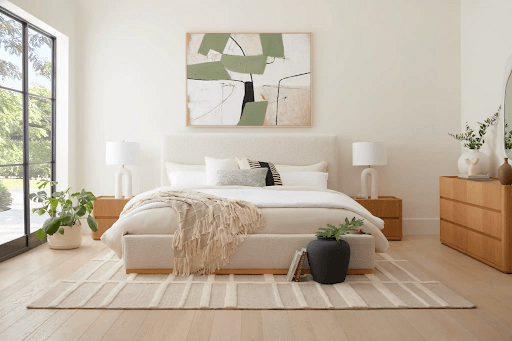
Determining what size rug for bedroom use depends heavily on your bed. The rug should extend 18 to 24 inches beyond the sides and foot of the bed, so when you step out in the morning, your feet meet something warm rather than bare floor.
A quick reference by bed type: Twin beds pair well with a 5×7; Full beds with a 6×9; Queen beds with an 8×10; King beds with a 9×12 or two runners positioned along each side.
Dining Room
Your dining rug has one primary job: staying under the chairs even when they’re pulled out from the table. That requires adding at least 24 to 30 inches on every side of the table, less than that and chairs will catch the edge every time someone sits down.
An 8×10 handles most standard dining sets comfortably. A 9×12 is the better call for larger tables or open-plan spaces. Round tables tend to look most natural with round or square rugs of a compatible proportion.
Entryway and Runners
Runners in the 2½×8 foot range are standard for hallways and entry zones. They define movement paths without cramping the space. For tighter entryways or the area beneath a console table, small accent rugs in the 2×3 or 3×5 range work well.
Getting your dimensions right room by room is genuinely a game-changer, but before anything lands in your cart, there’s one more step that experienced designers never skip.
Visual Tools and Tech-Forward Tactics to Nail Rug Sizing
Even armed with precise measurements, it’s remarkably easy to misjudge how a specific footprint will feel once you’re standing in the actual room. Testing first is always worth the extra fifteen minutes.
Painter’s Tape and Cardboard Mock-Ups
This one sounds almost too simple. Grab painter’s tape and mark your intended rug dimensions directly on the floor. Walk around it. Sit nearby. It sounds low-tech because it is, and it’s still one of the most effective methods for visualizing sizing before you spend a dollar.
Virtual Room Planners and AR Apps
Several retailers now offer augmented reality tools that use your phone’s camera to place a rug preview directly into your actual space. If you’re torn between two sizes, these tools usually confirm what designers already know: when genuinely uncertain, go larger. A bigger rug reads as more intentional and more polished, almost without exception.
Once your sizing is confirmed through tape, technology, or both, the next variable that can either complete or undermine your decision is material, because even a perfectly sized rug will fall short if it doesn’t match how you actually live.
Materials, Traffic, and Rug Pad Considerations Alongside Sizing
The market reflects how seriously people have started taking this category: according to Catalina Research via Floor Covering Weekly, area rugs grew their category share from 11.7% to 12.6% in just one year, a signal that more homeowners are actively investing in rugs as a deliberate design choice rather than an afterthought.
That investment holds up longer when you match material to traffic patterns. High-pile rugs create stunning visual texture in bedrooms, but they make chair movement around dining tables awkward and frustrating. Low-pile and flatweave options perform significantly better in high-use zones.
A rug pad is non-negotiable regardless of size or material. It prevents slipping, cushions every step, protects your flooring underneath, and extends the rug’s lifespan in ways that justify the modest additional cost. Size the pad to sit just inside the rug’s border, this keeps edges flat and prevents curling at corners.
With sizing, materials, and rug pads all addressed, here’s a quick-access reference that consolidates everything into one scannable table.
Quick Reference Cheat Sheet
| Room | Recommended Size | Key Rule |
| Living Room | 8×10 or 9×12 | Front or all legs on rug |
| Bedroom (Queen) | 8×10 | 18–24″ beyond bed sides and foot |
| Bedroom (King) | 9×12 | Full coverage or layered runners |
| Dining Room | 8×10 or 9×12 | 24–30″ beyond table on all sides |
| Entryway/Hallway | 2½×8 runner | Frame the path, not wall-to-wall |
| Small Accent Area | 2×3 or 3×5 | Define zone without crowding |
This area rug size guide keeps every critical sizing rule in one place, no re-reading required when you’re standing in a showroom trying to make a decision in real time.
Frequently Asked Questions
What’s the biggest mistake people make when choosing a rug?
Choosing one that’s too small. An undersized rug disconnects furniture from its surroundings and makes the room feel incomplete. When you’re weighing two sizes, the larger one almost always delivers the more polished result.
How big should a rug be for a living room?
For most living rooms, an 8×10 or 9×12 covers the range well. At minimum, all front legs should rest on the rug. In larger rooms, placing every leg on the rug creates a fully anchored, cohesive seating group.
Why should I leave space between the rug edge and the wall?
That exposed floor border, typically 6 to 24 inches depending on room size, introduces visual breathing room. Without it, the rug reads like wall-to-wall carpet and loses the definition that makes a room feel deliberately designed.
How do I use painter’s tape to choose rug size?
Mark the exact rug dimensions on your floor using painter’s tape. Walk around it. Sit in your usual spot. Live with the taped outline for a day if needed. You’ll know very quickly whether the footprint works or whether it needs adjusting.
Can I go larger if I’m unsure?
Absolutely, most designers would actively encourage it. Oversized rugs generate a sense of luxury and cohesion that smaller rugs simply cannot replicate. The risk of going too large is genuinely smaller than the risk of going too small.
Final Style Tips to Make Your Rug Work for You
The area rug sizing tips with the most lasting impact extend past raw measurements. Layering two rugs, a natural flatweave as a base, topped with a smaller patterned piece, is a clever workaround when a single size doesn’t quite solve the problem. It adds texture and dimension simultaneously.
Matching rug shape to room geometry matters as well. Rectangular furniture groupings typically call for rectangular rugs, while round accent tables pair naturally with round rugs. And always confirm that your rug shape and area rug sizing tips actually pull your furniture together rather than simply occupying floor space beneath it. A well-placed rug should feel purposeful, not accidental.
Get the Size Right, Every Time
Choosing the right rug size stops being complicated once you understand the logic behind it. Anchor your furniture grouping, respect the border margins, and always test your dimensions before you commit.
Room by room, the right size elevates everything, making your space feel more cohesive, more comfortable, and more considered. Whether you’re furnishing a studio apartment or a large family home, the same principles apply consistently. And now you have every tool you need to apply them with complete confidence.

Emma Rose is the founder of TryHardGuides.co.uk and a senior content strategist specializing in lifestyle, personal development, and digital entrepreneurship. With a focus on evidence-based living, she produces actionable content designed to help readers make informed life decisions and navigate the evolving tech-lifestyle landscape. As the editorial lead, Emma oversees the site’s mission to provide trustworthy, high-authority information. Her work reflects a commitment to personal growth, transparency, and the pursuit of a well-balanced, informed life.