
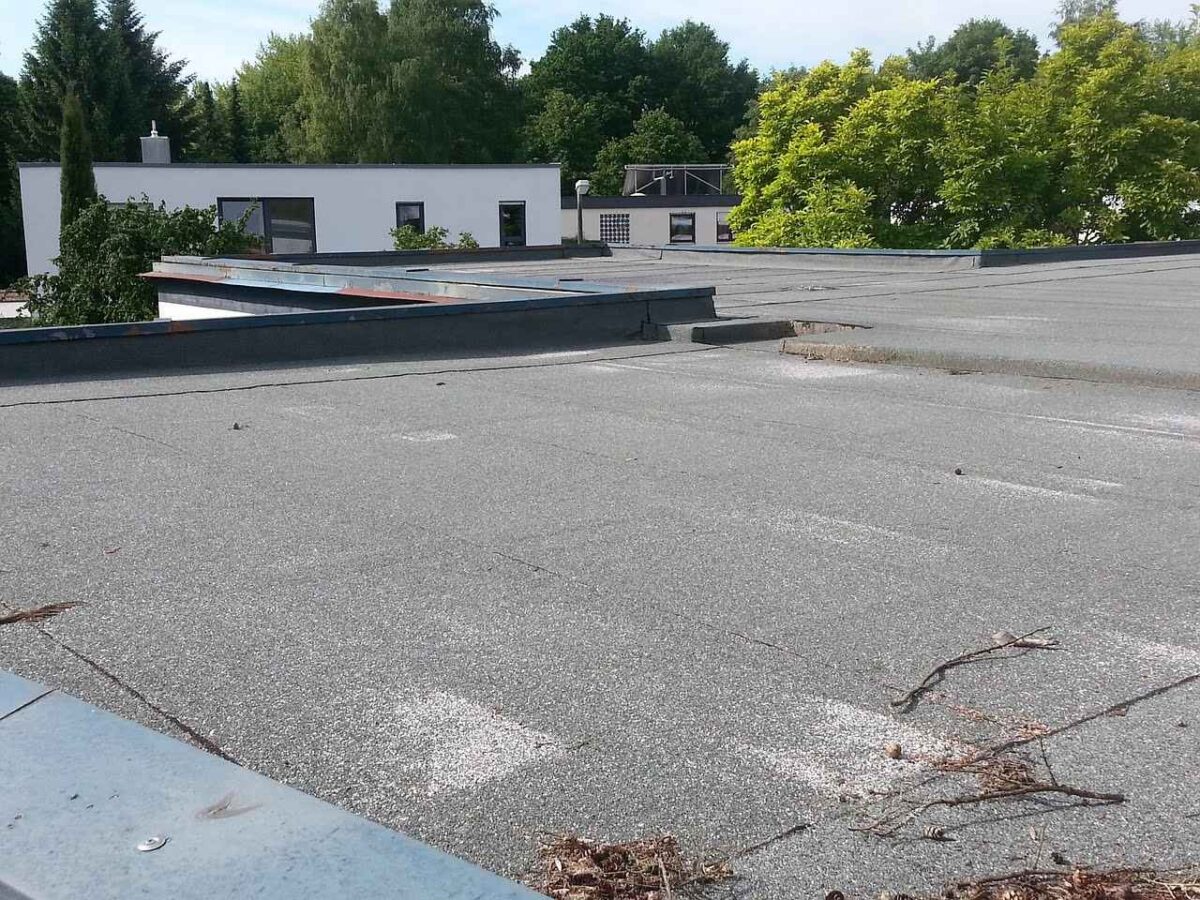
Flat roofs are common on commercial buildings and are often some of the most underused spaces on a business property. Whether you own a hotel, factory, hospital, office building or retail store, it’s important to consider how you can make the most of a flat roof. With the right upgrades, you could improve your building’s durability, sustainability, comfort or even brand reputation. Below are just a few ideas to consider.
For Durability – EPDM Rubber
If you’ve already had to make repairs to your flat roof, start by considering how you might be able to improve its durability. Installing an EPDM roof is recommended if you want to reduce future damage.
This synthetic rubber material can last over 50 years with little to no maintenance, making it a great investment. It expands and contracts with the temperature of your building, withstanding extreme temperatures better than most other materials. On large factory and warehouse roofs, EPDM can also come in long continuous sheets. Fewer seams means less leaks, making EPDM useful in heavy rainfall areas.
Fiberglass and metal are other options that provide good longevity, although they can cost more to install. PVC roofs meanwhile offer excellent fireproofing, but can degrade faster than EPDM over time.
For Cooling – White Reflective Membranes
In hot climates, upgrading to a ‘cool roof’ could be worthwhile. This involves using white reflective membranes to repel heat from the sun and keep your property cooler longer.
In properties like hotels and offices where comfort is a priority, cool roofing can be a very valuable upgrade. White reflective membranes can also reduce HVAC demand, saving you money on energy bills and preserving the life of your HVAC system.
Such membranes are typically made from materials like TPO or PVC. A cheaper option may be to simply add a white elastomeric coating to your existing roof.
For Energy Savings: Solar Panels
One of the best flat roof upgrades to help you slash your energy bills is installing solar panels. These can be fitted using commercial flat roof mounts.
Solar panels are great investments for businesses that use a lot of energy like factories, hospitals and hotels. They can be particularly efficient in locations that receive a lot of sunlight (make sure other buildings aren’t casting a shadow over your roof for most of the day). Solar panels may also come with tax deductions, plus you may be able to sell excess energy generated. You’ll also boost the value of the building.
Find a solar system within your budget and explore payback options. Factor in whether to install a battery for energy storage overnight. Solar installation companies can help you to decide exactly which locations to place panels and how to angle them to maximize energy harvesting.
For Brand Visibility: Roof Signage
You could also consider installing signage on your roof to help advertise your business to those nearby. Restaurants, retail stores and hotels can benefit mostly from this modification.
Roof signage comes in many forms. 3D lettering is a popular choice that could be illuminated for salience at night. This is best placed at the edge of a flat roof on a metal frame. Signage can also be painted directly onto a flat roof to be viewed from above – this is most effective on large low flat roofs surrounded by larger buildings.
It’s worth noting that you don’t have to use your roof to advertise your own business. Roofs can also be leased out as billboard space via an outdoor advertising company. This could be a good source of passive income if your company premises overlook a busy road or high traffic area.
For Leisure Usage: Roof Terrace
Roof terraces are an often overlooked way to make use of a flat roof. This involves adding a surface like asphalt, outdoor seating and some greenery in order to turn it into a leisure space.
For hotels, terraces are excellent places to add bars for guests or even swimming pools. Restaurants can meanwhile use terraces to create attractive dining outdoor space. As for office buildings, a terrace could make a relaxing break area or even an additional space for informal meetings and events.
Be wary that this can be an expensive upgrade as it typically involves reinforcing the roof first to take extra loads. You’ll also need to fit guardrails or parapets for safety and add a suitable staircase leading to your roof if there isn’t already one. Terrace design companies will be able to help you look into all the details.
For Natural Light: Skylights
Skylights are windows on the roof. Such windows can allow sunlight to flood in from above – a useful feature on properties that don’t have many windows.
For large single storey retail buildings, this can help natural light to penetrate inner areas, making your store brighter and cheerier. Skylights could also be used to brighten up hotel foyers or office lobbies to make these spaces more welcoming.
Make sure skylights are designed with energy performance in mind so that you’re not losing heat through them. You should also place them in areas where they will allow a suitable amount of light in without causing problems like glare on computer screens or excess heat in areas that need to be kept cool.
For Drainage: Tapered Insulation
Pooling water is one of the biggest causes of damage to flat roofs. Older buildings in areas that get a lot of rain can be particularly susceptible to leaks. While you can completely renovate your roof to make it sloped and improve water runoff, tapered insulation could be a more economical solution.
This involves adding subtle slopes to certain areas in order to direct water into drains and gutters. The existing roof does not have to be replaced – layers of insulation are simply added over the top in varying thicknesses.
Tapered insulation can also improve thermal performance, keeping heat out to reduce energy bills in cool climates. Specialist roofing companies can design tapered insulation that is best suited for your building by looking at where water is most likely to accumulate.

Alex Taylor is a seasoned technology writer and systems specialist with over 5 years of experience in hardware maintenance and digital troubleshooting. He specializes in practical tech guides, focusing on making complex technical repairs and software optimization accessible to everyday users. Alex personally reviews and fact-checks every guide to ensure that maintenance tips are safe, effective, and budget-friendly. Whether it’s a hardware fix or a software setup, his work is driven by a passion for technical clarity and real-world utility.