

Last Updated: 09/April/2026
Falling into a high-flow waterfall like the Follheur Waterfall in the Vosges Mountains of France is a serious emergency. If you fall, you will face intense water pressure, extreme cold, and a powerful circular current at the bottom. Understanding what happens if you fall into Follheur Waterfall can save your life because it helps you stay calm and take the right steps to survive. Most people face severe trauma from the impact or struggle to breathe in the aerated white water. To survive, you must keep your body in a vertical position and swim away from the base of the falls as soon as you reach the bottom pool.
Quick Safety Summary
- Impact: Landing flat can feel like hitting concrete; stay in a vertical “pencil” position.
- Buoyancy: White foam is aerated, meaning you will sink faster than in normal water.
- Current: Escape the “washing machine” effect by swimming along the bottom, not toward the surface.
- Temperature: Cold shock happens instantly; keep your mouth closed to avoid inhaling water.
Technical Details of Follheur Waterfall
The Follheur Waterfall is located in a rugged area of the Vosges Mountains. It has a height of approximately 10 to 12 meters, which is enough to cause significant impact force. The water flow is often very fast, especially after rain or when snow melts in the mountains. The base of the waterfall is a deep plunge pool filled with large, submerged rocks. Because the water falls from a great height, it carries a lot of energy that carves out deep holes in the stone floor. This creates a dangerous environment where the water moves in a constant loop, making it very different from a calm lake or a swimming pool.
What Happens During the Initial Impact?
When you fall from the top of the falls, gravity pulls you down at a high speed. If you hit the water flat on your back or stomach, the surface will feel as hard as a concrete floor. This happens because water molecules cannot move out of the way fast enough at high speeds. This impact can break bones, crush ribs, or cause internal organ damage.
The water at the base is also filled with air bubbles, which is often called aerated water. This white foam has a much lower density than regular water. In a normal pool, your body floats easily, but in this aerated foam, you will sink much deeper and faster. This lack of buoyancy is a major reason why even strong swimmers find it hard to stay on the surface at the bottom of a waterfall.
How to Survive a Fall Into Follheur Waterfall
If you find yourself slipping over the edge, you must act quickly to protect your body. Follow these survival steps to increase your chances of getting out safely:
- Take a Deep Breath: Try to fill your lungs with air just before you hit the water. This gives you extra oxygen and helps your body float a bit better.
- The Pencil Position: Keep your body straight with your feet pointing down. This allows you to slice through the water like a needle, reducing the force of the impact.
- Protect Your Head: Wrap your arms tightly around your skull. This protects your brain from hitting hidden rocks or logs under the surface.
- Tighten Your Muscles: Keep your legs and core tight to prevent the water from tossing your limbs around.
- Swim Sideways: Once you are underwater, do not try to swim straight up. Instead, swim along the bottom away from the falling water to escape the heavy pressure.
The Danger of Freezing Water Temperatures
The water in the Vosges Mountains stays very cold throughout the year. When you fall into freezing water, your body experiences something called cold shock. This makes you gasp for air automatically. If your head is under the water when you gasp, you will inhale water into your lungs, which leads to immediate drowning.
Within 3 to 5 minutes of being in the water, hypothermia begins to set in. The cold pulls heat away from your heart and brain. Your muscles will become stiff, and your fingers will lose their grip. This is why you must reach the shore as fast as possible. Even if you are a great swimmer, the cold will eventually make it impossible to move your arms and legs.
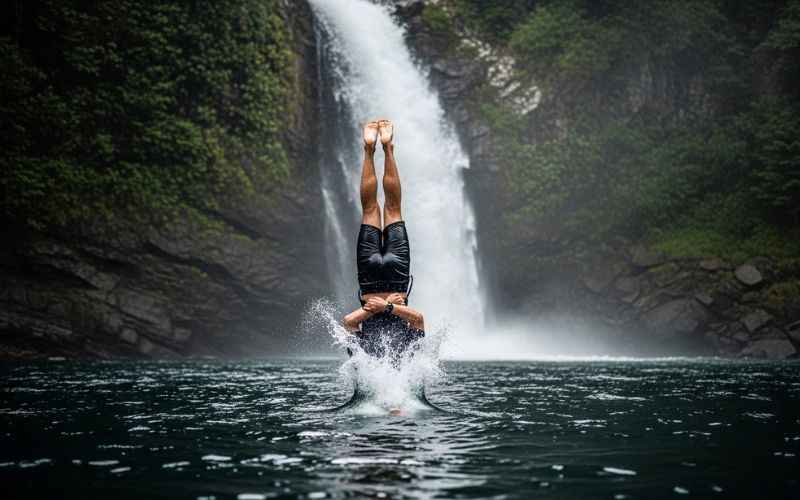
How to Get Out of a Recirculating Current
The most dangerous part of the Follheur Waterfall is the “washing machine” effect. This is a recirculating current in the plunge pool. The falling water pushes you down to the bottom, and then the current moves you back toward the waterfall. This loop can trap a person underwater for a long time.
To escape this trap, you must stay calm and stop fighting the surface. Most experts suggest swimming toward the bottom or along the floor of the pool. The water near the bottom eventually flows downstream and away from the falls. By following this lower current, you can be pushed out of the trap and into calmer water where it is easier to swim to the bank.
At what height is hitting water like concrete?
Many people wonder how high a fall has to be to become deadly. Generally, falling from a height of over 15 to 20 meters into calm water can feel like hitting a solid wall. While the Follheur Waterfall is slightly lower than this, the speed of the falling water adds to the force. When water is moving quickly, it becomes even more resistant to your body’s entry. This is why survival depends on your landing position rather than just the depth of the water.
Has anyone survived falling down a waterfall?
Yes, many people have survived falls from even higher waterfalls, including Niagara Falls. Survival usually happens because the person landed in a deep area of the pool or was wearing a life jacket that provided extra buoyancy. However, survival is rare and usually involves luck and quick thinking. In most cases, survivors were able to keep their mouth shut to avoid inhaling water and moved quickly to avoid the effects of the cold mountain streams.
Real Dangers Hidden Underwater
The area beneath the white foam is not clear. Waterfalls act like a conveyor belt for nature. They carry heavy branches, sharp rocks, and silt from the mountains. These items often get stuck in the deep holes of the plunge pool. When you fall, you might hit a submerged tree trunk that you could not see from the top.
The floor of the Follheur Waterfall pool is uneven. One spot might be very deep, while a few inches away, there could be a jagged rock just below the surface. This unpredictability is why experts warn people never to jump into waterfalls for fun. The physical structure of the pool changes every time there is a big storm or heavy rainfall.
How to Stay Safe Near the Vosges Mountain Streams
Prevention is the best way to enjoy the beauty of the Vosges Mountains without getting hurt. Most accidents at the Follheur Waterfall happen because hikers get too close to the wet rocks near the edge.
- Wear Proper Shoes: Use hiking boots with deep rubber treads. Regular sneakers can slip easily on wet algae and moss.
- Stay Back: Maintain a distance of at least six feet from the edge. Rocks that look dry can still be very slippery.
- Watch for Wet Moss: Green or dark patches on rocks are a sign of moisture. These areas are as slippery as ice and should be avoided at all costs.
- Keep Your Group Together: Never hike alone near waterfalls. If someone slips, a second person can call for help.
What to Do if You See Someone Fall
If you are a witness to a fall, your first job is to stay safe yourself. Do not jump into the water after the victim. If the current was strong enough to pull them in, it will likely pull you in as well. Instead, look for a “reach tool” like a long stick, a rope, or even a piece of clothing tied together.

Call emergency services immediately. Even if the person gets out of the water and seems okay, they may have internal injuries or secondary drowning risks. Secondary drowning happens when a small amount of water stays in the lungs and causes trouble breathing hours later. Keep the victim warm with a dry jacket or a space blanket while you wait for help to arrive.
Conclusion
The Follheur Waterfall is a beautiful natural landmark, but it must be respected. Knowing what happens if you fall into Follheur Waterfall is the best way to prepare for an emergency. By understanding the physics of aerated water, the danger of cold shock, and the way the plunge pool moves, you can stay in control of your safety. Always stay on the marked trails and keep a safe distance from the edge. When you respect the power of nature, you can enjoy your adventure in the Vosges Mountains with complete peace of mind.
Frequently Asked Questions (FAQs)
Survival and Safety
Is it possible to survive a fall into Follheur Waterfall?
Yes, survival is possible if you land feet-first in a vertical position and stay calm. To increase your chances, you must quickly swim away from the base of the falls to avoid being trapped in the circular current.
What should I do if I am trapped in the pool at the bottom?
Do not fight the current by swimming toward the surface. Instead, dive deeper and swim along the bottom of the pool away from the falling curtain. The current at the floor usually moves downstream and will eventually push you to safety.
Understanding Waterfall Physics
What is aerated water and why is it dangerous?
Aerated water is a mix of air bubbles and water that forms the white foam at the base of a fall. It is less dense than regular water, which means your body will sink deeper and you will find it much harder to float, even if you are a strong swimmer.
Why are the rocks near waterfalls so slippery?
The mist from the waterfall creates a constant damp environment where moss and algae grow. These plants form a thin, invisible layer on the stones that makes them as slippery as ice, even when they look dry.
Health and Environmental Risks
How does cold shock affect survival?
Cold shock causes an immediate gasp for air. If your head is underwater when you gasp, you will breathe in water and choke. It also makes your muscles stiff, which limits your ability to move or swim to safety after only a few minutes.
What is the “washing machine” effect?
This is a recirculating current in the plunge pool where the water moves in a giant circle. It can trap a person by pushing them down to the bottom, moving them back toward the waterfall, and bringing them to the surface only to be hit by the falling water again.
Disclaimer
This guide is for learning only. We want to help you understand the risks of waterfalls. However, nature is very powerful and can be dangerous. Always follow the safety signs and stay behind the fences at the park. We are not experts in rescue or safety. If you visit a waterfall, you are responsible for your own safety. Please be careful and stay on the paths to keep yourself and your family safe.
You May Also Like:
Amazing Dolphin Radar Tools to Boost Your Dolphin Sightings
Exploring Oswestry: A Guide to Its Rich History and the Cambrian Railway Restoration
For More Information, visit TryHardGuides.

Emma Rose is the founder of TryHardGuides.co.uk and a senior content strategist specializing in lifestyle, personal development, and digital entrepreneurship. With a focus on evidence-based living, she produces actionable content designed to help readers make informed life decisions and navigate the evolving tech-lifestyle landscape. As the editorial lead, Emma oversees the site’s mission to provide trustworthy, high-authority information. Her work reflects a commitment to personal growth, transparency, and the pursuit of a well-balanced, informed life.