
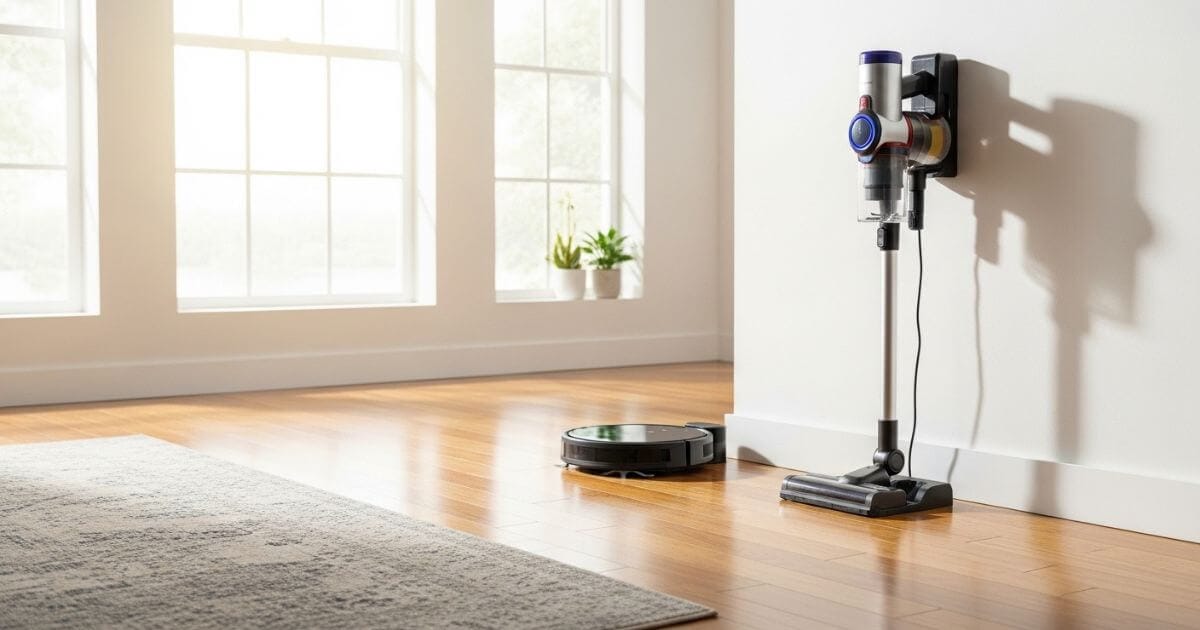
Keeping floors clean amid the demands of daily life is a challenge almost everyone faces—yet the payoff is well worth the effort. Consistent care reduces allergens, extends the life of your flooring, and makes a measurable difference to indoor air quality. Tools like cordless vacuums and robot vacuum models make quick touch-ups genuinely effortless, eliminating the hassle of cords and constant oversight while fitting neatly into any lifestyle. Whether you’re in a compact apartment or a sprawling family home, a floor care routine tailored to your space makes long-term cleanliness achievable—regardless of your experience level.
Key Takeaway: Floors account for 80% of household dust buildup—regular strategies make a lasting difference.
Understanding Floor Types and Their Cleaning Needs
Not all floors respond to cleaning the same way, and treating them as if they do is one of the most common mistakes homeowners make. Hardwood is particularly vulnerable to excess moisture, which causes warping over time; always use pH-neutral solutions and wring your mop out thoroughly before it touches the surface. Carpet traps particles deep within its fibers, making consistent vacuuming essential for keeping allergens in check. Tile handles moisture well but tends to collect grime in the grout lines, which calls for targeted scrubbing. Laminate falls somewhere between hardwood and tile—durable on the surface, but prone to water damage at the seams if you’re not careful.
Families transitioning from carpet to hardwood, for instance, are often caught off guard by how quickly dust becomes visible on hard surfaces. Shifting from a weekly vacuuming habit to daily light sweeping makes an immediate and noticeable difference.
| Floor Type | Primary Dirt Type | Recommended Frequency |
|---|---|---|
| Hardwood | Dust, footprints | Daily light sweep, weekly mop |
| Carpet | Embedded particles | Weekly vacuum, monthly deep clean |
| Tile | Grime, spills | Daily spot clean, bi-weekly scrub |
Building a Daily and Weekly Cleaning Routine
A realistic schedule keeps dirt from reaching unmanageable levels before you even notice it. A busy professional, for example, can see real results with a focused 10-minute morning routine: a quick sweep of high-traffic areas, a dry-cloth wipe along the edges, and prompt attention to any spills. Consistency, even in small doses, adds up quickly.
Weekly sessions should go a step further—shake out area rugs, clean door thresholds, and mop hard surfaces with a microfiber pad that lifts fine particles without saturating the floor. Hygiene experts consistently caution against over-wetting floors, since residual moisture creates conditions that invite mold and surface damage.
- Daily essentials: Dustpan sweeps of entryways, edge wiping along baseboards
- Weekly musts: Area rug shaking, threshold and grout spot-cleaning
Pro Tip: Vacuum edges and corners first to corral loose debris before moving to the center of the room.
Incorporating Tools and Technology for Efficiency
Modern tools can meaningfully enhance a cleaning routine—though they work best when paired with sound fundamentals rather than used as a substitute for them. HEPA filtration systems capture the fine particles and allergens that standard filters let slip through, which is a genuine advantage in homes with pets or allergy sufferers. Understanding suction power—measured in air watts—helps you match the right tool to your floor type; higher air watts are well suited to deep-pile carpets, while moderate settings protect the finish on delicate hardwood.
In multi-pet households, automated cleaning tools have been shown to cut manual cleaning effort by roughly 50%, handling daily surface debris so that weekly sessions can focus on deeper maintenance rather than just keeping up with the basics.
Advanced Techniques for Deep Cleaning and Maintenance
Seasonal deep cleans tackle what daily routines simply can’t reach. Shampooing carpets removes embedded odors; sealing grout prevents future staining; polishing hard surfaces restores the protective layers worn down by constant foot traffic.
For more stubborn problems, targeted solutions tend to work far better than general-purpose approaches:
- Pet hair: Use rubber-bristle tools to gather clumps before vacuuming, rather than letting the vacuum struggle through them
- Organic stains: Apply enzymatic cleaners, which break down biological matter at a molecular level rather than simply masking it
- Odors: Sprinkle baking soda on carpet, leave it overnight, then vacuum thoroughly—it neutralizes smells safely and without harsh chemicals
Preventive Habits to Minimize Future Cleaning
The most effective cleaning strategy, in many ways, is one that reduces how much cleaning you need to do in the first place. Placing quality doormats at every entry point, adopting a no-shoes policy indoors, and adding felt pads beneath furniture legs can collectively cut the amount of tracked-in dirt by a significant margin. Environmental health research confirms that indoor pollutants—dust, pollen, and fine particulates—accumulate far faster in homes without these simple barriers in place. One long-term study of no-shoe households found that vacuum frequency dropped by nearly half compared to homes without the policy.
Pairing these habits with a small air purifier and basic humidity control—keeping indoor levels between 40 and 50%—further reduces the airborne dust that eventually settles on your floors.
Key Takeaway: Preventive steps cut cleaning time in half over time.
A Cleaner Home Starts With One Small Change
Maintaining spotless floors doesn’t demand hours of daily effort—it demands the right approach matched to your specific floor type, a routine you can realistically stick to, and smart use of the tools available to you. The satisfaction of a well-kept home goes beyond appearances; it contributes directly to healthier indoor air and a living environment that holds up better over time. Take a look at your current setup, identify one gap in your routine, and tackle it this week. Start with your floor type today for lasting improvements.
You May Also Like:
Top features to include in a new home design for comfort

Emma Rose is the founder of TryHardGuides.co.uk and a senior content strategist specializing in lifestyle, personal development, and digital entrepreneurship. With a focus on evidence-based living, she produces actionable content designed to help readers make informed life decisions and navigate the evolving tech-lifestyle landscape. As the editorial lead, Emma oversees the site’s mission to provide trustworthy, high-authority information. Her work reflects a commitment to personal growth, transparency, and the pursuit of a well-balanced, informed life.